Sinqly journal
Read. Try. Make it your own.
Everyday examples to help you choose what matters, plan your work and repeat useful habits. Find an answer, try a tool and apply the approach to your own tasks.
Read without signing up. Create an account to work on your own tasks.
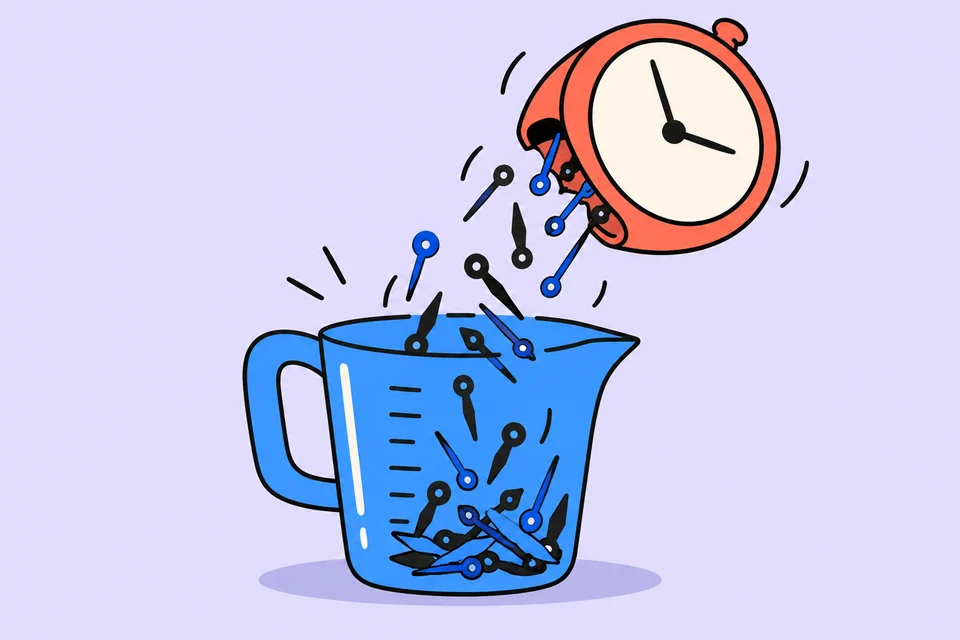
Hours and minutes: why 1.30 hours is not 1 hour 30 minutes
How to convert minutes to decimal hours, add durations and calculate an interval across midnight without mixing up formats. A table and worked examples.
Read article →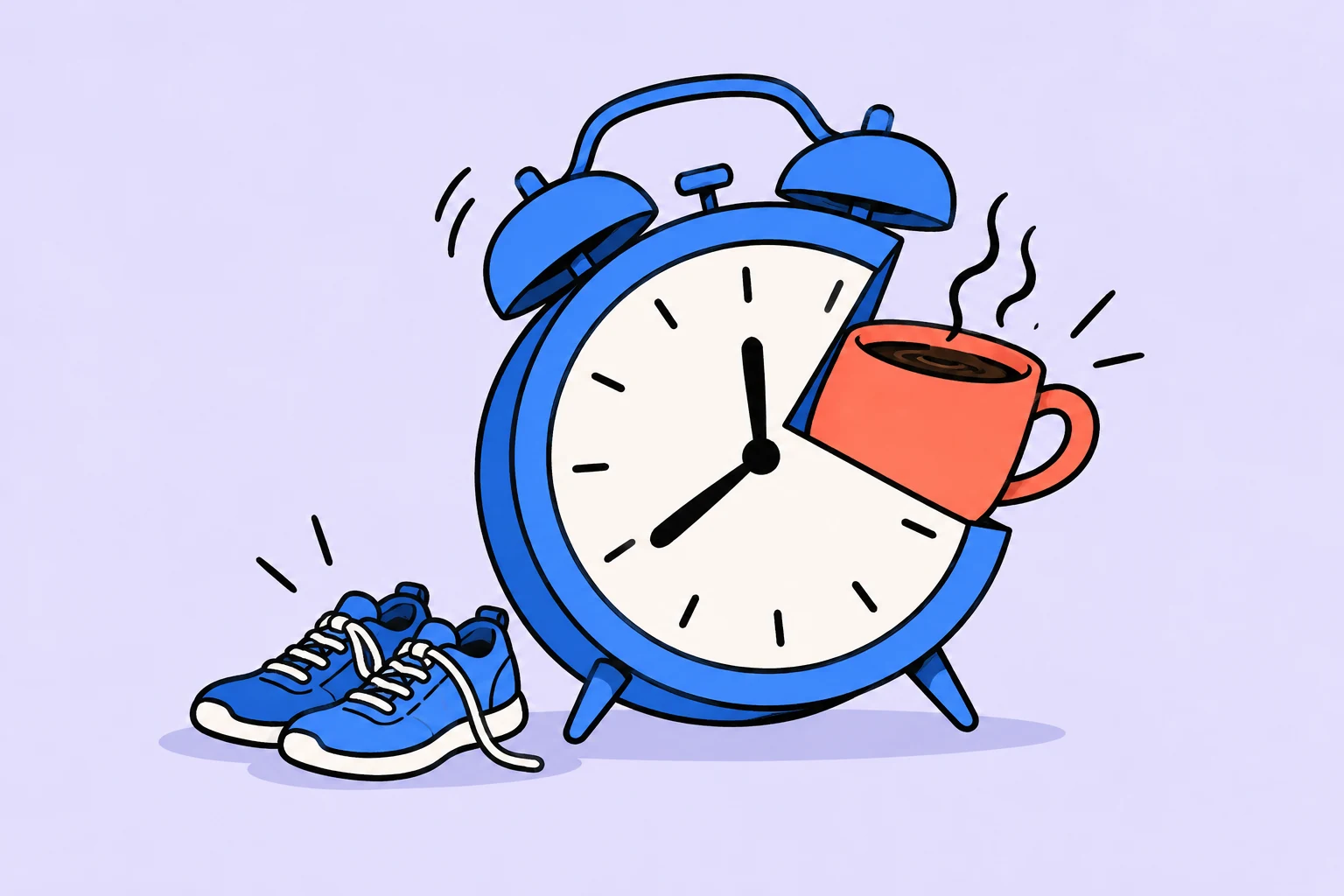
How to plan your day with a realistic time buffer
Choose the main step. Leave room for the unexpected. If the day changes, adjust your plan rather than demanding the impossible of yourself.
Read article →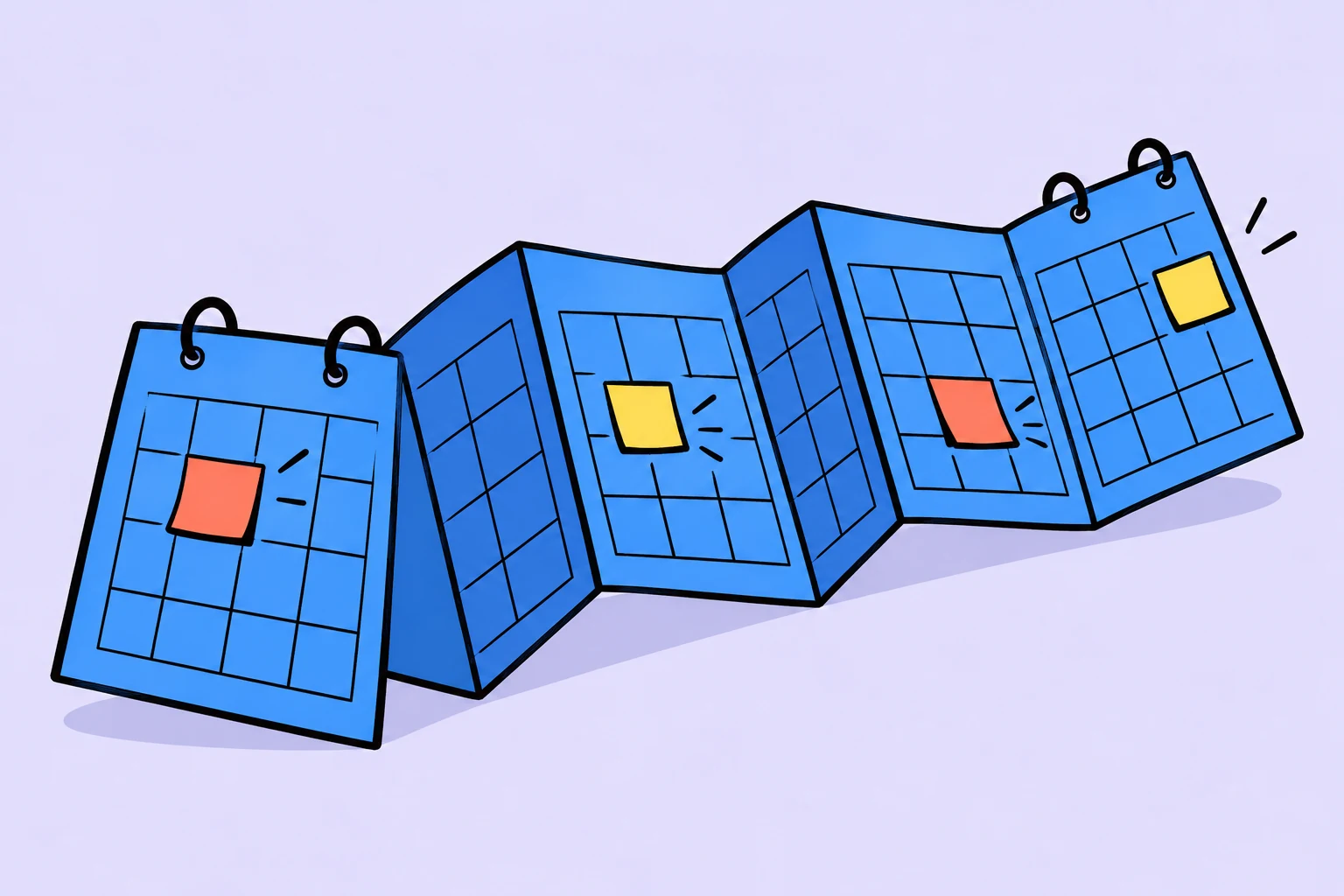
How to build a weekly schedule: fixed and flexible blocks
A practical weekly grid with commitments, movable activities, transitions and a buffer. Work through an example and check whether the schedule fits your real workload.
Read article →
Digital minimalism: how to choose the tools you need
Decide what you need technology for. Adjust how you use it and check those choices during an ordinary week, without having to delete apps.
Read article →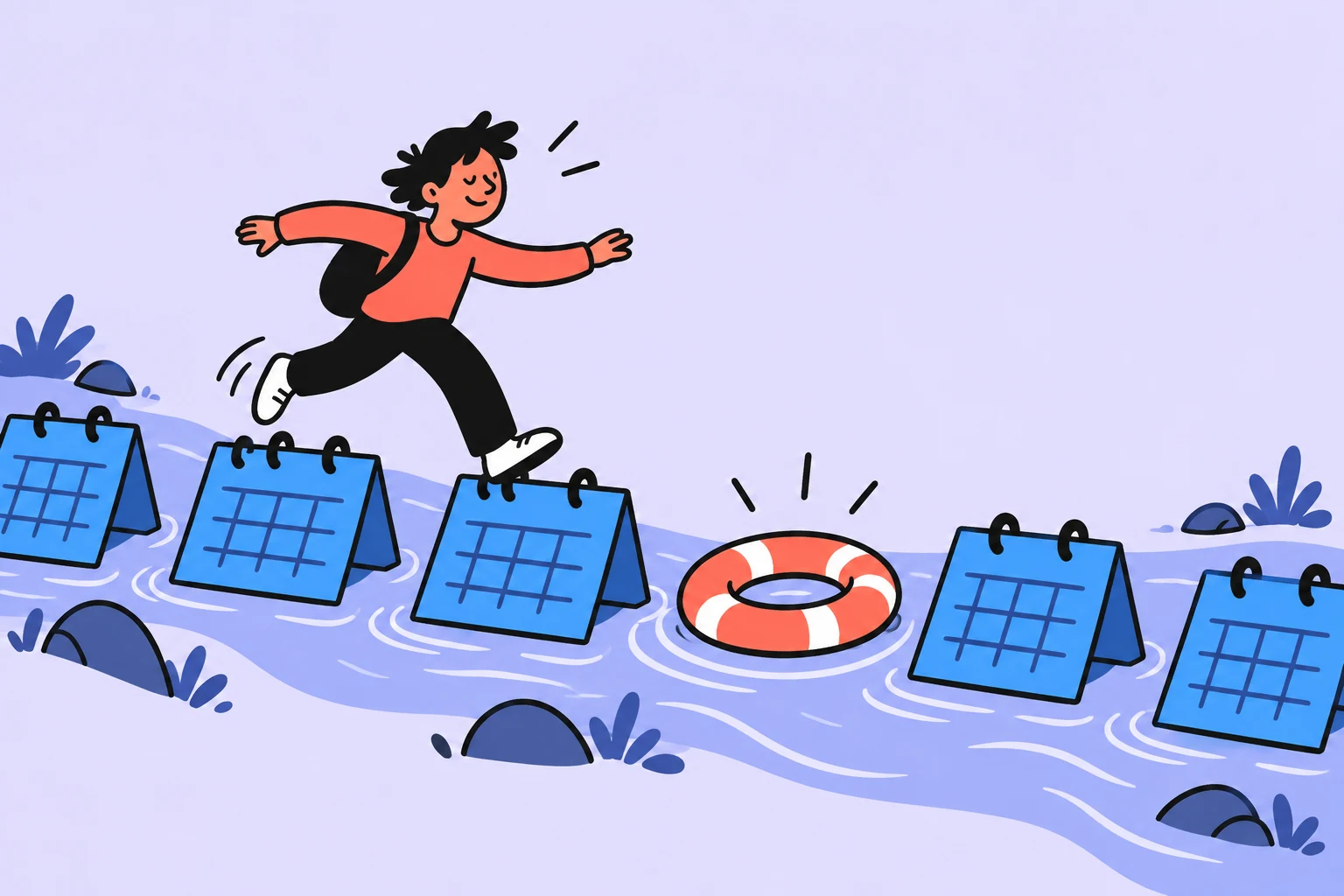
Weekly planning: commitments, workload and buffer
Gather your commitments, check your workload and leave a buffer for the week. A worked example of scheduling dependent steps before a deadline.
Read article →
A waiting-for list: keep track of tasks that depend on other people
Sent a request and heard nothing? A design mockup example shows what to record, when to follow up and how to manage a waiting-for list in Sinqly.
Read article →
How to write a checklist that helps you finish the work
A checklist for a recurring task: turn a vague “check everything” into clear checkpoints. A worked example of sending client materials and recording the process in Sinqly.
Read article →
The meeting is over. How to turn agreements into tasks
What to do after a call: separate decisions from questions, name the result of each action and record your own next steps in Sinqly.
Read article →
Work day and deadline: two dates to make the plan clearer
Why a task due on Friday does not necessarily belong on Friday's work list. Separate the promised deadline from the day you will work, using a client proposal as an example.
Read article →
The workday is over. Leave yourself a clear start tomorrow
Do not try to finish the entire list before leaving. Record the actual result, separate what you are waiting for and note where to resume.
Read article →
Overdue tasks: review the backlog instead of carrying the worry forward
You do not have to promise yourself you will do everything tomorrow. Here is how to separate live commitments from outdated entries and make your list meaningful again.
Read article →
Task breakdown: how to turn a large job into clear steps
What task breakdown means, how to choose a way to divide the work and when to stop. A client proposal example, common mistakes and moving your finished plan into Sinqly.
Read article →
“It's urgent”: where to put a task when your day is already full
A new task does not create new hours. How to clarify urgency, choose the smallest useful result and agree on what will move.
Read article →
Company knowledge base: structure, first articles and update rules
How to build a minimal employee knowledge base: first instructions, a clear structure, owners and updates. Help people find and use answers, rather than simply store them.
Read article →
Project backlog: keep an idea list that helps you choose work
How to collect ideas, clarify tasks and choose the next work without an endless list of promises. An example backlog for a small product and rules for reviewing it.
Read article →
Project brief: what it is and how to complete one before starting work
What to include in a project brief, how to clarify vague answers and what to agree before estimating the work. A completed example for a small digital project.
Read article →
Deadlines: set a realistic date, spot risks and agree on changes
What a deadline means, how to set a realistic date and how to notice delivery risks early. A backward plan, an interim check and an example message about a delay.
Read article →
Definition of Done: what counts as finished work, with an example
How to agree on a Definition of Done, distinguish it from acceptance criteria and Definition of Ready, and check completion using a booking form example.
Read article →
Definition of Ready: prepare a task without creating bureaucracy
A Definition of Ready example for a team: what to clarify before starting, how to handle uncertainty and why DoR should not become a rigid entry gate.
Read article →
Daily team meetings: coordinate the work without reporting for its own sake
When a team needs a short daily check-in, how it differs from a status report and how to discuss obstacles. Includes a conversation example and an asynchronous alternative.
Read article →
Project roadmap: example, stages and how it differs from a plan
Show a project's direction, agree on stages and keep a roadmap from becoming a list of promised dates. A small service launch and a ready-to-use Now / Next / Later example.
Read article →
Job stories: the format, examples and differences from user stories
How to describe a situation, motivation and desired outcome in a job story. Explore rescheduling a booking, distinguish hypotheses from facts and avoid jumping straight to a feature.
Read article →
A team Kanban board: columns, WIP limits and moving work forward
Organise the flow of team work: define columns and transition rules, limit unfinished work and discuss stuck tasks. An example from a small editorial team.
Read article →
Monthly content plan: example and practical template
Build a realistic content plan: goal, recurring topics, a sample month and the path from idea to publication. Account for preparation, approval and rescheduling.
Read article →
Task acceptance criteria: how to write and check them, with examples
Observable conditions instead of “do it well”: acceptance criteria for a form, success and failure scenarios, task boundaries and a disputed result worked through.
Read article →
Project success criteria: measuring results, with an example
Distinguish completed work from useful impact. Workshop launch criteria with a metric, threshold, period, data source and limits on conclusions.
Read article →
The critical path: a simple project calculation
Find the longest chain of dependent activities and understand which delays will move the whole project. A small worked example calculated by hand, without specialist software.
Read article →
RACI matrix: how to assign project responsibilities
Explore the four RACI roles through a website launch: who does the work, who accepts the result and who really needs to participate. With a completed example and error checks.
Read article →
ABCDE method: how to prioritize your to-do list
Five ABCDE categories through a working-day example: consequences, choosing A1, delegation and elimination. What to do when almost everything seems urgent.
Read article →
MoSCoW prioritization: a practical requirements example
Must, Should, Could and Won’t: prioritize a workshop launch, test what is essential and reduce scope when work falls behind.
Read article →
Employee onboarding: a first-month plan
Organize a new employee's first days and month: access, a clear first task, support and feedback. An illustrative onboarding plan for a small team.
Read article →
Project communication plan: example, channels and escalation rules
How to create a communication plan: who needs information, how often and who is responsible. A completed launch example, a status message and a response to delay.
Read article →
Project plan: build it from the outcome to the next task
How to create a workable small-project plan: outcomes, activities, dependencies, dates and review points. An illustrative open-class launch without complex tools.
Read article →
Team meeting agenda: discuss what matters and finish on time
How to prepare a working meeting: decisions to make, necessary participants, a sample agenda and a closing process. Help discussions produce results without unnecessary overruns.
Read article →
Task prioritization: choose what matters when resources are limited
Choose what matters when everything will not fit: urgency, value, effort and uncertainty. Compare approaches and work through one task list.
Read article →
Meeting minutes: an example, decisions and agreement follow-up
A working minutes example: separate discussion from decisions, record responsible people and deadlines, then follow up agreements. No need to transcribe every remark.
Read article →
Work procedure: describe a process people actually use
How to describe a repeatable work process: inputs, steps, roles, exceptions and updates. An illustrative enquiry-handling procedure you can test in practice.
Read article →
Project resource plan: calculate availability and find overload
A completed resource plan for three specialists: available hours, buffer, workload and a bottleneck. Why total time alone is insufficient for a realistic plan.
Read article →
Team retrospective: a meeting outline and follow-up actions
How to run a retrospective, discuss facts without blame and choose a verifiable improvement. A meeting outline and an example post-launch experiment.
Read article →
Project risks: build a register and prepare an action plan
How to describe a risk, choose an early warning and prepare a response. A simple register for a small launch, without invented precision or an endless list of everything that might go wrong.
Read article →
Scrum or Kanban: choose an approach that fits your team
Compare Scrum and Kanban through the nature of your work, incoming requests and need for feedback. Two illustrative scenarios and questions to ask before choosing.
Read article →
Scrum explained: accountabilities, events and artifacts in one example
How Scrum works: team accountabilities, events, artifacts and short inspection cycles. An illustrative product example, without presenting one approach as suitable for every team.
Read article →
Sprint planning: set a goal, choose the work and inspect the result
Formulate a Sprint Goal, select work the team can complete and inspect the result. An illustrative booking improvement and common planning mistakes.
Read article →
Project stakeholders: who influences the outcome and how to work with them
How to identify project stakeholders, understand their expectations and choose a communication approach. Includes an influence map and a small launch example.
Read article →
Story points: estimating work without converting it into hours
Relative estimation with story points: choose a reference task, discuss differing estimates and explore uncertainty. Why points should not become hours or individual performance targets.
Read article →
SWOT analysis: a small project example and practical next steps
How to fill a SWOT matrix with facts, distinguish internal constraints from external threats, and choose actions after analysis. Detailed case study of a small service.
Read article →
Team task manager: how to choose and test before migrating tasks
How to choose a task manager using real team scenarios: assigning work, handovers, deadlines, mobile use and limitations. Plan a trial project before migrating data.
Read article →
Timeboxing: limit a task's time and keep a useful result
Set a time limit for a task and decide in advance what to do when it ends. A draft-planning example and the difference from an ordinary calendar block.
Read article →
Technical specification example: describe the outcome and verify completion
How to describe requirements for a small digital task so the result can be tested. Includes an enquiry form example, acceptance criteria and a change process.
Read article →
Managing client expectations: how to agree on outcomes
Separate promises from assumptions, agree on boundaries and communicate delays. A project with late materials and examples of practical wording.
Read article →
User story mapping: how to build a map of user stories
A workshop example of user story mapping: the visitor's journey, action cards, a first end-to-end release and common mistakes when splitting releases.
Read article →
User stories: how to write one, with examples
The user story format, three improved examples and a workshop booking story: distinguish a need from a feature, add acceptance criteria and split work that is too large.
Read article →
Project kickoff meeting: agenda and example decisions
How to run a one-hour kickoff meeting: preparation, agenda, participants, open questions and practical minutes using a workshop launch example.
Read article →
Project charter example: one page without bureaucracy
Record the goal, boundaries, participants and conditions for starting a project on one page. An illustrative small service launch and questions to resolve before planning work.
Read article →
One-on-one meetings: practical questions for managers and employees
How to prepare a conversation between a manager and an employee: questions about the situation, expectations, support and agreements. Without turning the meeting into a report or interrogation.
Read article →
Kanban WIP limits: how to limit unfinished work
What counts as work in progress, how to choose an initial limit and how to handle blockers. An editorial queue example and a way to assess changes without promises of magical speed gains.
Read article →
The project life cycle: stages from idea to completion
How a project moves from an idea to completion: decisions at each stage, useful documents and signs that it is ready to move forward. Illustrated with a small exhibition.
Read article →
21 Days to Build a Habit: Myth or Reality?
Are 21 days really enough to build a habit? Exploring the UCL study, the neuroscience of automatic behavior and realistic timelines.
Read article →
8 life areas: a complete guide to each area with examples and exercises
Explore all 8 life areas: health, finances, career, emotions, relationships, growth, creativity, and home. The 8-area wheel of life, exercises, and an action plan.
Read article →
Analyze a spreadsheet with AI: formulas, errors, and a verifiable result
An AI-for-Excel exercise using a fictional sales table: formulas, discounts, a 2450-ruble total, input errors, and reproducible checks. No invented AI run.
Read article →
Atomic Habits: A Summary of James Clear’s Book
A summary of Atomic Habits: the 4 laws of behavior change, the 1% principle, the habit loop, and practical ways to apply Clear’s ideas.
Read article →
An AI-assisted advertising banner: concept, editable layout and checks
Build a banner around one message: brief, visual-concept prompt, separate text layers and a readability check before placement.
Read article →
A business plan with AI: inputs, calculations, and assumption checks
Prepare a business plan with AI: a complete educational service model, break-even calculation, scenarios, and cash balances. Assumptions are separated from verified data.
Read article →
The future of AI coaching: trends for 2026-2030
An overview of AI coaching trends for 2026-2030. Multimodal models, emotional AI, hybrid coaching, and integration with wearable devices.
Read article →
Bullet Journal: quick notes and deliberate task migration without decoration
A minimal Bullet Journal: tasks, events, notes and deliberate migration. A monthly review example without decorative requirements.
Read article →
Monthly goals: choose results that fit your resources
Choose a few achievable results, check time and dependencies, and define month-end criteria and review conditions without chasing a target number of goals.
Read article →
ChatGPT for productivity: 25 prompts and AI tips
The best ChatGPT prompts for productivity: planning, prioritization, time management, and reflection. 25 ready-to-use templates + AI tips for work.
Read article →
Digital detox: a complete guide
A complete guide to digital detox. Signs of information overload, dopamine dependence, weekend and week-long plans, and a family detox.
Read article →
Deep Work: a complete guide to deep, focused work
A complete guide to Cal Newport's Deep Work. How to practice deep work, 4 strategies, focus rituals, and the science of concentration.
Read article →
Gratitude Journaling: Science, Practice and a Template
How to keep a gratitude journal based on research: studies, step-by-step instructions, entry templates, mistakes and variations on the practice. A guide to gratitude journaling.
Read article →
An achievement journal: notice results and useful effort
Record facts, your contribution and an outcome still unknown. An achievement-journal example after negotiations, without compulsory positivity.
Read article →
Dopamine and motivation with ADHD: using neurochemistry for productivity
How the dopamine system works with ADHD. 7 strategies for managing motivation through neurochemistry: gamification, stacking, micro rewards, and physical activity.
Read article →
The Zeigarnik effect: what research says about unfinished tasks
What a 2025 meta-analysis says about memory for unfinished tasks. Distinguishing the Zeigarnik effect, resumption and planning.
Read article →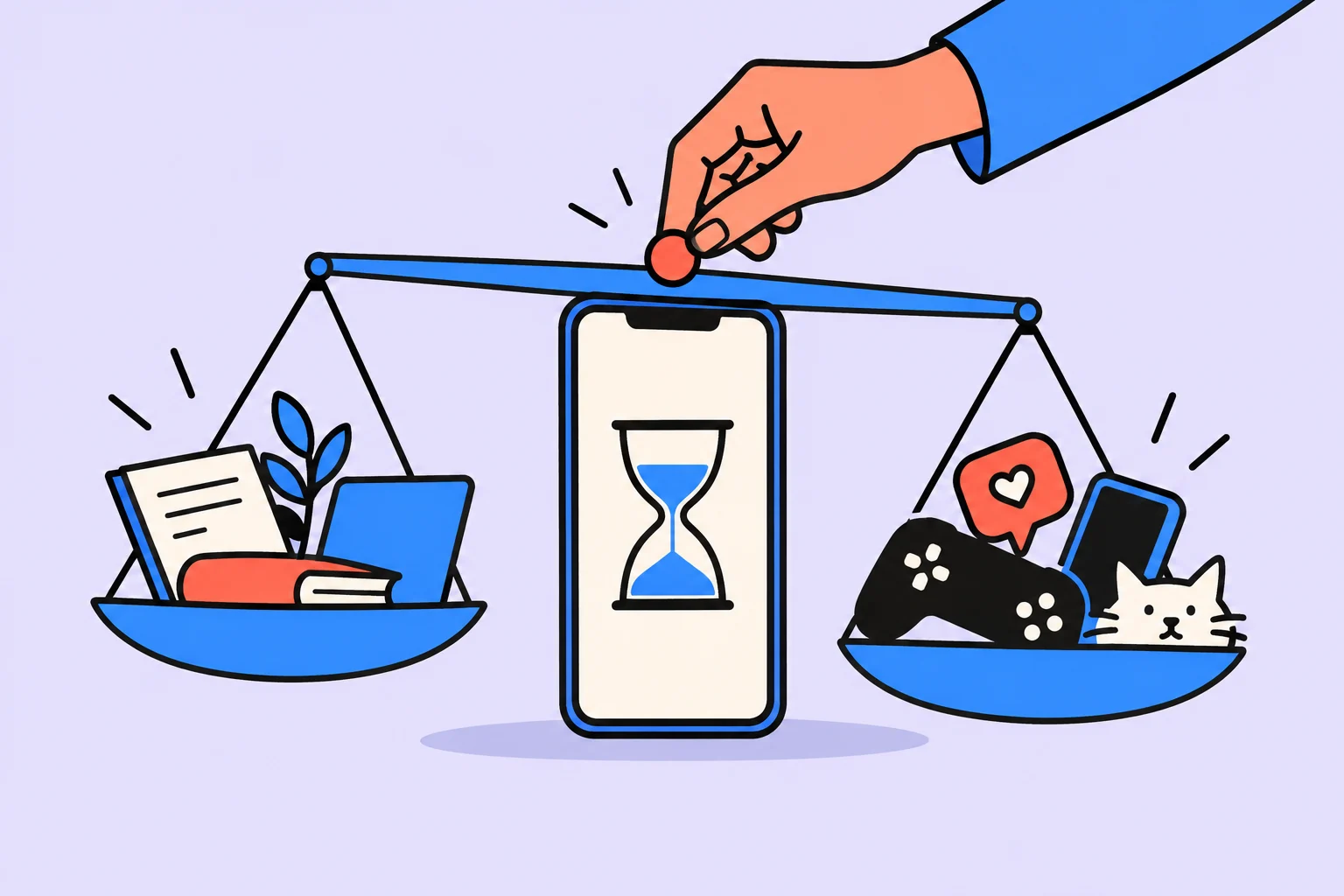
Screen time: read the report and choose limits
Where to find screen time on iPhone and Android, distinguish necessary use from unwanted use, and test a personal limit over a week.
Read article →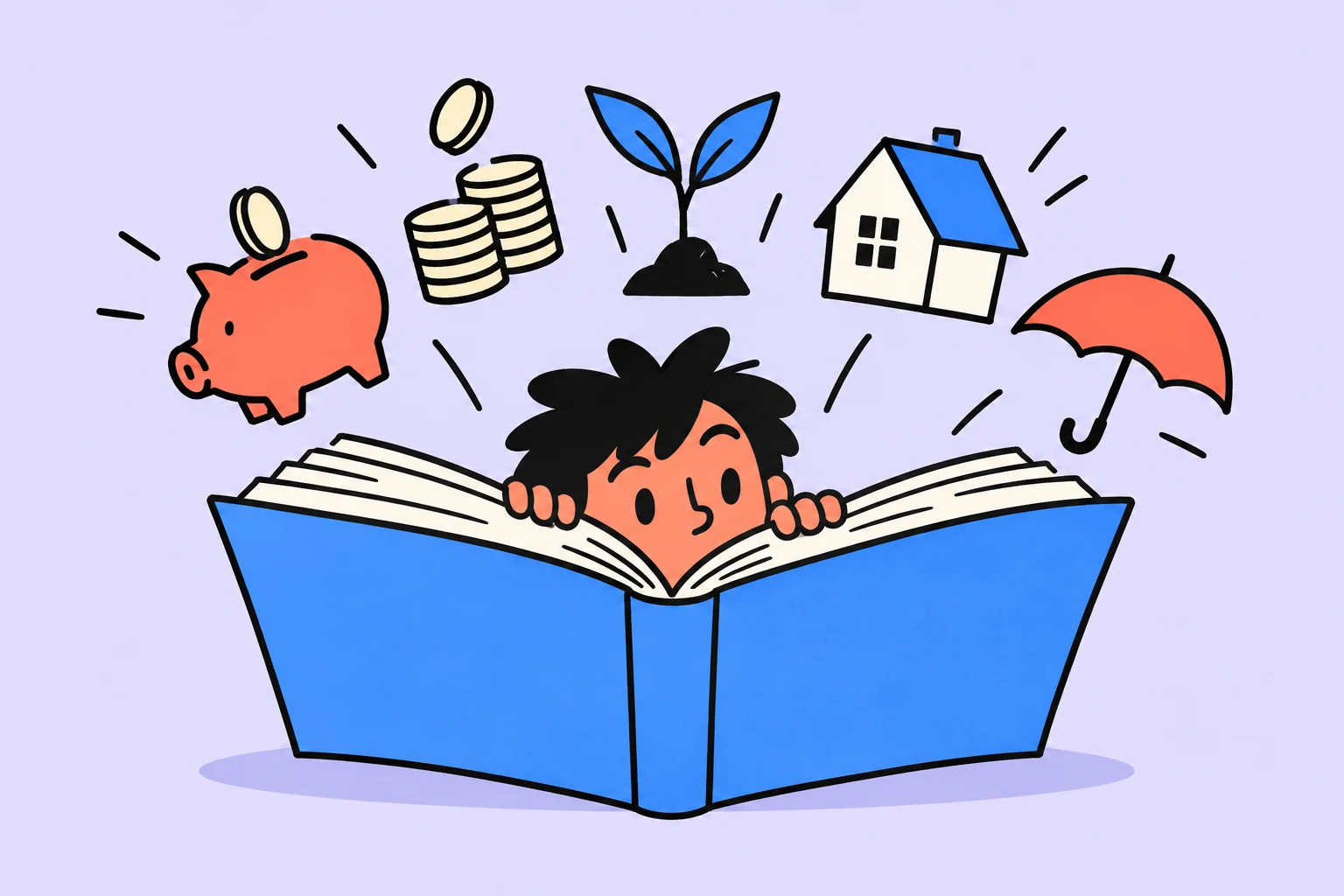
Financial literacy: the basics for everyone
A complete guide to financial literacy: budgeting, savings, investing, debt management, and habits for financial health. Practical advice from Sinqly.
Read article →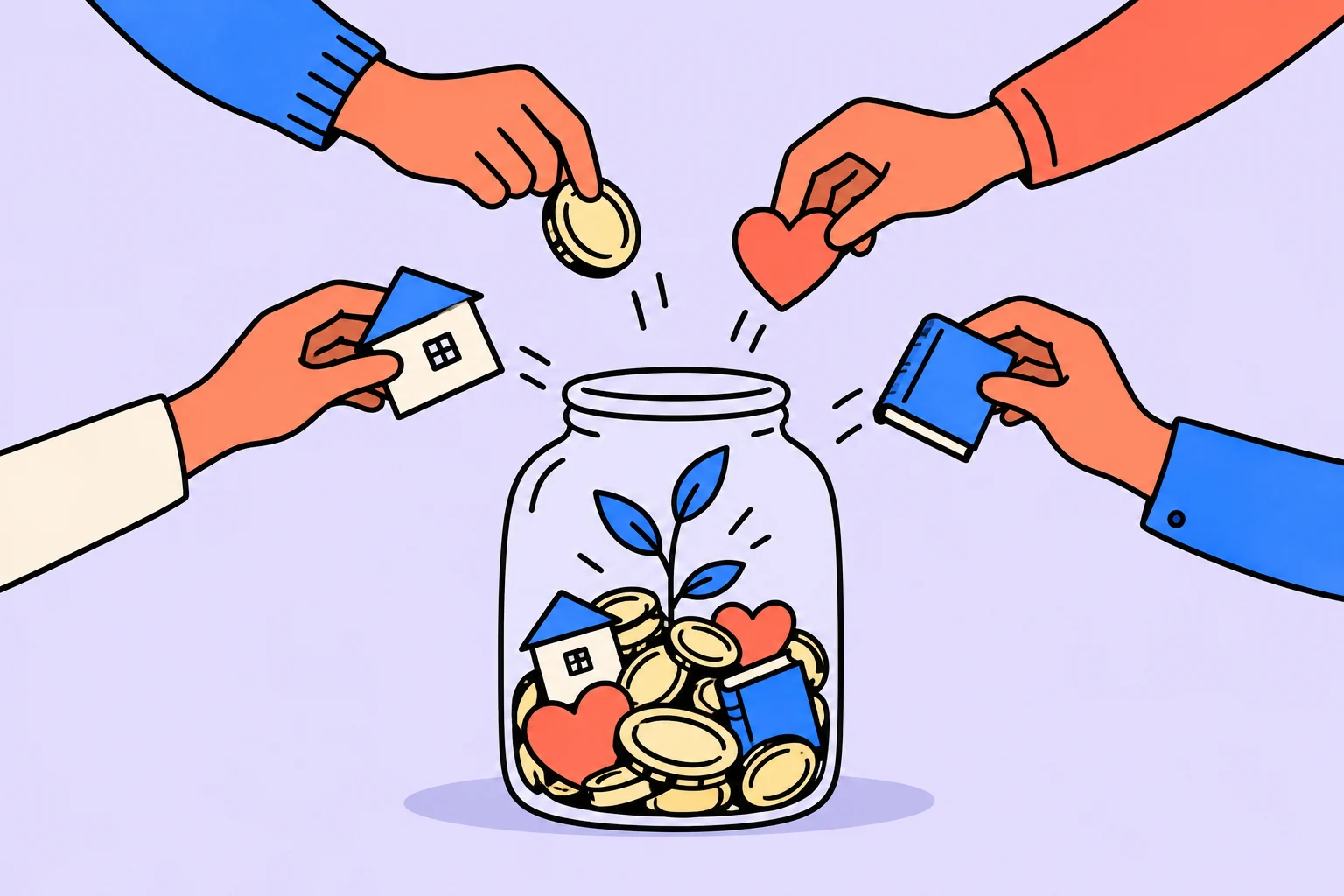
12 Financial Habits That Will Change Your Life
12 financial habits of wealthy people. Expense tracking, the 50/30/20 budget, compound interest and an emergency fund: step-by-step instructions and research.
Read article →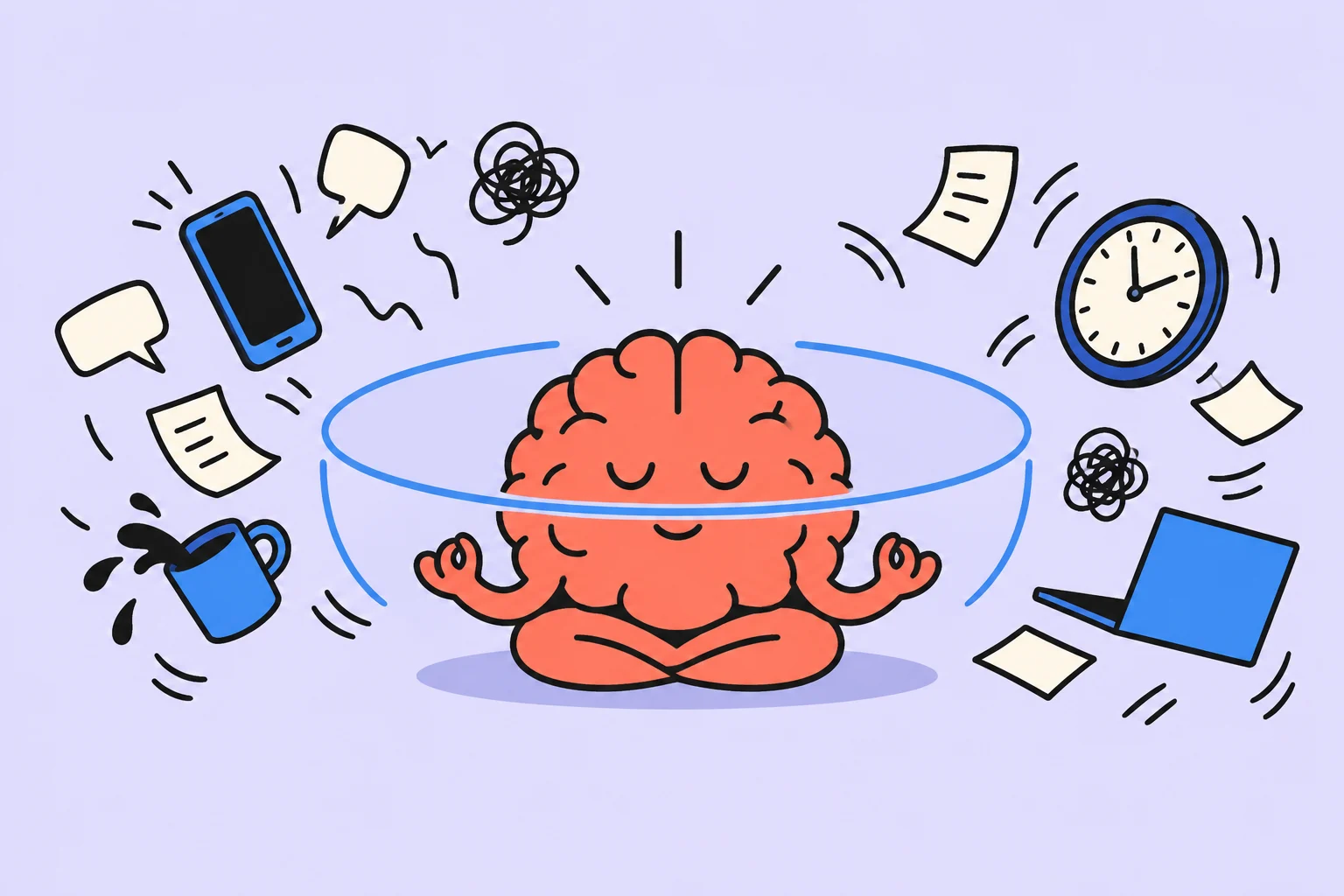
Focus techniques for ADHD: what really works in 2026
Scientifically grounded methods for improving focus with ADHD. 12 proven concentration techniques, exercises, and tools for people with attention deficits.
Read article →
Procrastination: 12 science-based ways to stop putting things off
Why we procrastinate and how to stop putting things off. 12 scientifically grounded methods for tackling procrastination, from the two-minute rule to cognitive therapy.
Read article →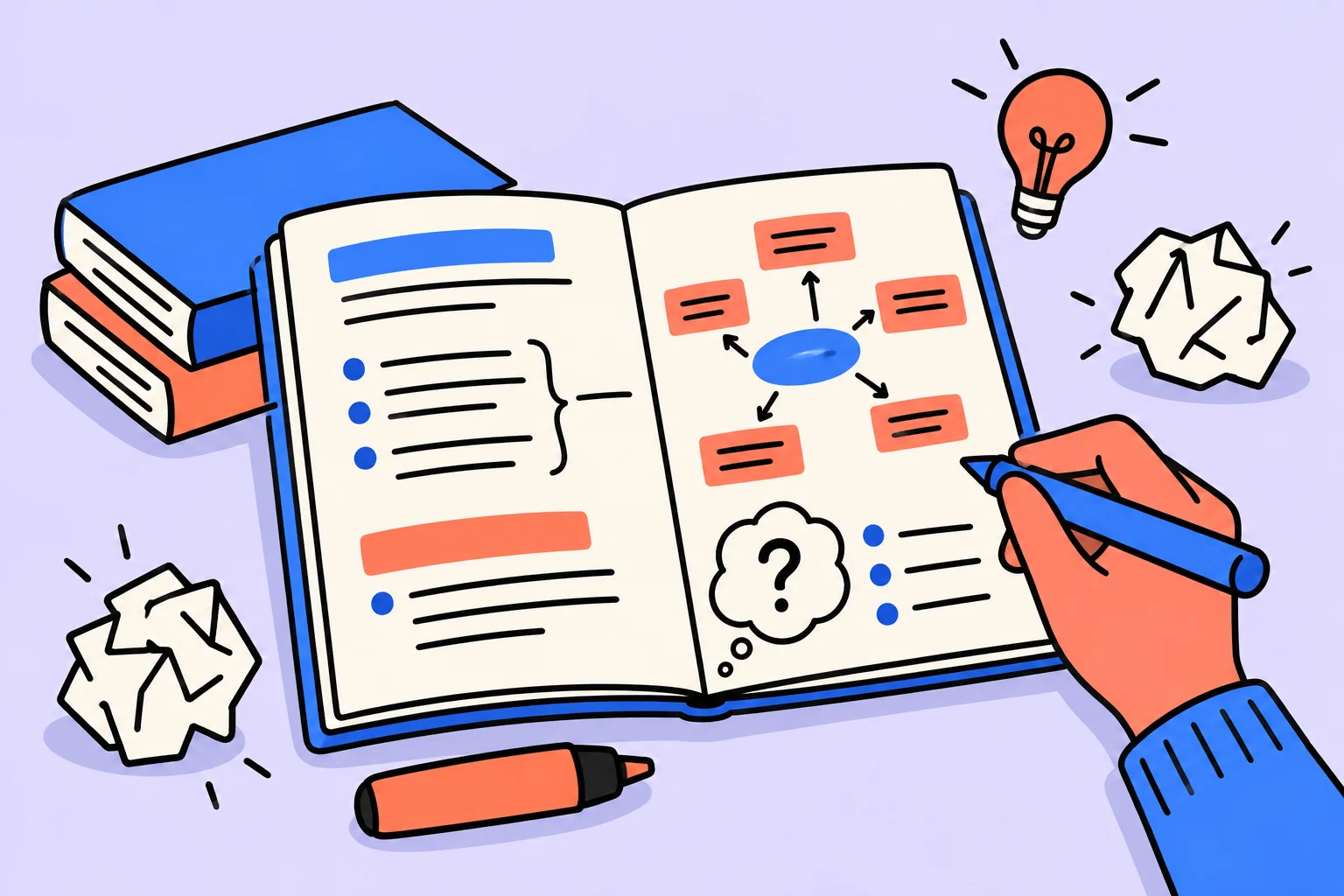
How to take notes: main ideas, connections, and checking questions
Lecture or reading notes that support learning: what to record, how to mark uncertainty, and how to turn material into questions. A complete worked example.
Read article →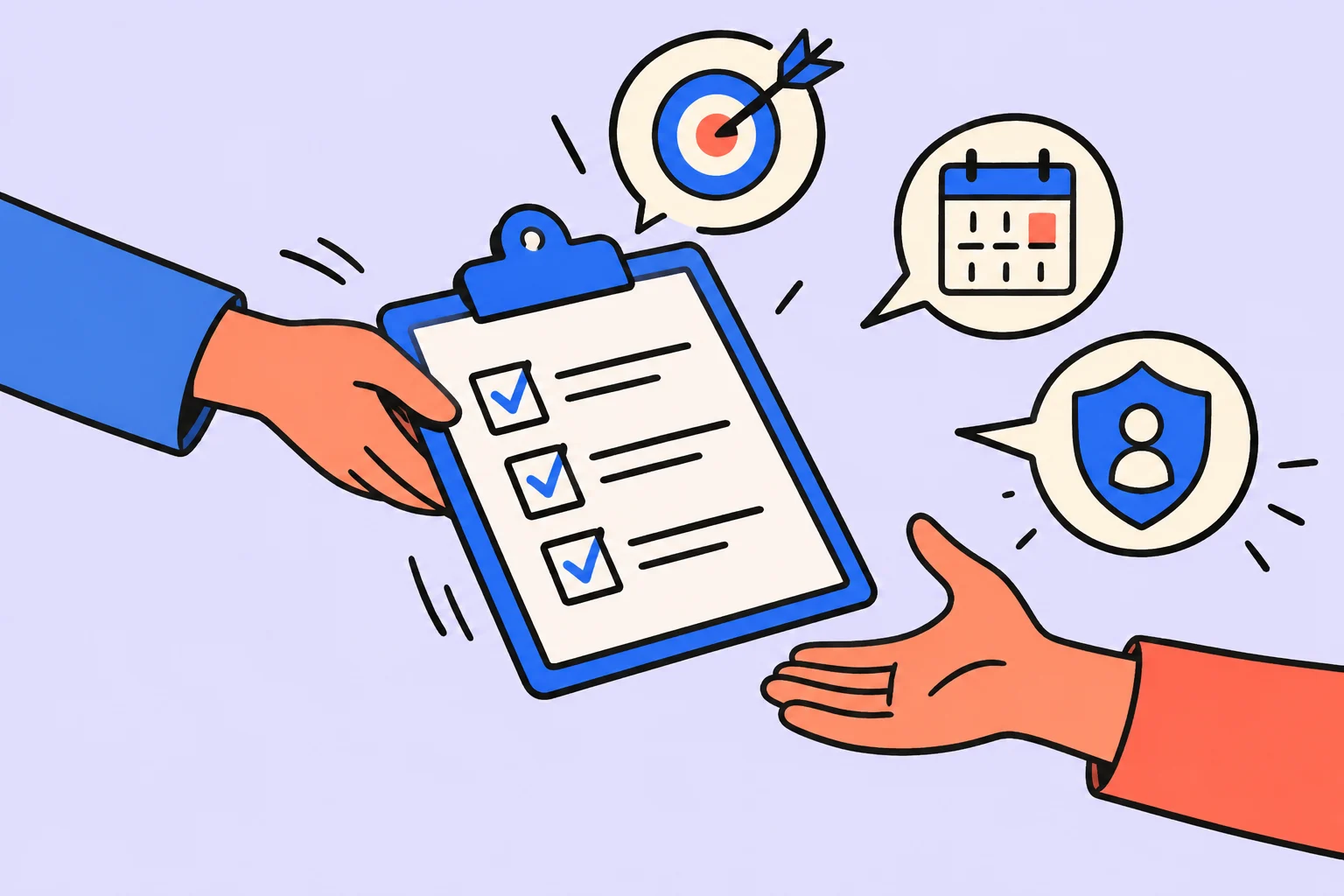
How to delegate tasks: outcomes, authority and checks
Hand over a task with completion criteria, a deadline and decision-making authority. A completed assignment example and a check before the deadline.
Read article →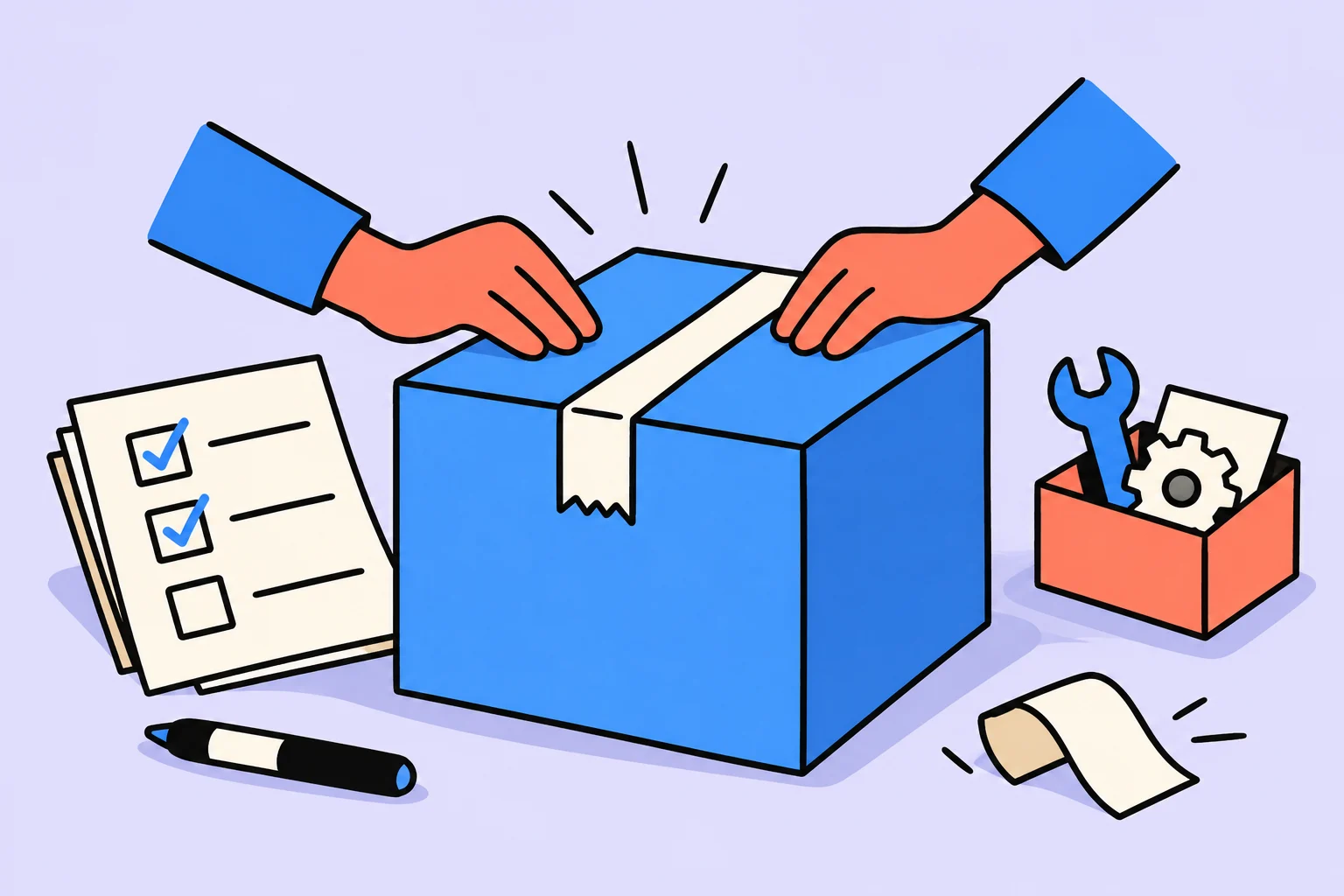
How to finish tasks: completion criteria and the final step
Review nearly finished work: define a verifiable result, separate improvements, prepare the handoff, and close the remaining commitments.
Read article →
How AI helps personal development: a complete guide for 2026
Artificial intelligence for life and personal development: AI coaching, habit tracking, and personalized plans. A practical guide with examples.
Read article →
How to use AI to improve your life
How to use AI in everyday life: planning, habits, coaching, and emotions. A step-by-step guide with examples and tools.
Read article →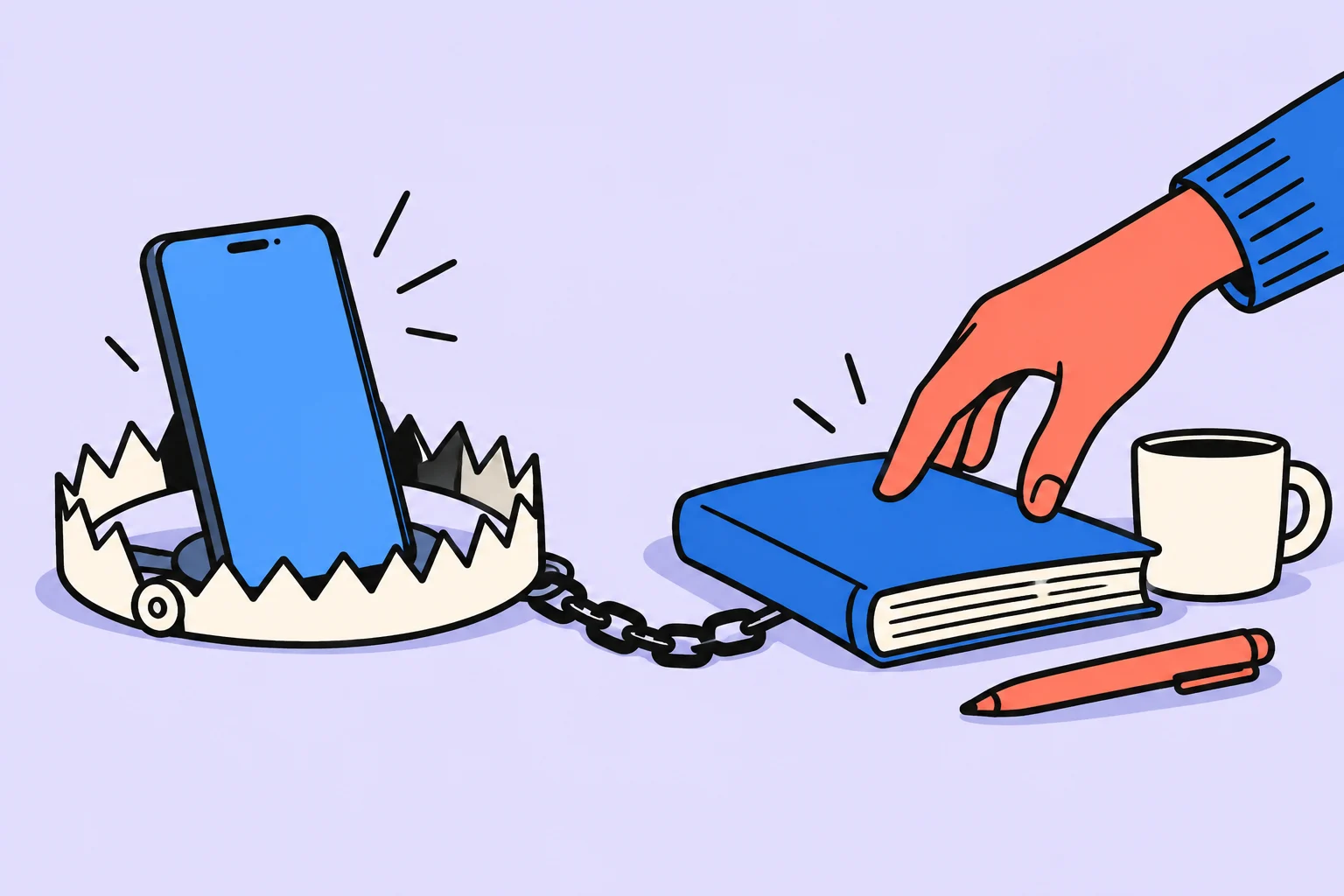
Spend less time on your phone: notice the trigger and change the habitual entry point
Find what triggers automatic phone use, preserve necessary contact and choose an alternative. One small experiment instead of a complete ban.
Read article →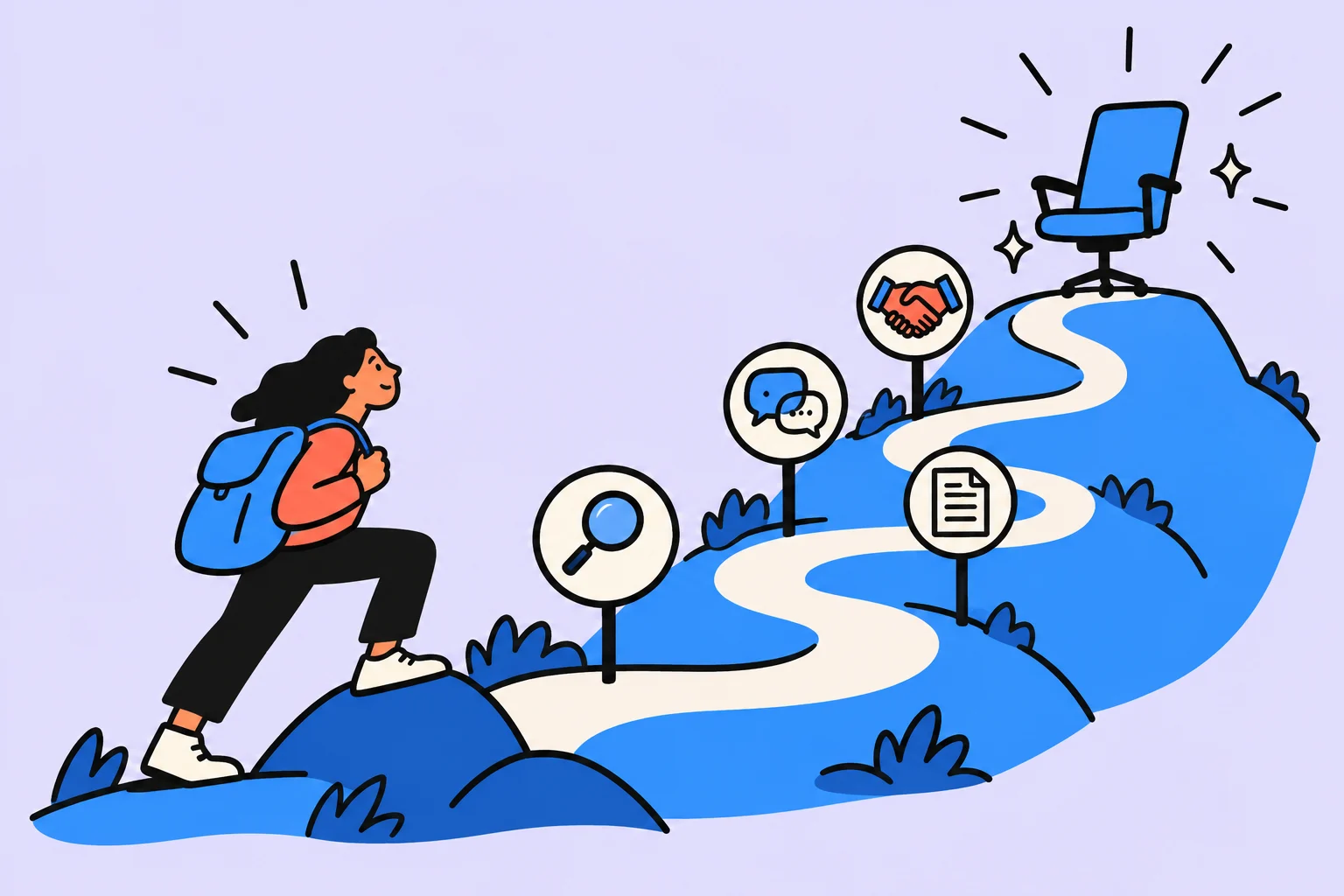
How to Find Your Dream Job: A Step-by-Step Plan
A step-by-step plan for finding your ideal job: self-reflection, writing a resume, networking and preparing for interviews. A practical Sinqly guide for 2026.
Read article →
How to find yourself and your purpose
A practical guide to self-discovery: methods for finding purpose, the Ikigai concept, working with values, and life experiments. A step-by-step plan from Sinqly.
Read article →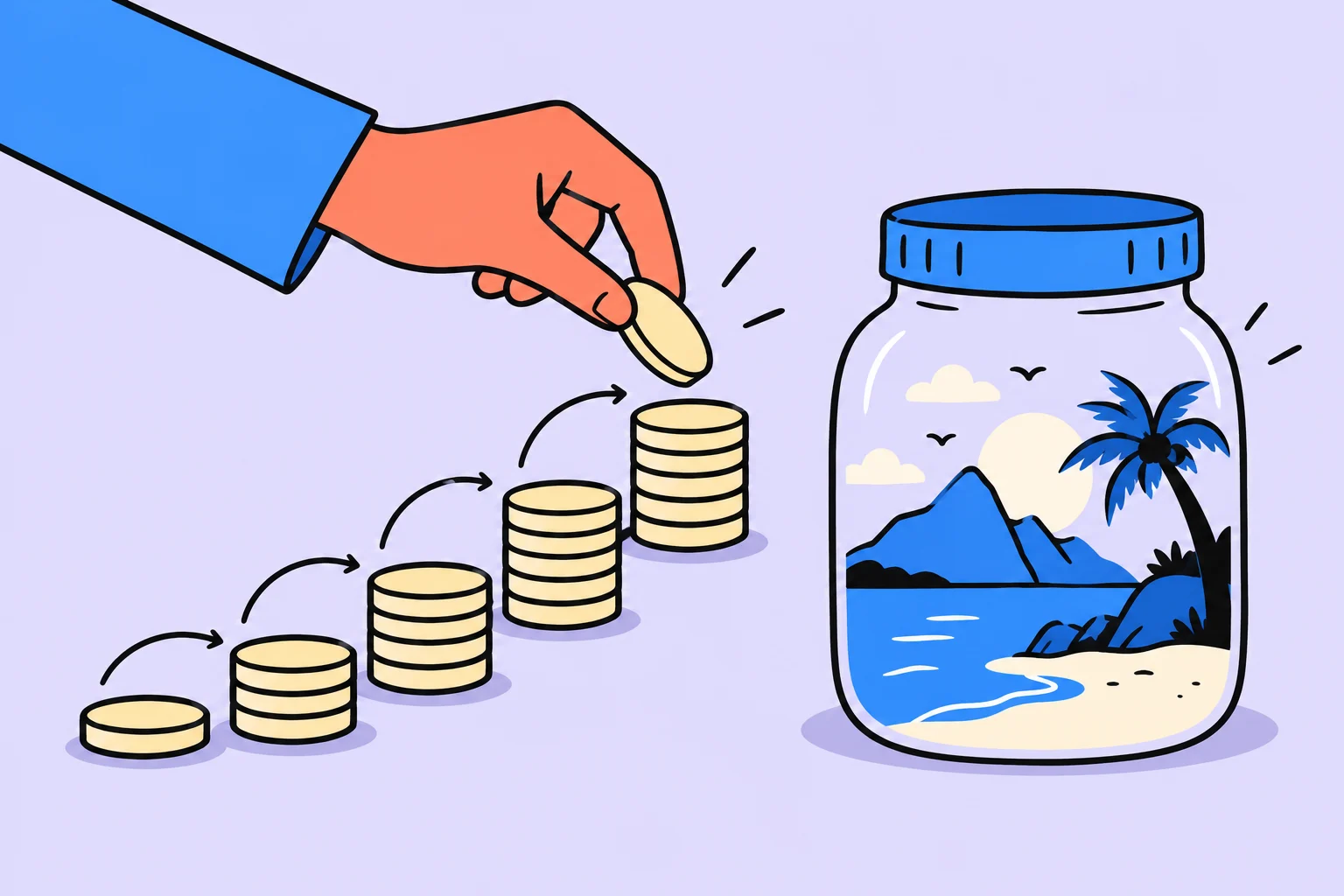
How to Save for a Dream: A Step-by-Step Plan
A step-by-step plan for saving for a major purchase or a dream: setting a goal, calculating a timeline, choosing a savings strategy and building money-saving habits. A practical Sinqly guide.
Read article →
How to learn to communicate: a guide for introverts
A practical guide to developing communication skills for introverts: why it can be difficult, step-by-step strategies, daily practices, and habits for confident communication.
Read article →
How to start waking up early: a 30-day plan
A step-by-step plan for switching to an earlier wake-up time in 30 days. The science of circadian rhythms, chronotypes, nutrition, melatonin, morning habits, and a challenge.
Read article →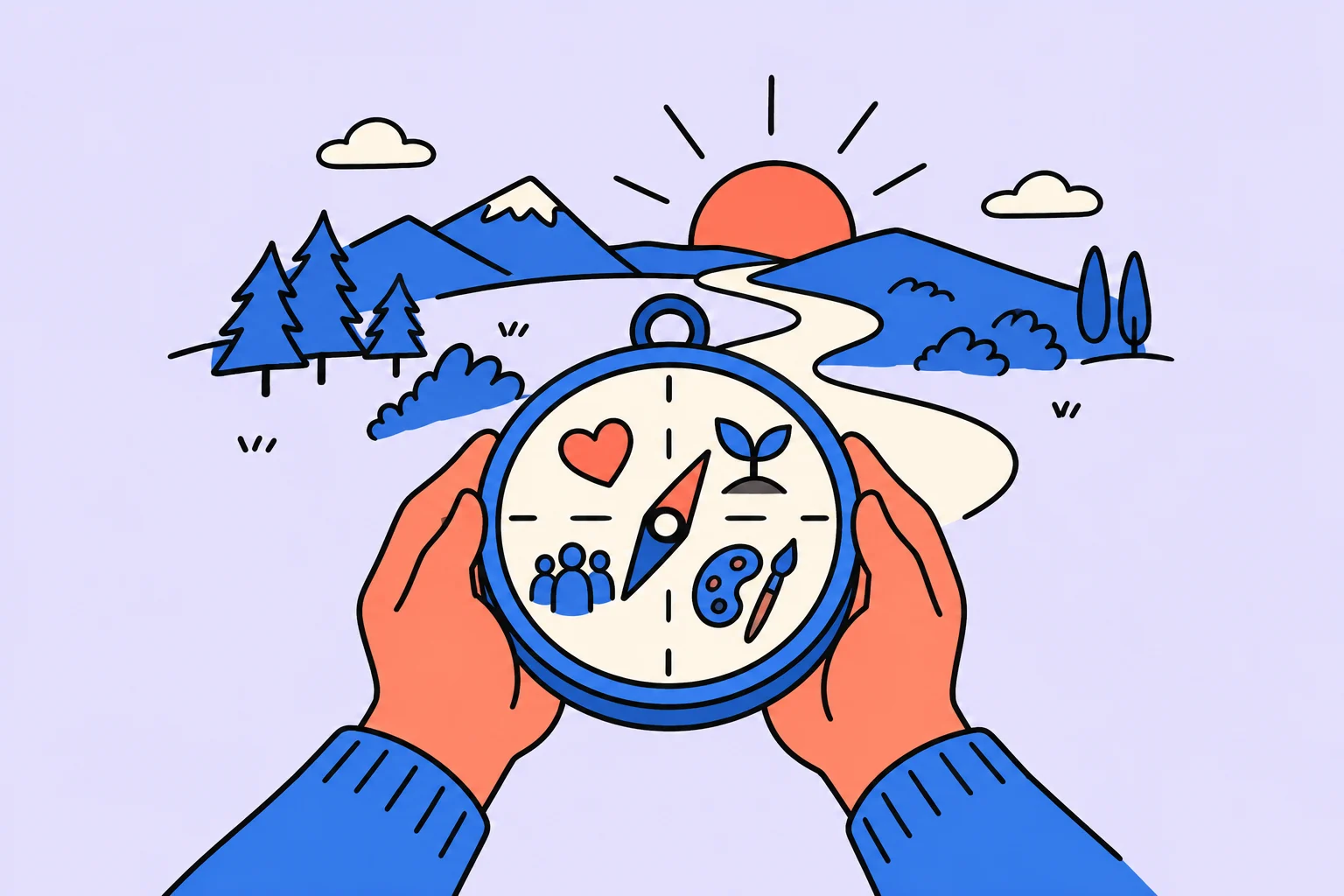
How to find your purpose: a complete path to ikigai and meaning in life
A step-by-step guide to finding your purpose through ikigai. Exercises, self-reflection questions, scientific evidence, and practical tools.
Read article →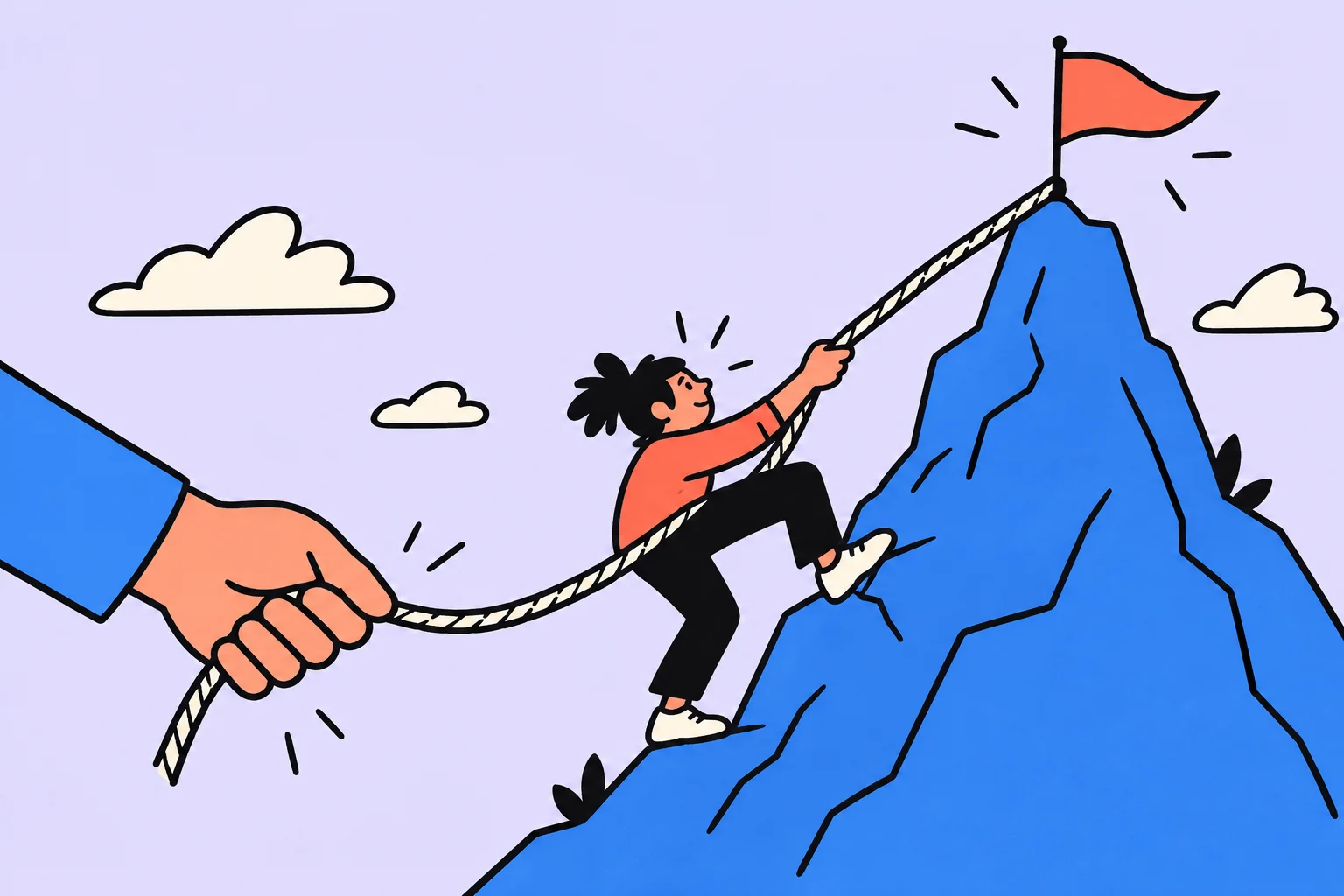
How to Stick With a Goal: 8 Strategies and Reviewing Your Plan
How to keep moving toward a goal: manageable steps, support, working conditions and progress reviews. Learn when to change your plan and workload.
Read article →
How to stick with a habit: 8 science-based strategies
Why 80% of people abandon habits within 2 weeks and how to avoid it. 8 strategies for maintaining habits supported by neuroscience and behavioral psychology.
Read article →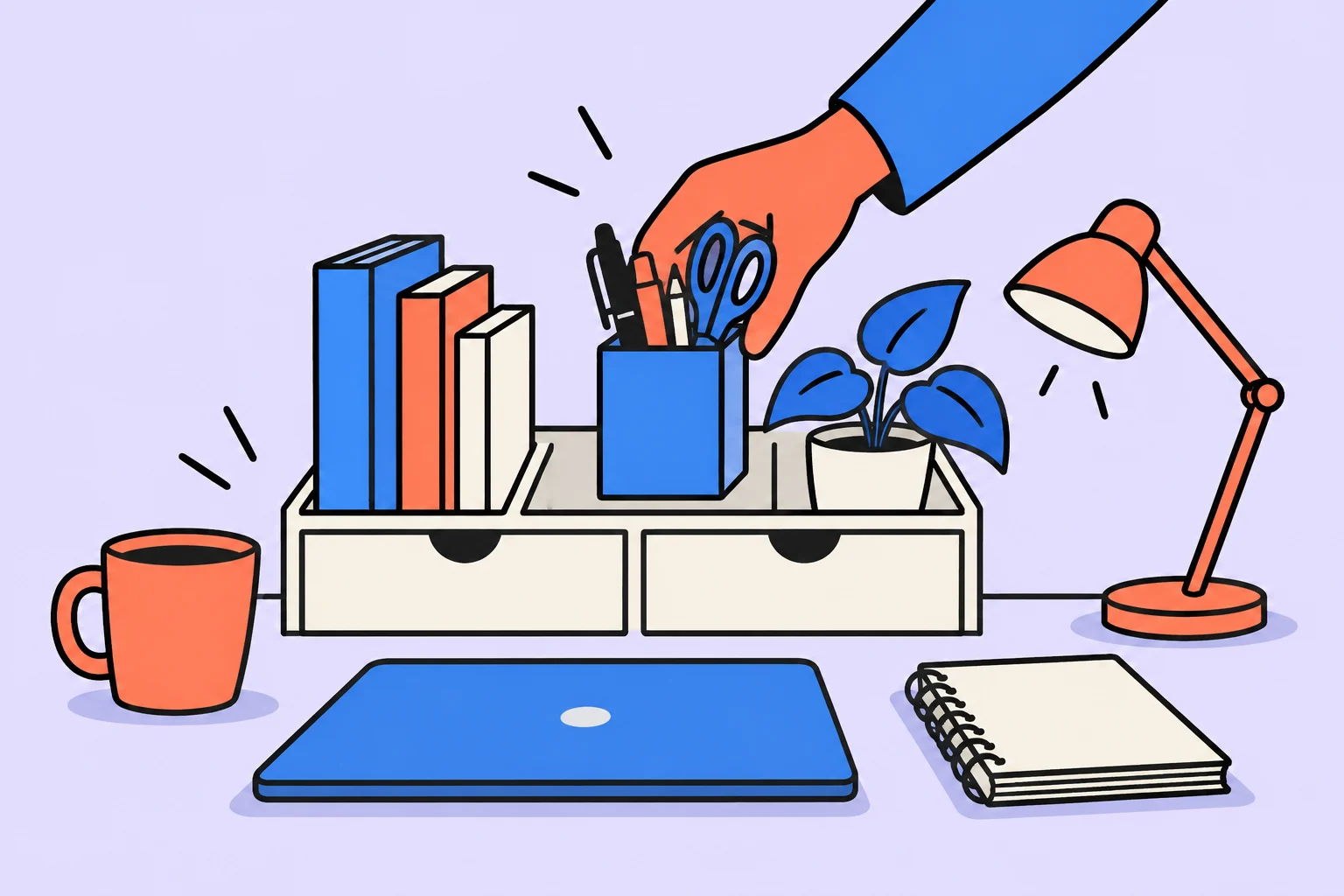
How to Organize the Space Around You
A practical guide to organizing your space: the KonMari method, 5S at home, tidying habits and minimalism. How order affects productivity and mental health.
Read article →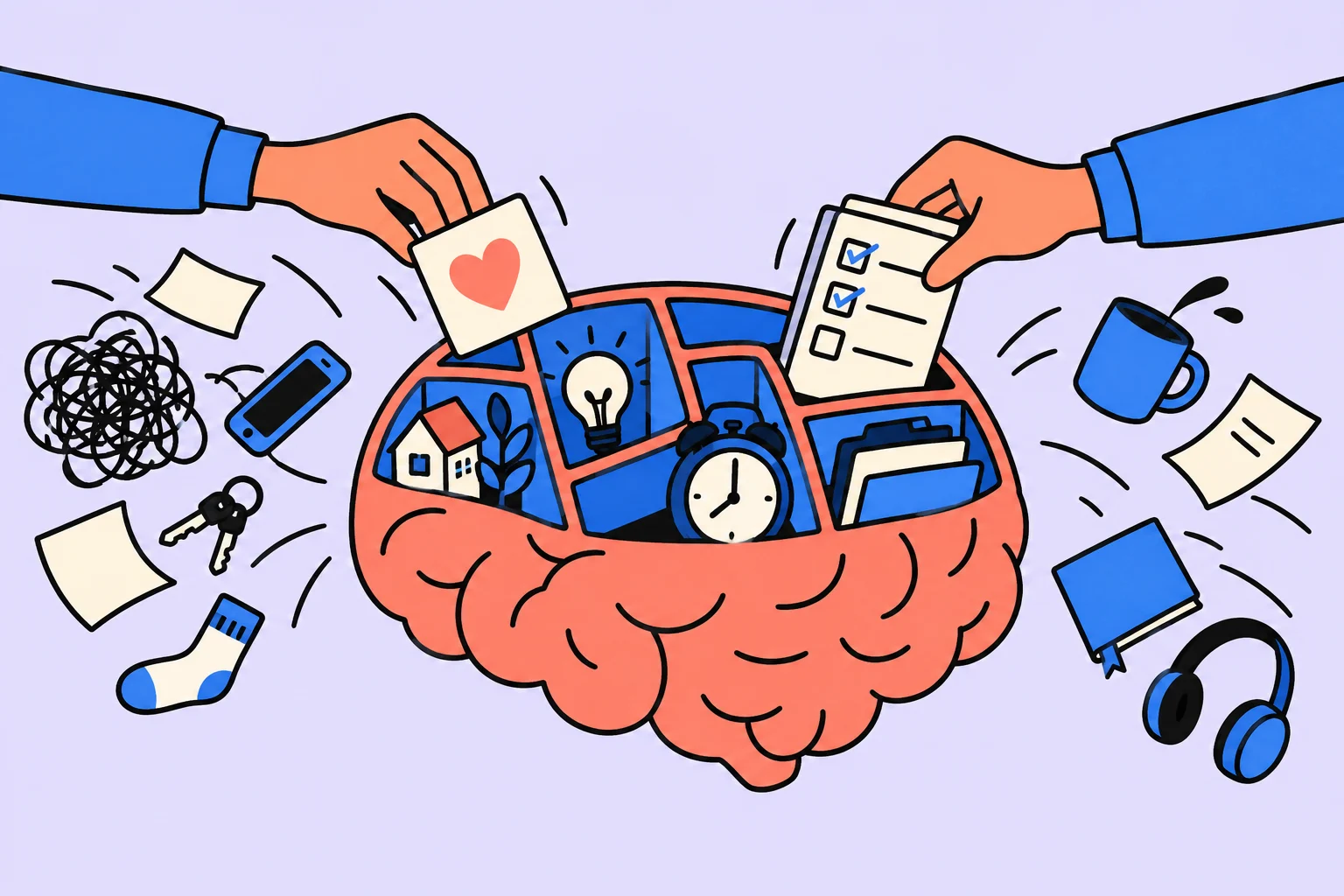
How to organize life with ADHD: a complete guide to systems and practical tips
A complete guide to organizing life with ADHD. Proven planning systems, practical tips, tools, and habits for people with attention deficit hyperactivity disorder.
Read article →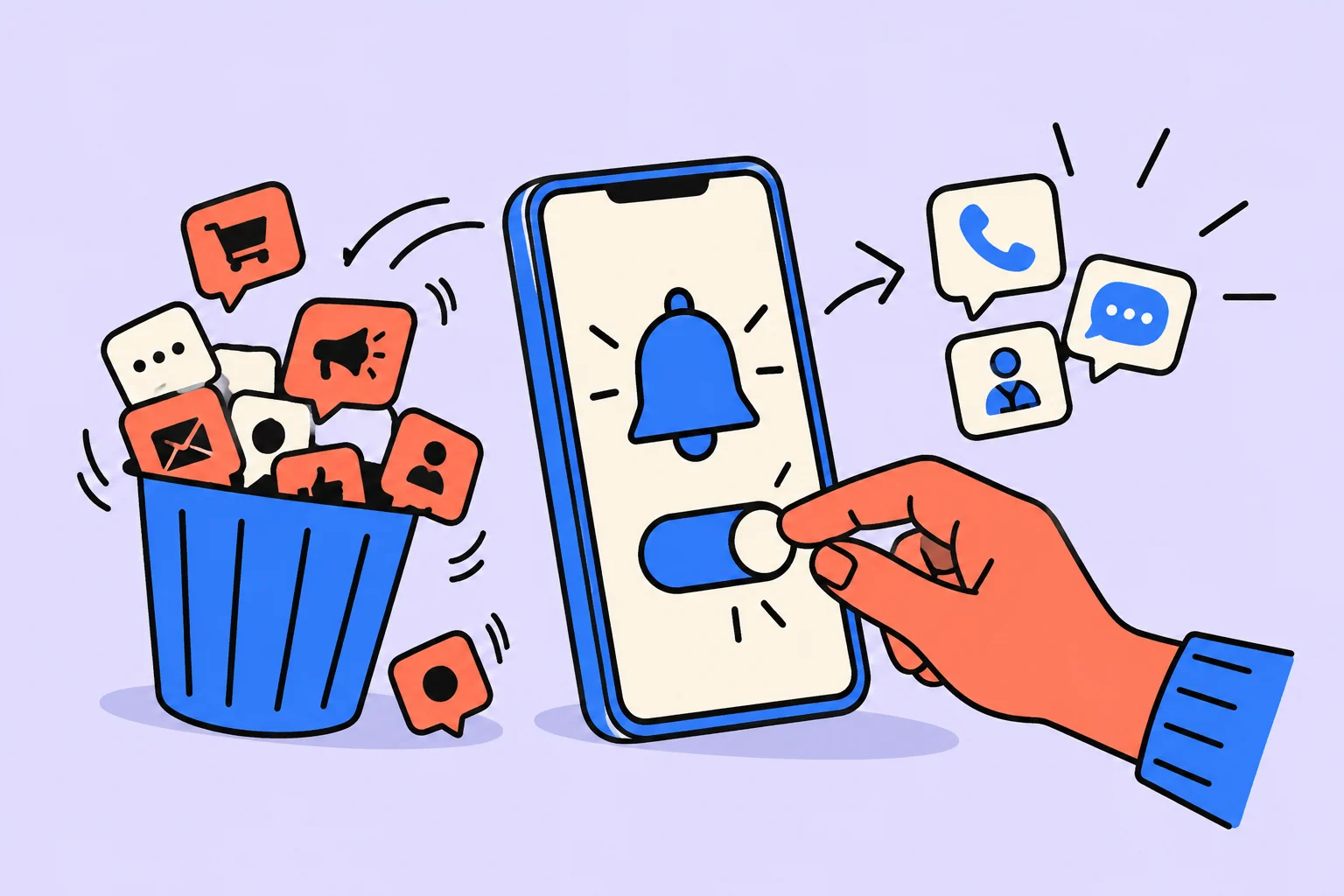
Turn off unnecessary notifications and keep the important ones
Android and iPhone notification settings: remove unnecessary signals, preserve important calls and test the resulting setup.
Read article →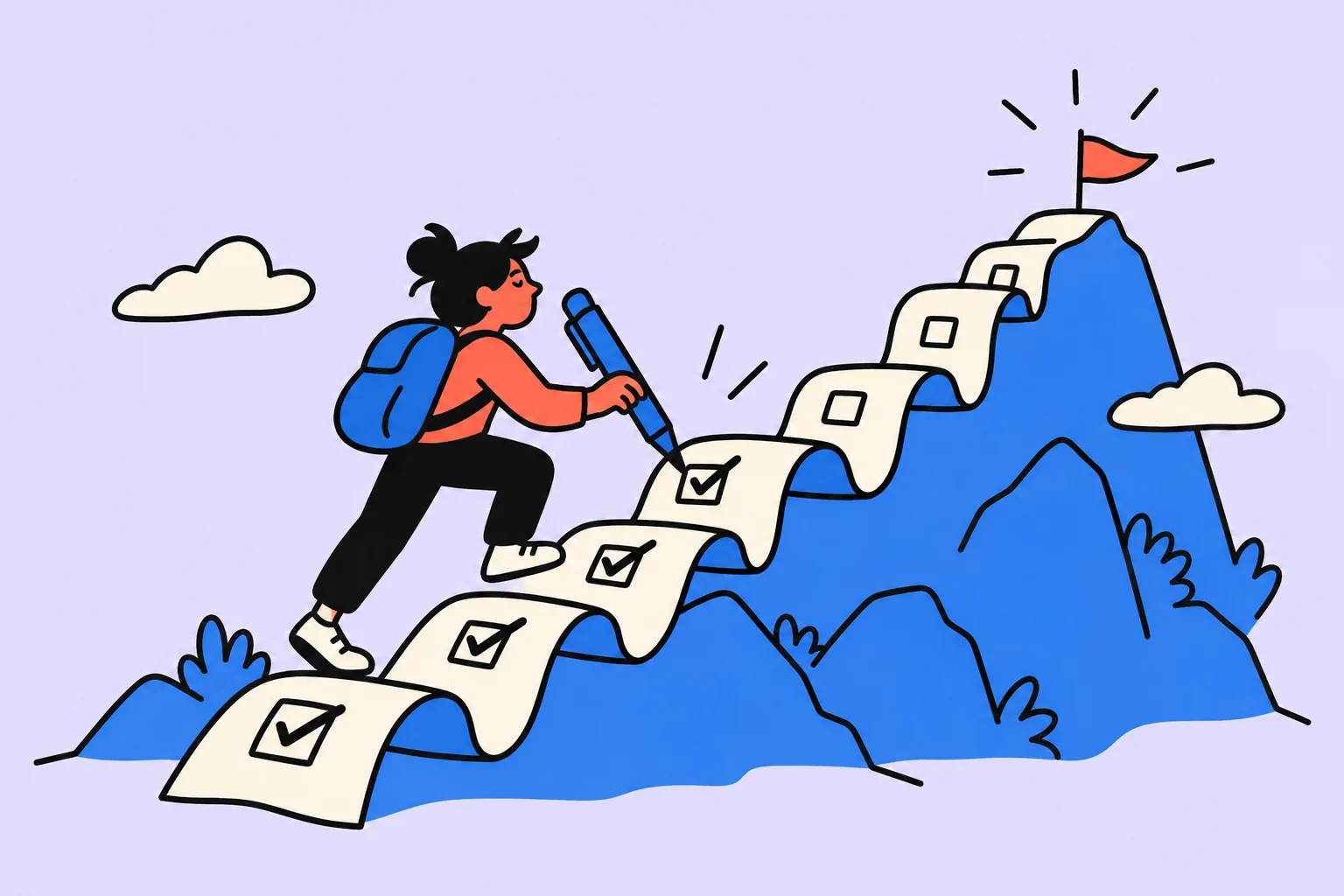
How to track progress and keep going
Why is tracking progress crucial for achieving goals? Visualization methods, habit tracking, metrics, and tools. A practical guide.
Read article →
How to Track Habits Effectively: The Complete 2026 Guide
Science-based habit tracking: habit diaries, habit journals and digital trackers. 7 methods and step-by-step instructions.
Read article →
How to stop being late: plan backward from arrival
Work backward from a meeting through arrival, travel, departure, and preparation. A worked calculation, a record of actual delays, and fallback rules.
Read article →
How to stop comparing yourself with others
The psychology of social comparison: why we compare ourselves with others, how social media intensifies it, and 10 science-based strategies for breaking free.
Read article →
How to increase productivity: 10 scientific methods that really work
10 science-backed ways to increase productivity. Planning, focus, and energy-management techniques for maximum results.
Read article →
How habits change the brain: habit neuroscience in simple terms
What happens in the brain when we form habits? The basal ganglia, myelination, dopamine, and the habit loop: neuroscience explained accessibly.
Read article →
How to Work from Home Effectively: A Complete Guide
A complete remote-work guide: workspace setup, routines, boundaries, focus, tools, health and a weekly plan for productive remote work.
Read article →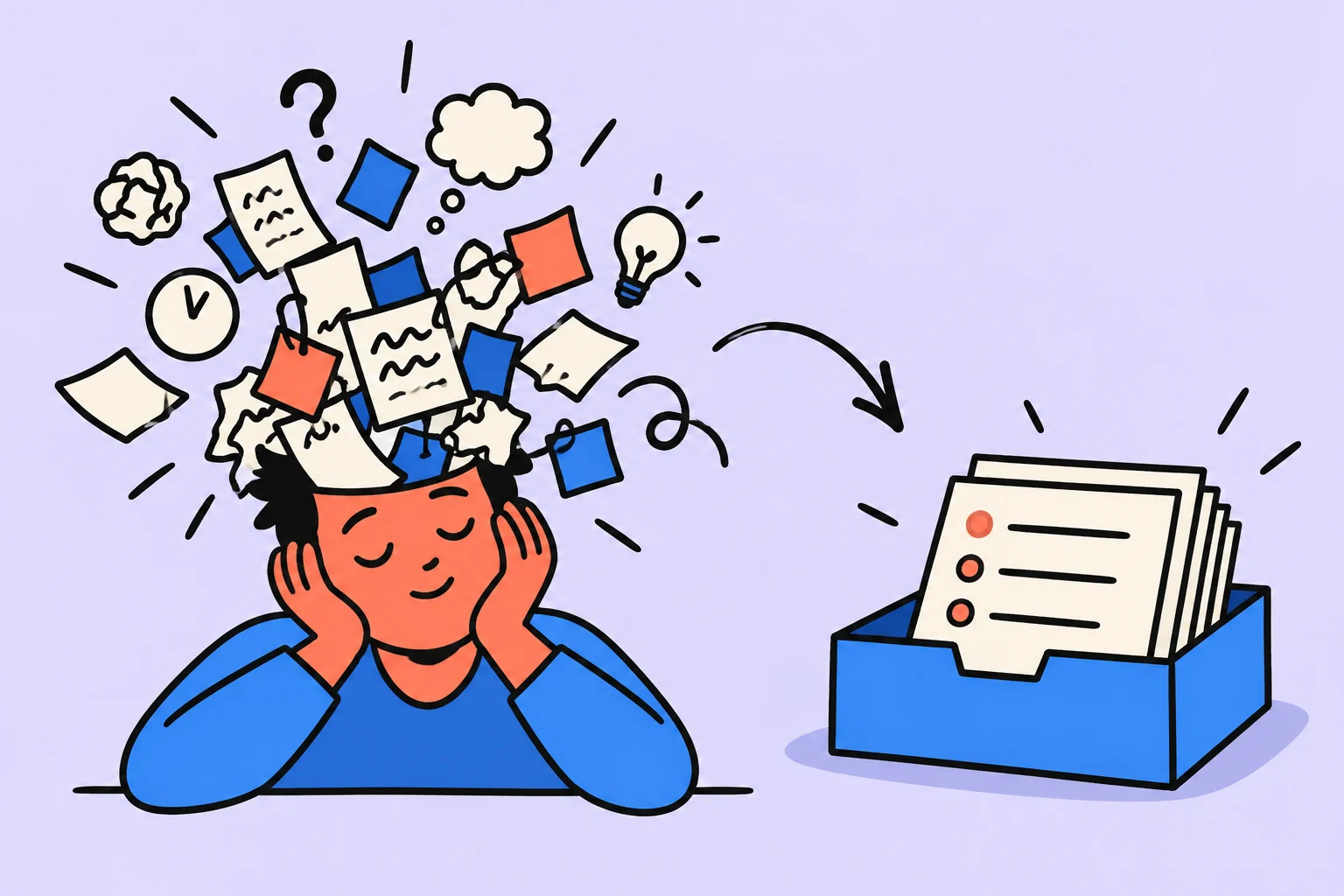
How to clear your head: capture tasks and unfinished decisions
Sort what you are trying to remember: actions, questions, waiting, and ideas. An example of turning rough notes into a short list of next steps.
Read article →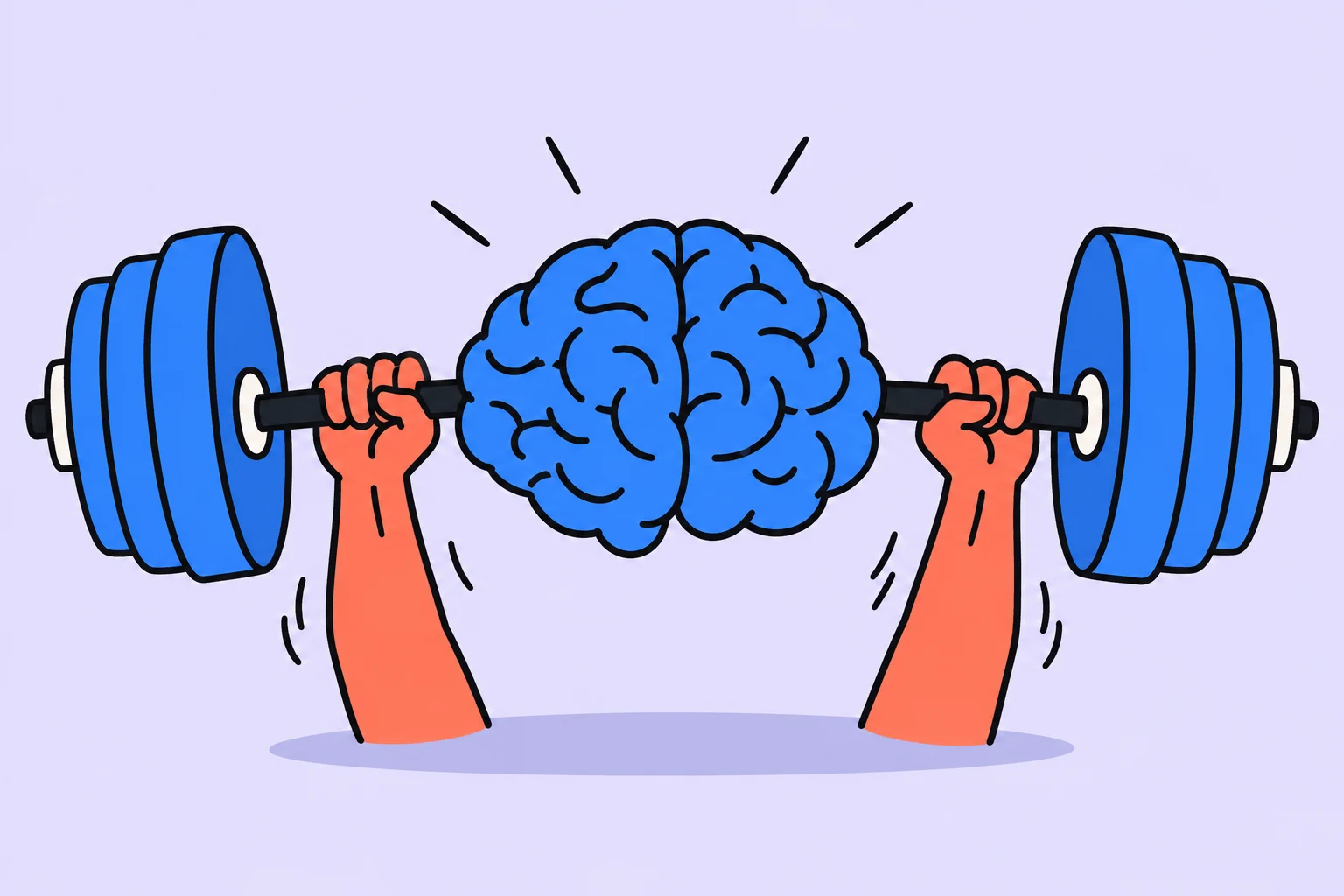
How to develop willpower: 10 scientific methods and exercises
Scientific methods for developing willpower: Baumeister's research, self-control strategies, and links between habits and discipline. Practical exercises and tools.
Read article →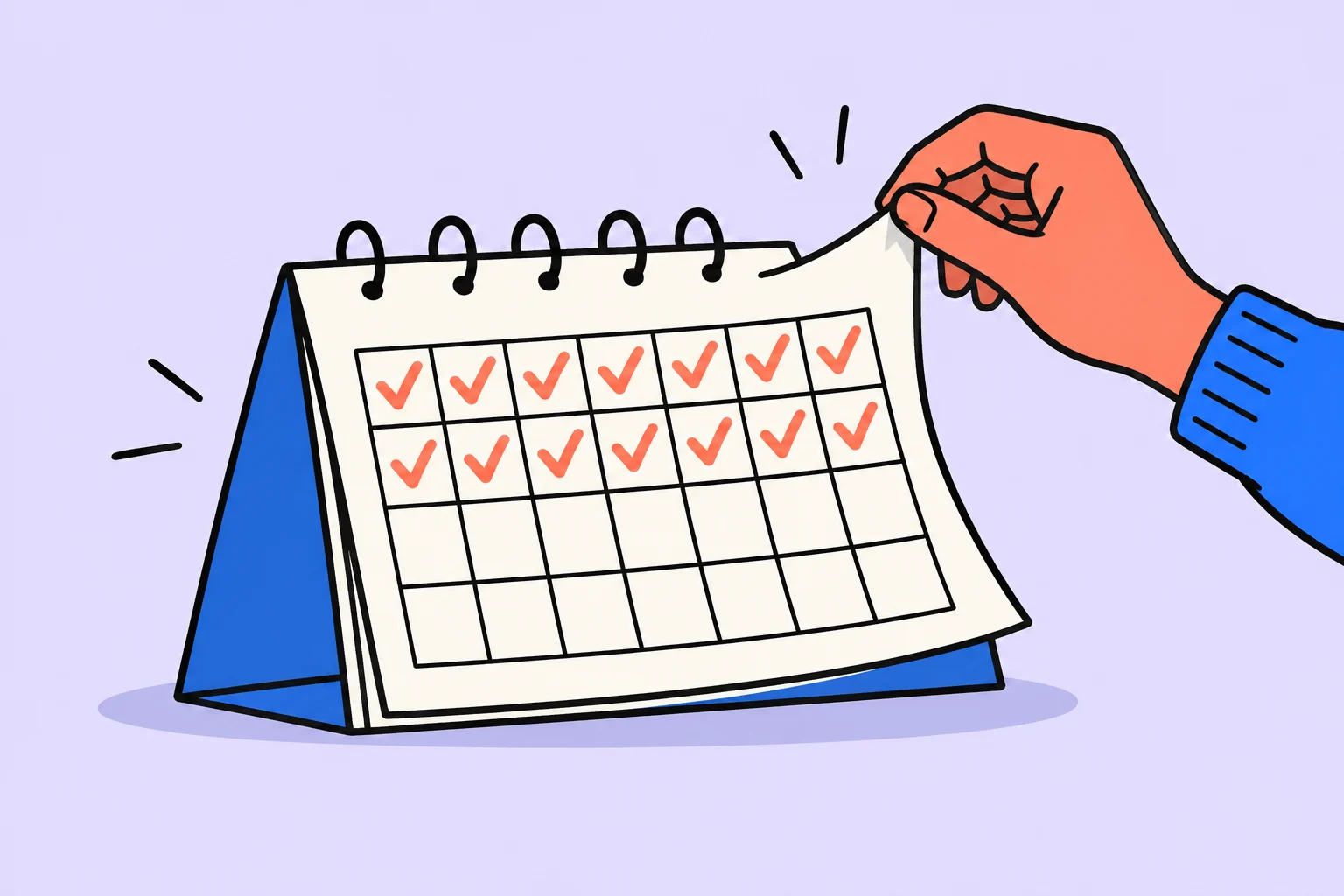
A Habit in 21 Days: What the Research Says and How to Start
Why 21 days does not guarantee a habit. The limits of Lally's research, a practical plan and a completed example for tracking actions and missed attempts.
Read article →
How to Change Careers in 2026
A complete guide to changing careers: how to recognize when it is time, plan your transition, choose training, and build a financial cushion. Practical advice, in-demand professions, and a step-by-step plan for 2026.
Read article →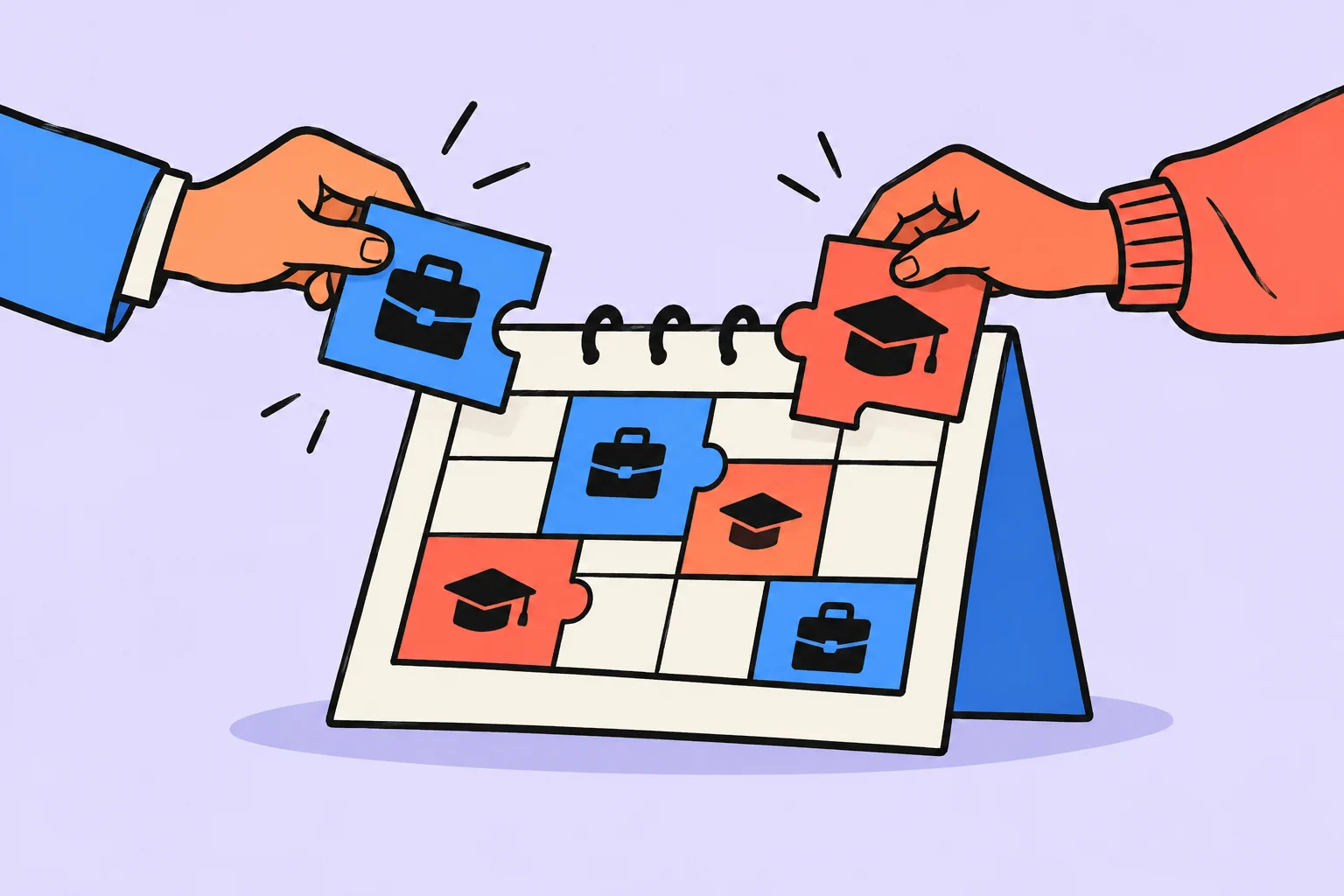
How to combine work and study without two full schedules
Bring work and study into one calendar, find deadline conflicts, and agree on the workload before free time runs out.
Read article →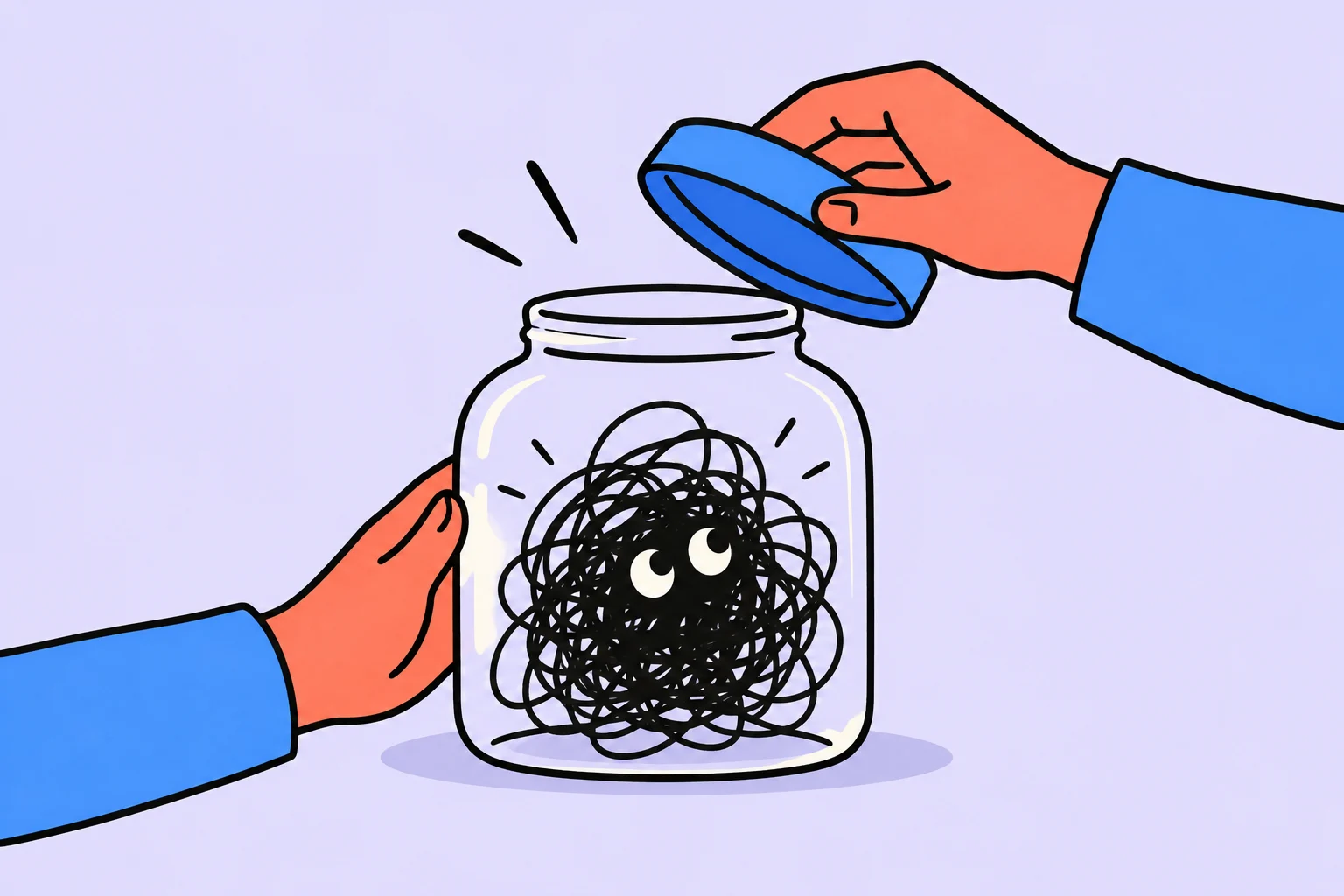
How to manage anxiety: 10 science-based methods for relief
Practical methods for tackling anxiety: cognitive techniques, breathing practices, and habits for reducing anxiety. A scientific approach and AI support from Sinqly.
Read article →
How to set goals that turn into actions
From a desired change to the first step: outcome criteria, constraints, actions, and review. A worked professional-goal example.
Read article →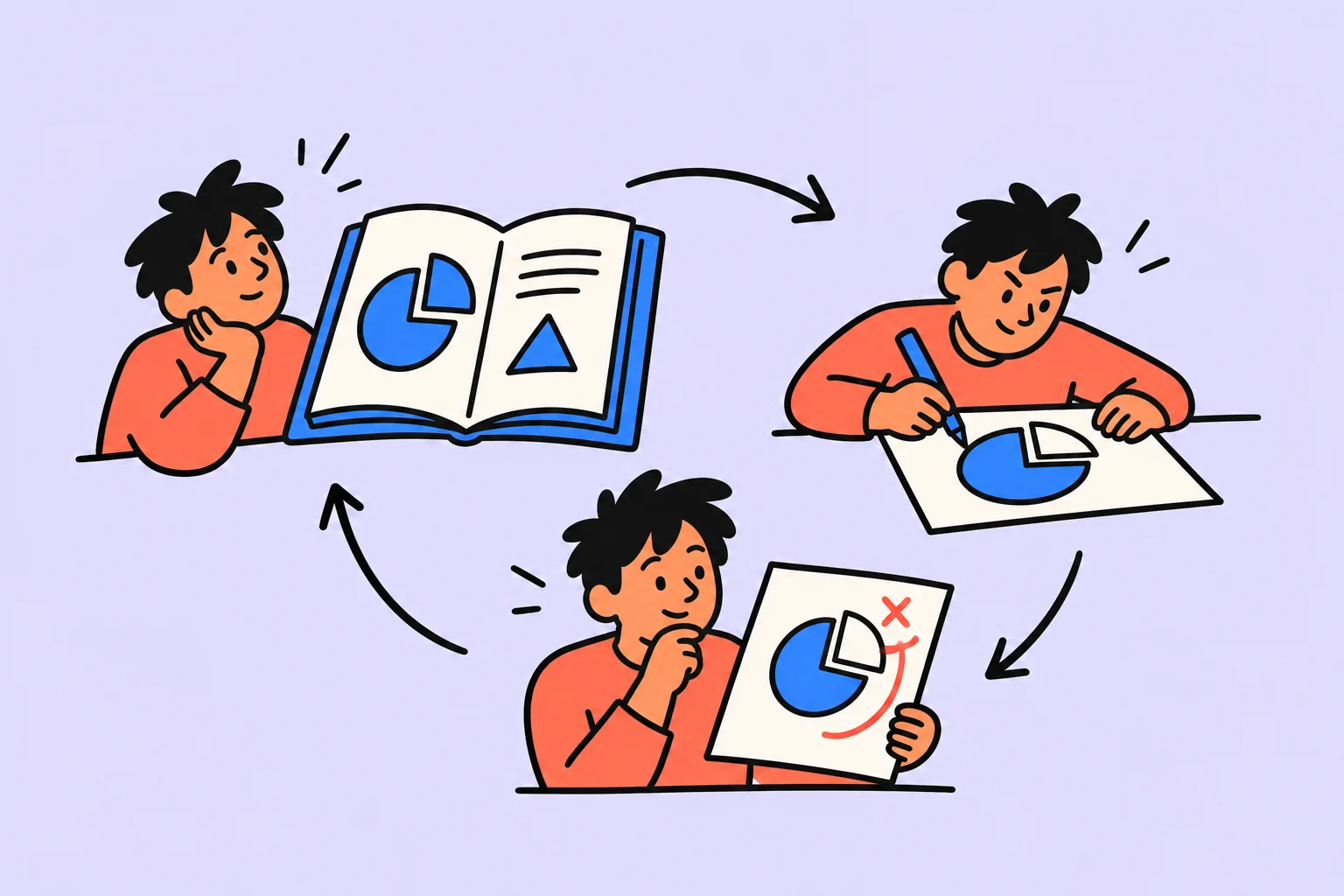
How to learn effectively: recall, apply and return to the material
Move from a familiar lesson to an independent skill through attempts, error checks and returning later. A chart-learning example.
Read article →
How to improve your relationship: 10 habits for couples
Discover 10 science-based habits for improving relationships: communication, quality time, gratitude, shared goals, and other practices for strong couples.
Read article →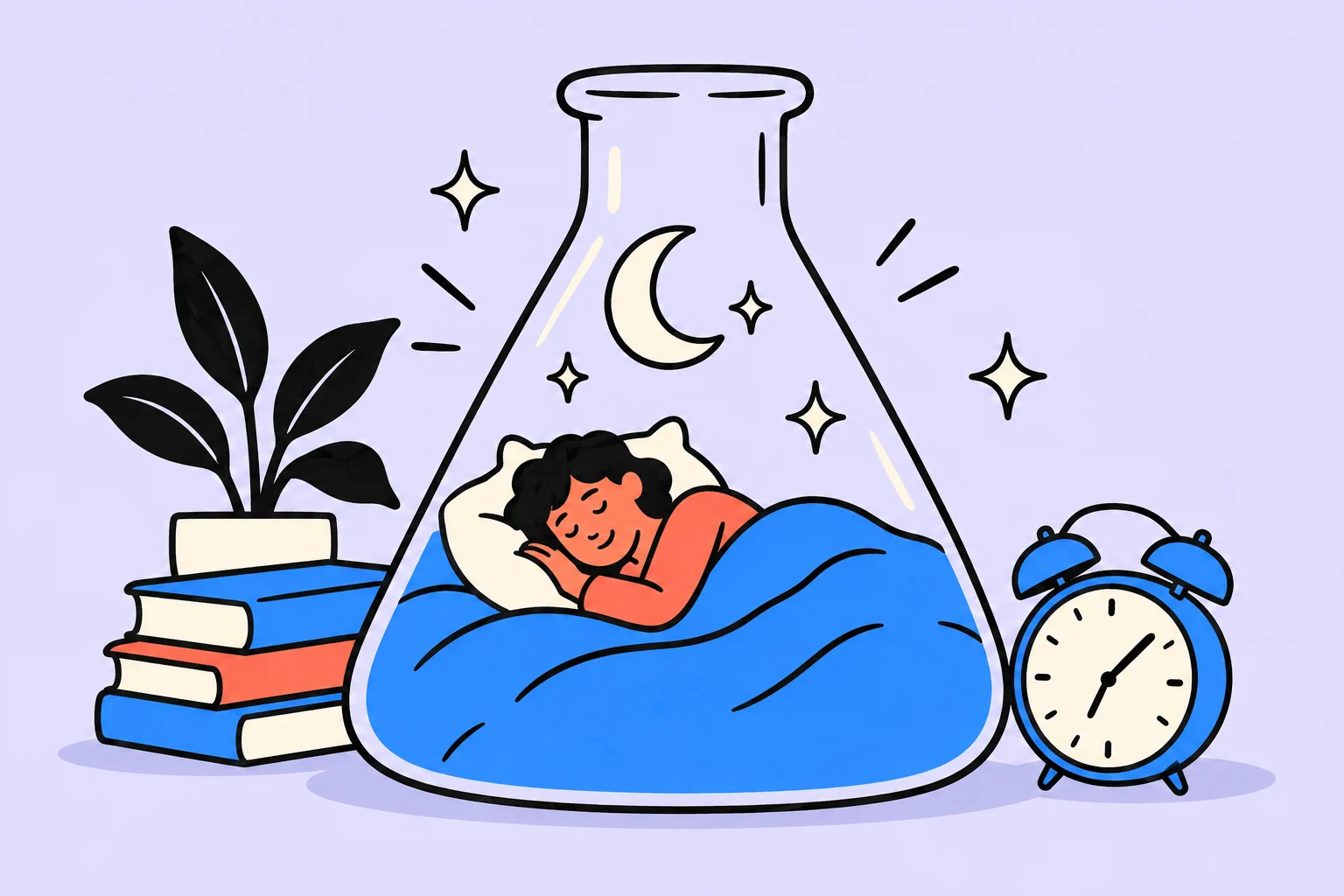
How to improve sleep quality: a scientific approach
Science-based ways to improve sleep quality: chronobiology, sleep hygiene, evening rituals, sleep tracking, and habits for healthy rest. A practical guide from Sinqly.
Read article →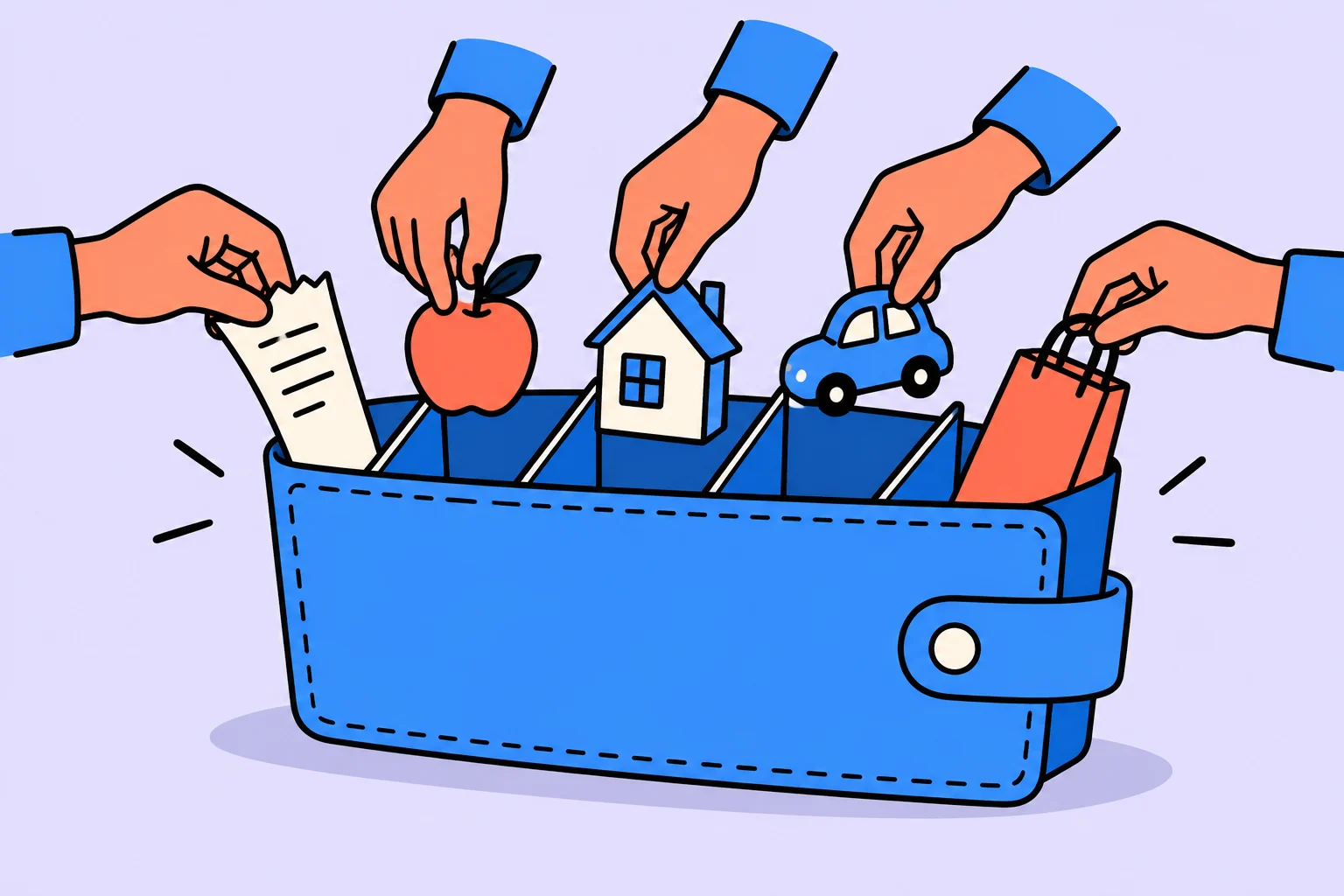
How to budget simply: 5 methods for everyone
Discover 5 proven methods for managing a personal budget: the 50/30/20 rule, the envelope system, zero-based budgeting, automation, and Sinqly's AI assistant. A step-by-step guide.
Read article →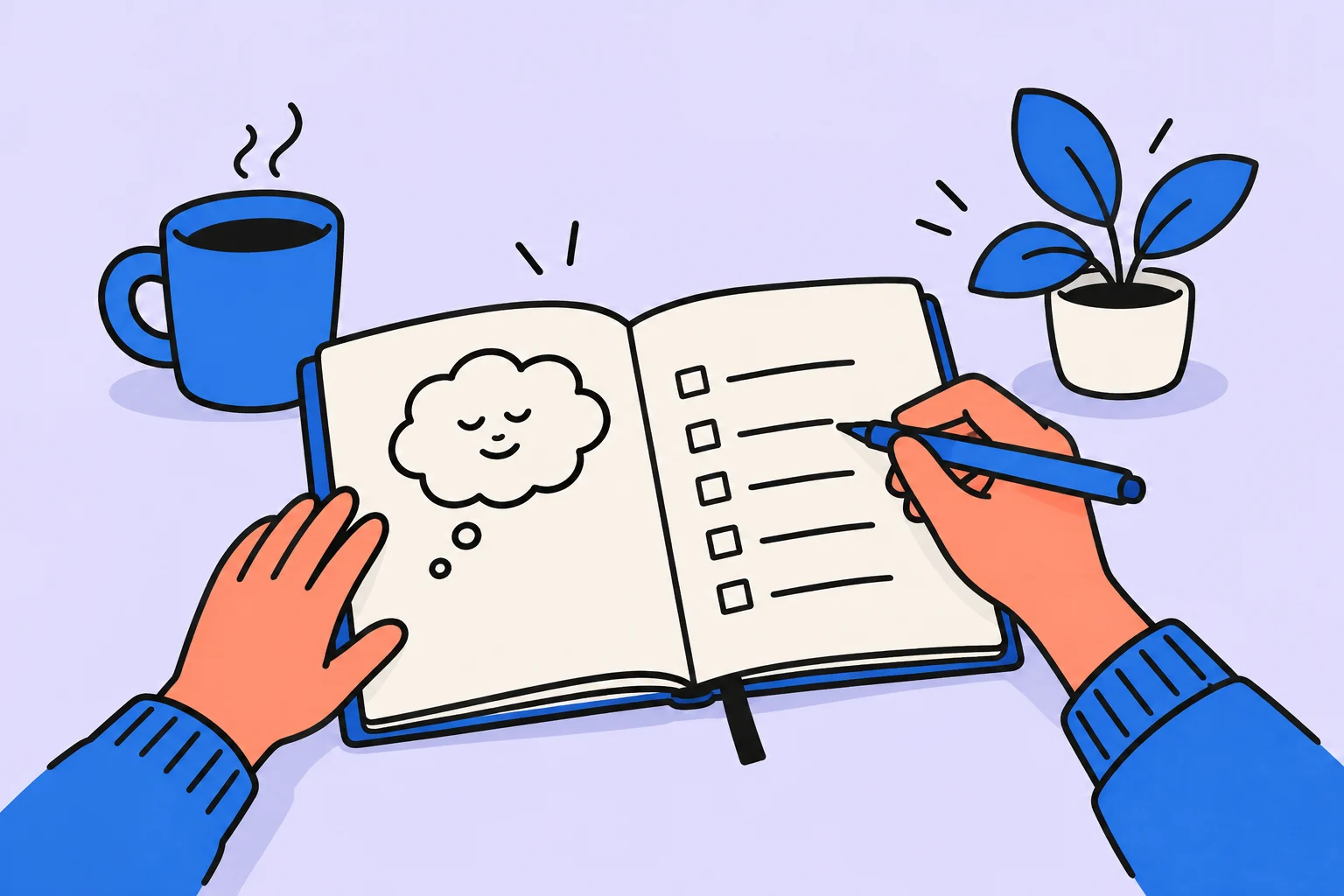
How to keep a reflection journal: a template, example, and weekly check
What to write in a reflection journal: a daily template, a completed example, and a weekly check of your chosen action. No promises of universal benefits.
Read article →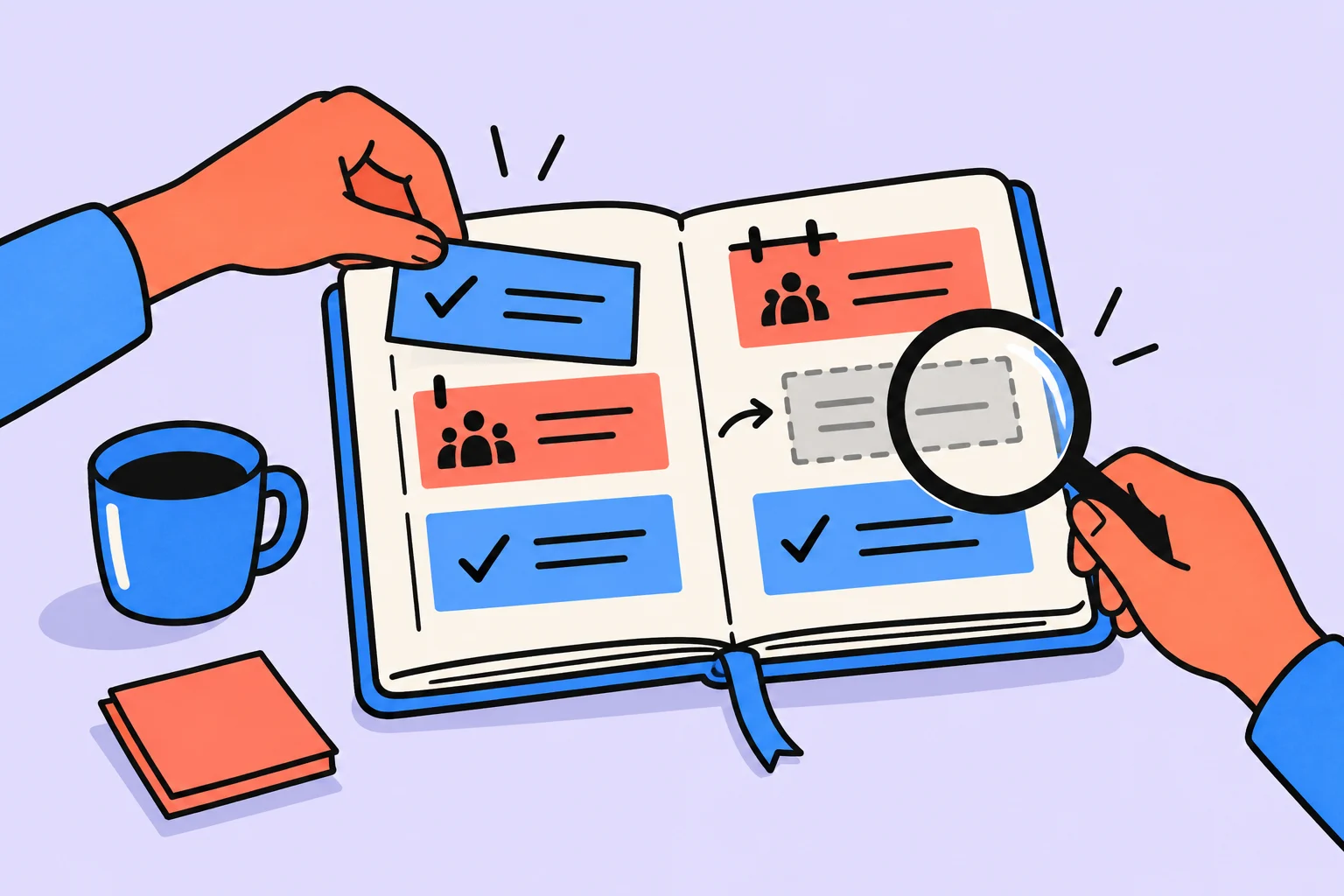
How to use a planner: tasks, appointments, and a short review
Set up a planner without elaborate decoration: distinguish appointments and tasks, mark rescheduling, and review open notes weekly. A practical example.
Read article →
How to recover after a demanding week
A practical plan for ordinary rest: remove unnecessary demands, simplify household work, leave free time, and check what needs reviewing.
Read article →
How to enter flow: prepare the task, challenge, and feedback
Conditions for focused work without promising a special state. Set up one session with a clear result, manageable challenge, and checks along the way.
Read article →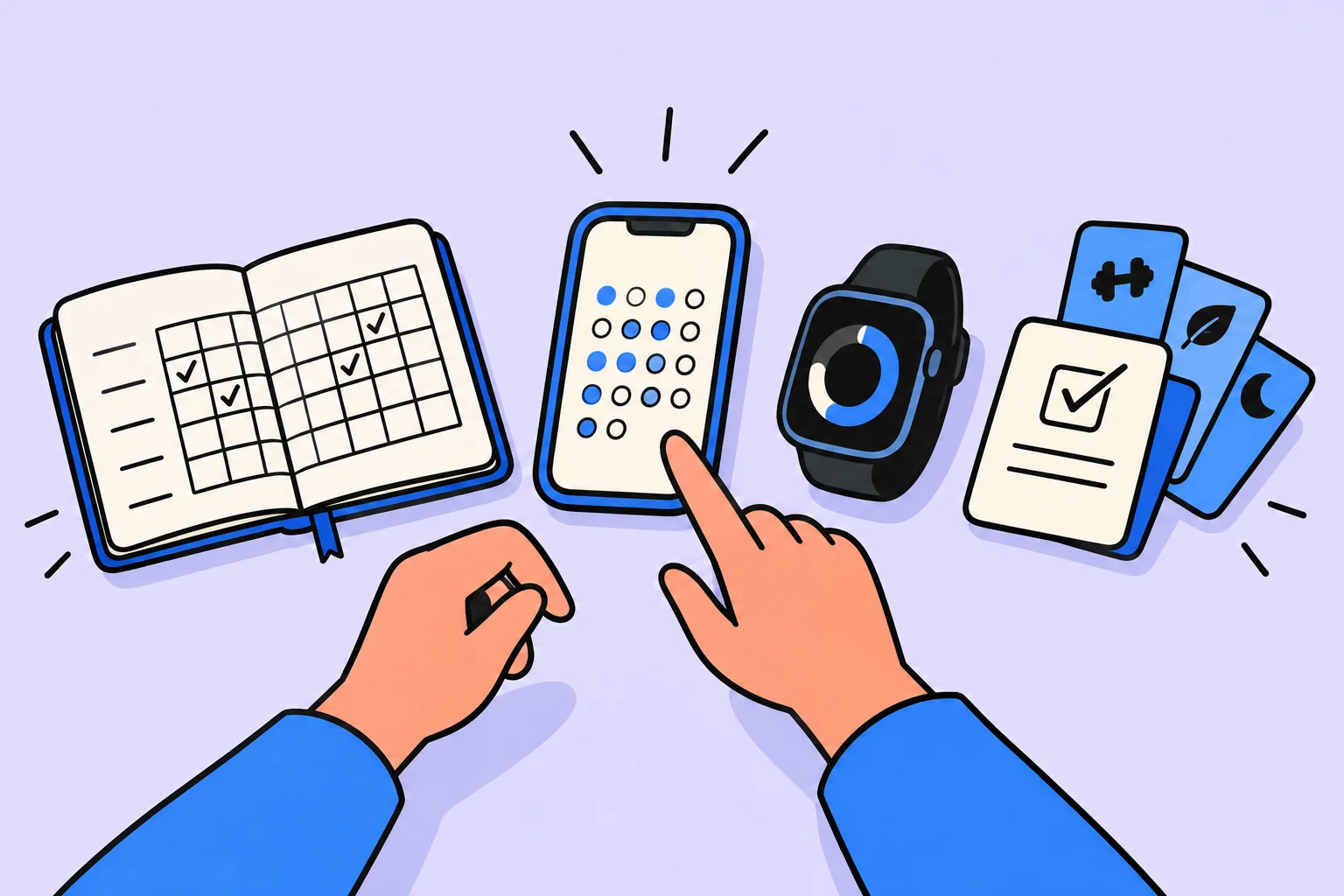
How to choose a habit tracker: criteria and tracker comparisons for 2026
Which habit tracker should you choose? A detailed comparison of trackers, evaluation criteria, common mistakes, and recommendations for different needs.
Read article →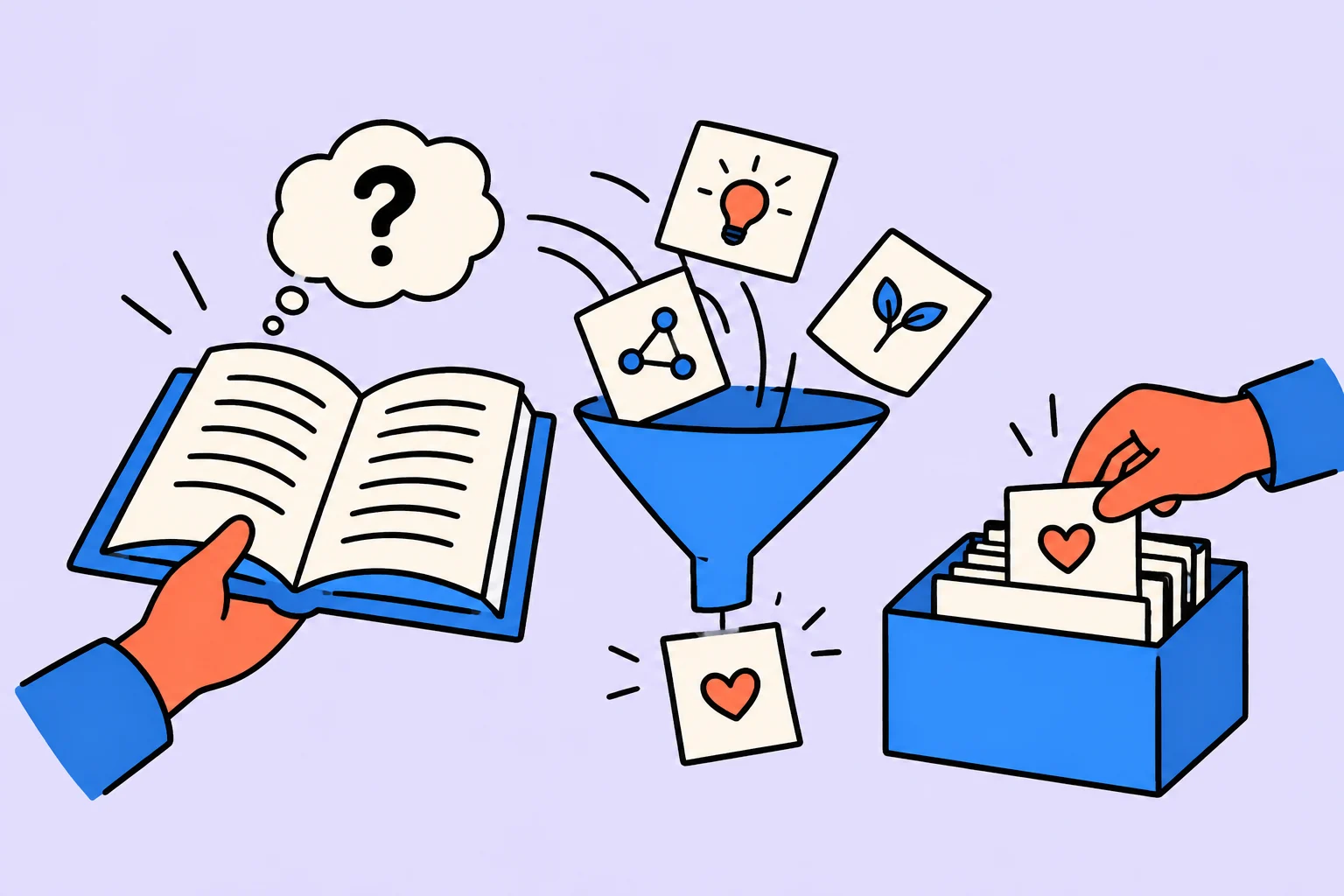
How to remember what you read: check understanding and return to ideas
Understand and remember reading through a question beforehand, an explanation without the text and your own example. A completed note for applying an idea.
Read article →
How to get yourself working when starting is difficult
Distinguish low energy, an unclear task, and resistance to starting. Choose a manageable first step, a short trial, and an honest decision about the remaining load.
Read article →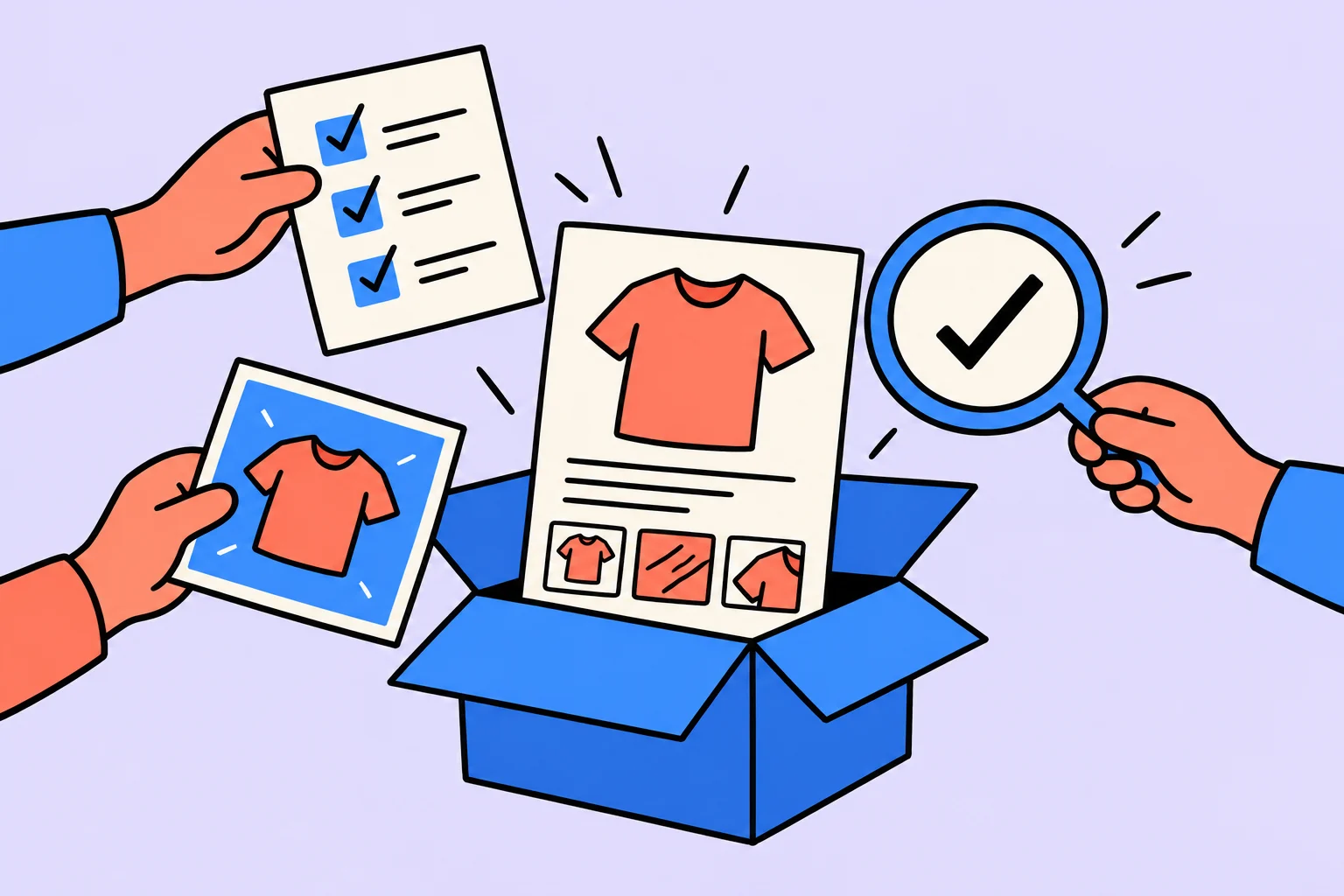
An AI-assisted product listing: description, images and property checks
Build a product listing from confirmed specifications: a full brief, sample description and image plan without invented properties or promises.
Read article →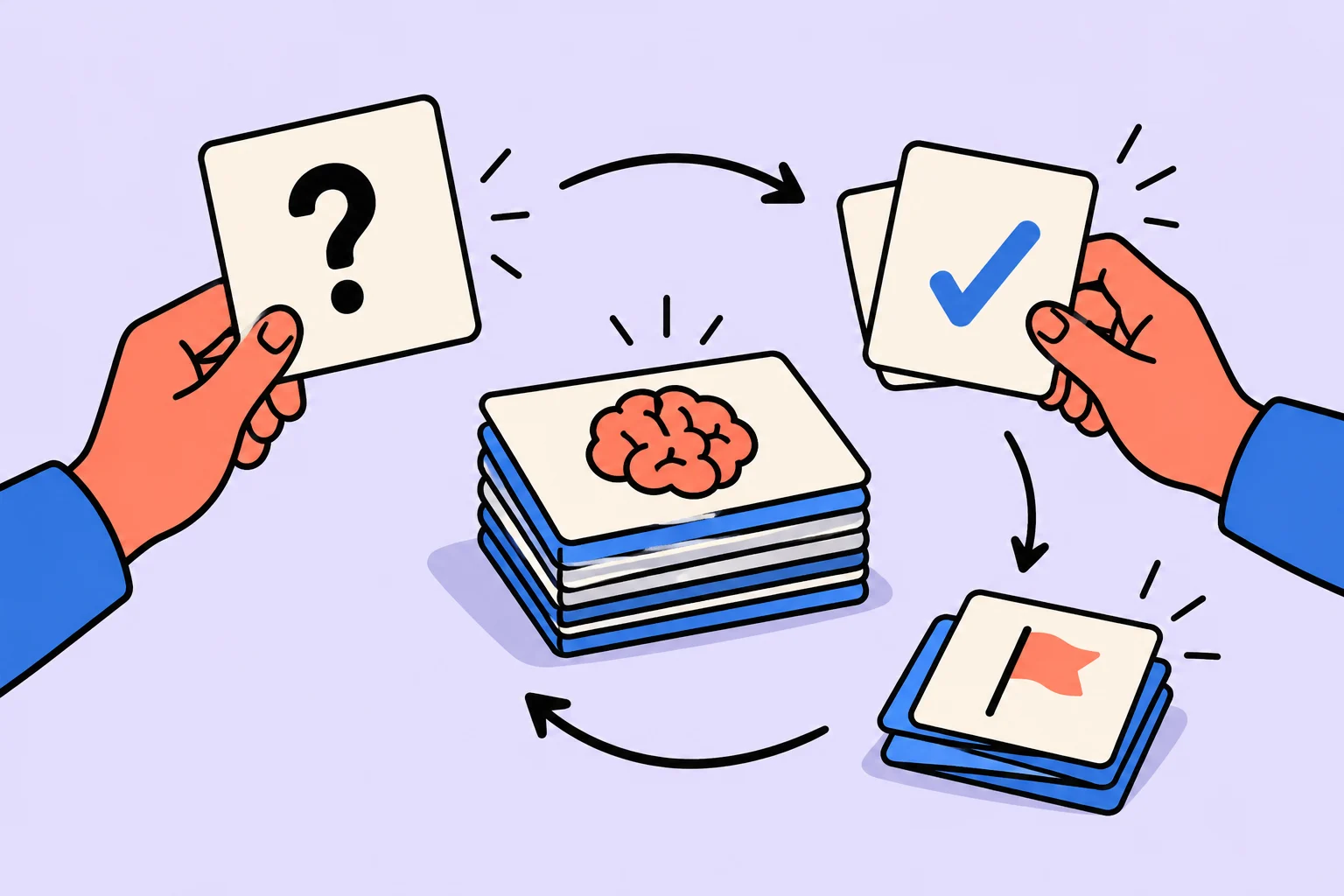
Flashcards: questions, answers and checking memory
Write memory questions, check answers and return to difficult cards. Examples covering definitions, distinctions and applications.
Read article →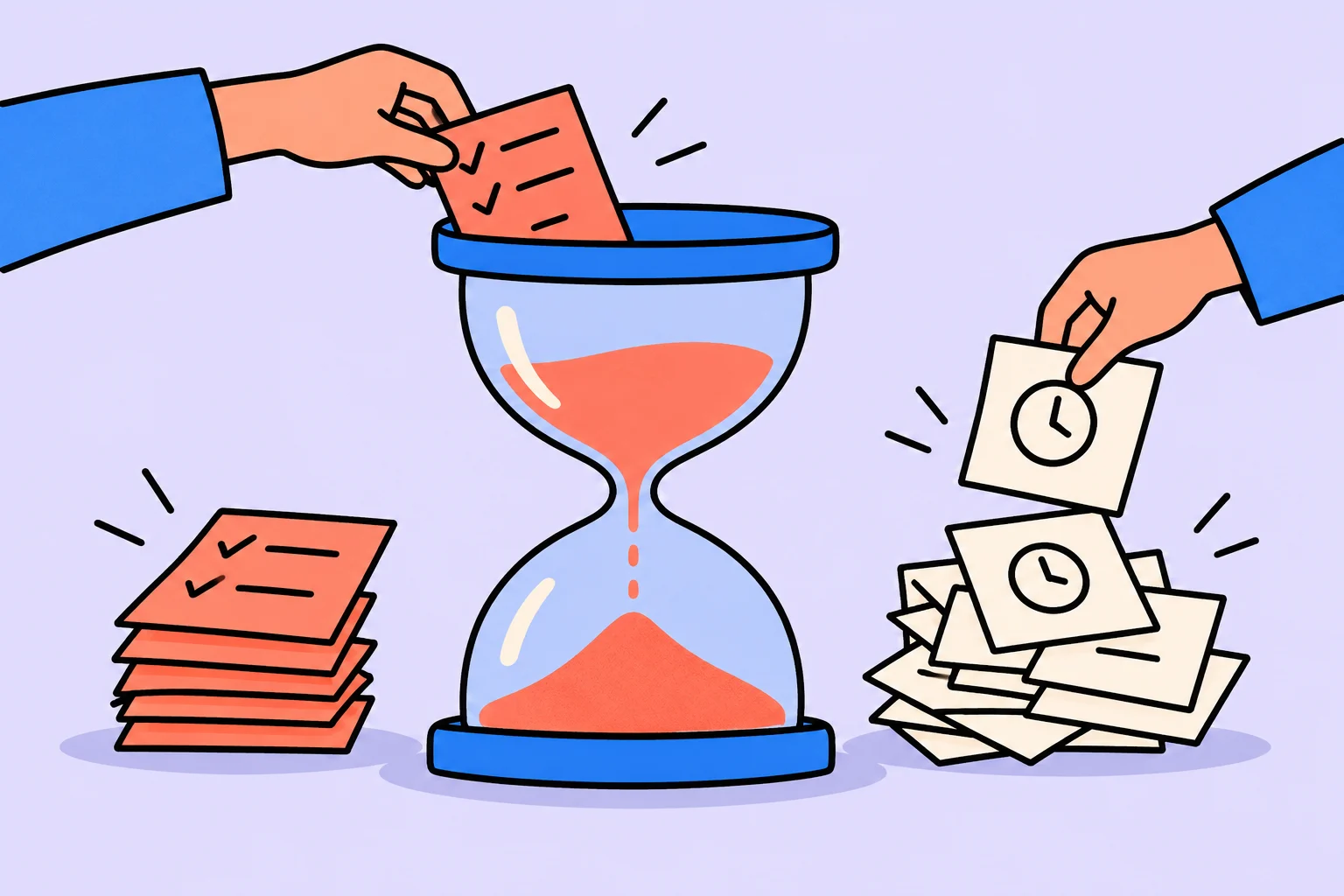
Time tracking: a short record for one decision
Keep a short time record to support a specific decision. A business proposal example distinguishes active work from waiting.
Read article →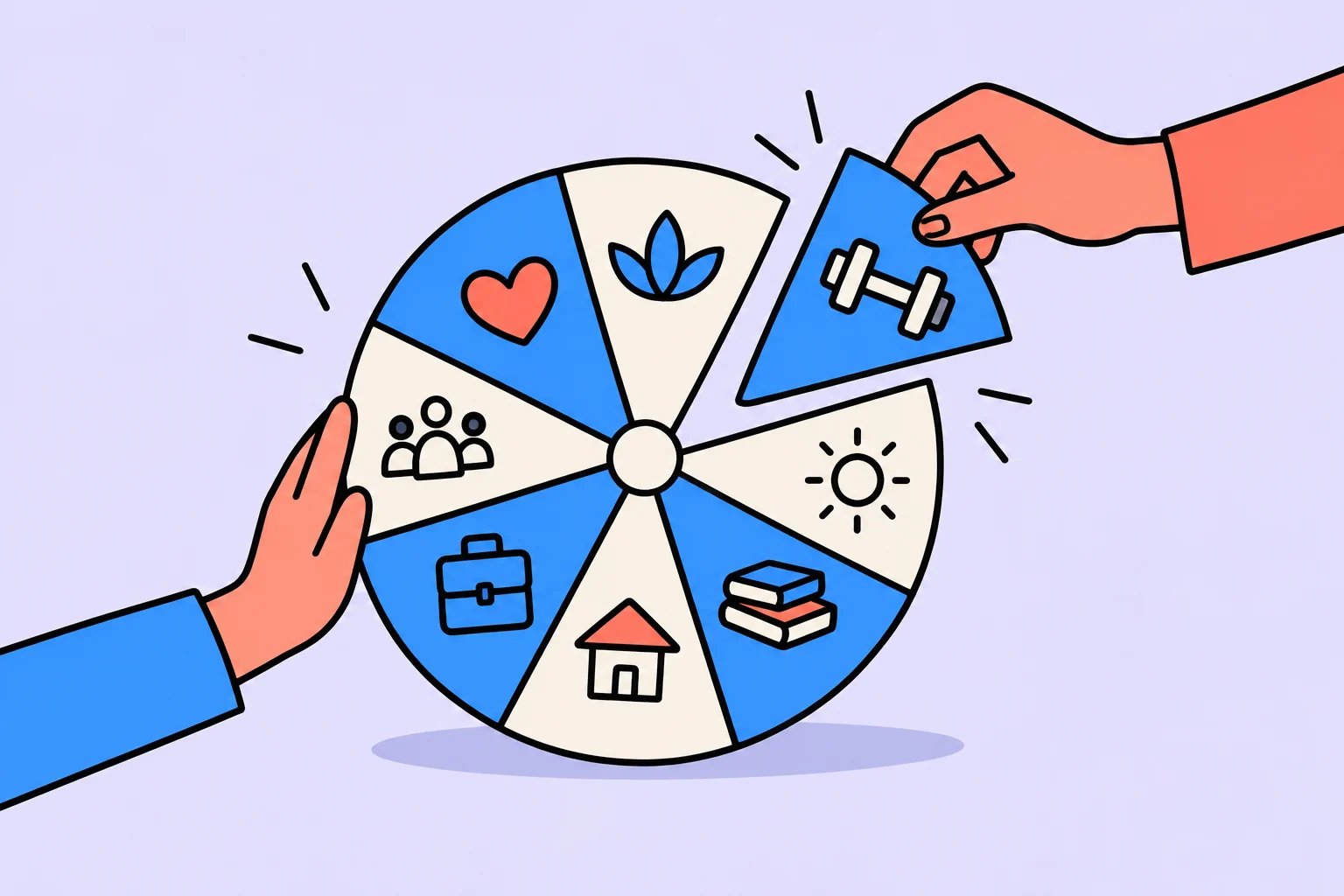
The Wheel of Life: What It Is, How to Complete It and How to Use It
A complete Wheel of Life guide. 8 areas, step-by-step instructions, life-area ratings, interpreting results and a free online assessment.
Read article →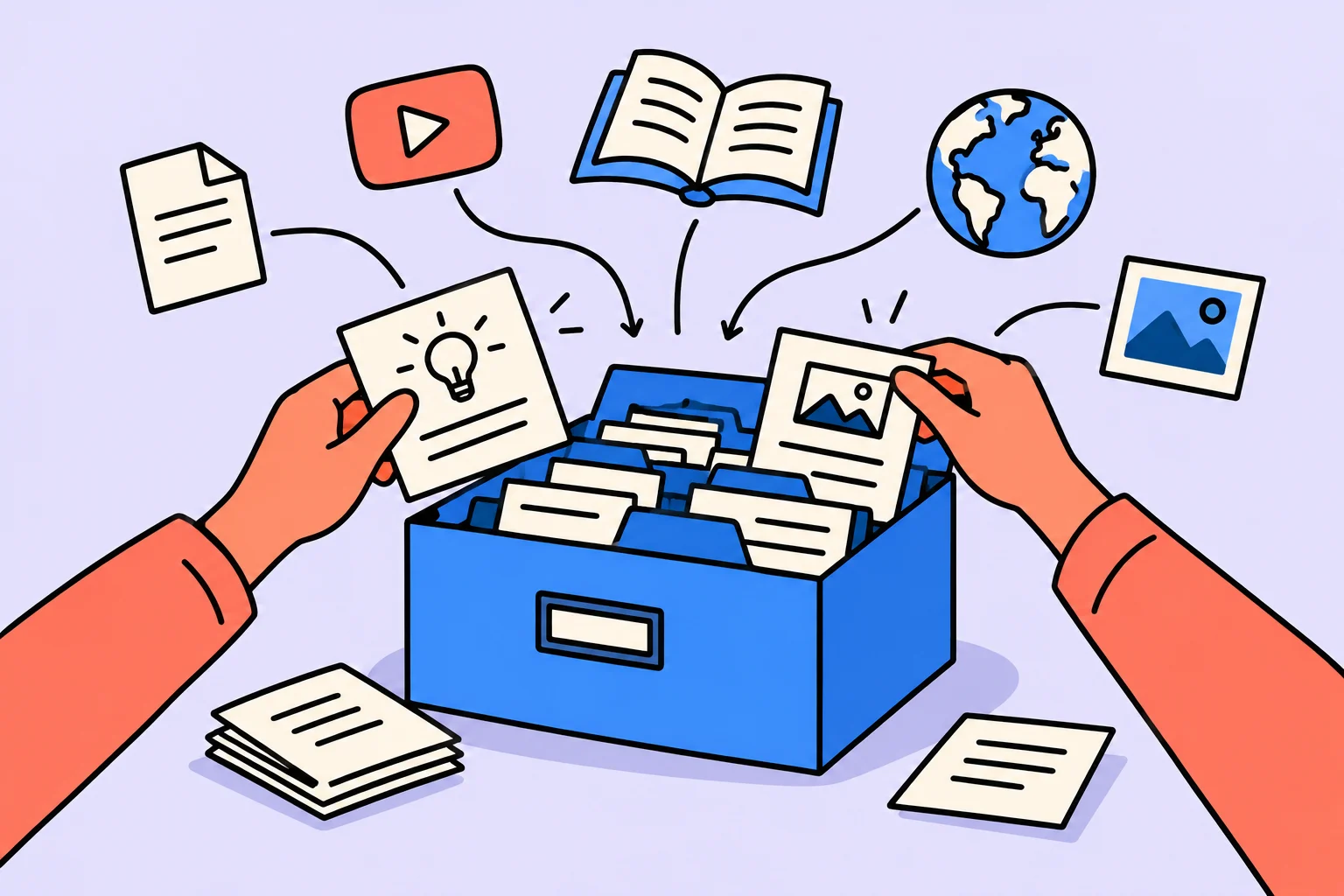
A personal knowledge base: save information so you can use it later
What to save in a personal knowledge base, how to name a note and connect it to its source. A completed note structure for a work project.
Read article →
Personal OKRs: setting and achieving goals with Google's method
Apply OKRs to personal goals: step-by-step instructions, 20+ examples, templates, and progress-tracking tools.
Read article →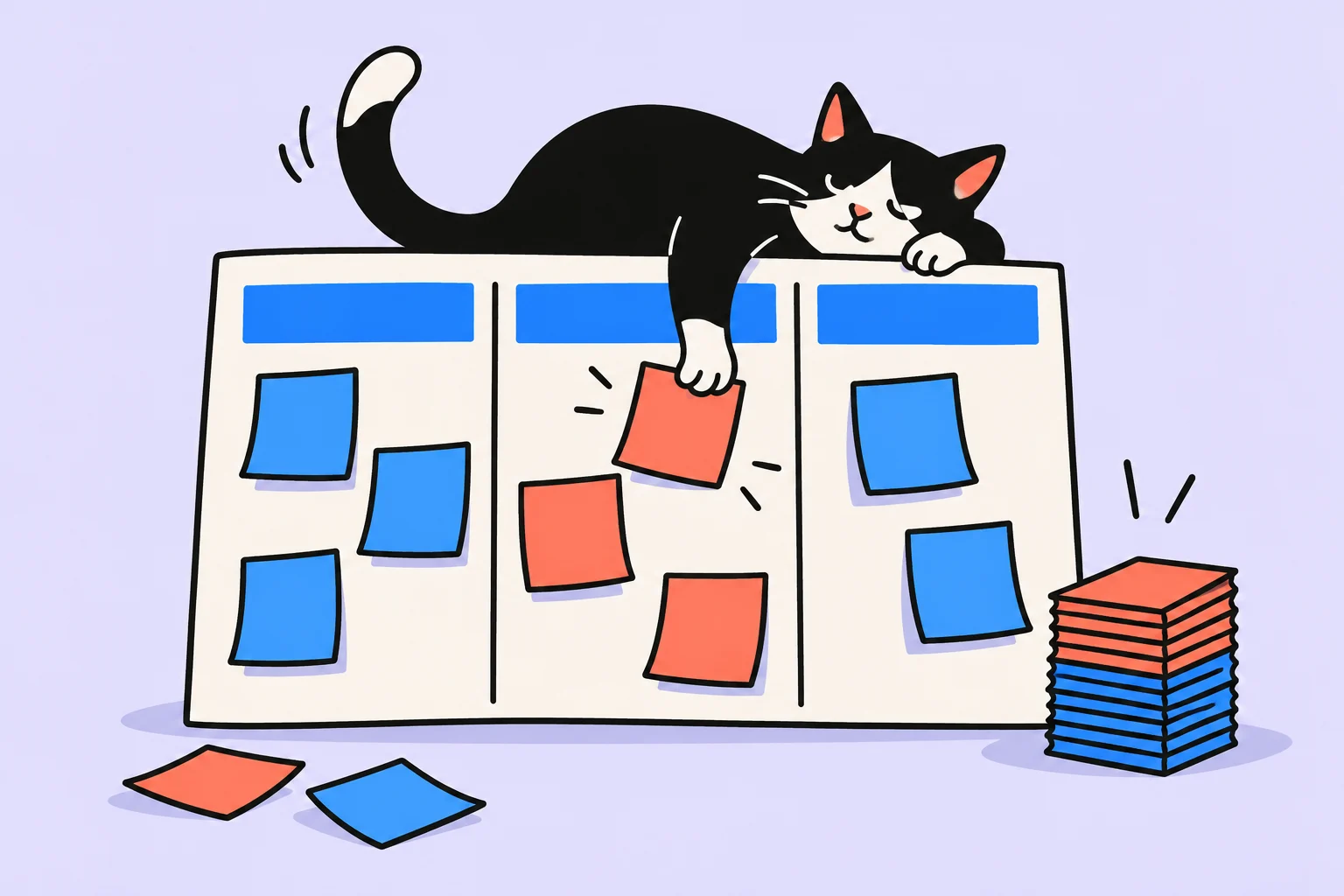
Personal Kanban: limit unfinished work
Three columns, clear completion boundaries, and a work-in-progress limit: set up a personal board on paper or in a familiar tool.
Read article →
The best apps for people with ADHD in 2026
The best ADHD apps: task managers, habit trackers, and focus timers. A detailed review of 12 tools for people with ADHD.
Read article →
Best Telegram Bots of 2026: Useful Bots for Productivity
A review of the best Telegram productivity bots in 2026: habit trackers, Pomodoro timers, task planners and AI coaches. A ranking of useful Telegram bots.
Read article →
Important and urgent: the Eisenhower matrix with real tasks
Define importance and urgency, fill four quadrants, and choose an action. A worked task review without automatic deletion or delegation.
Read article →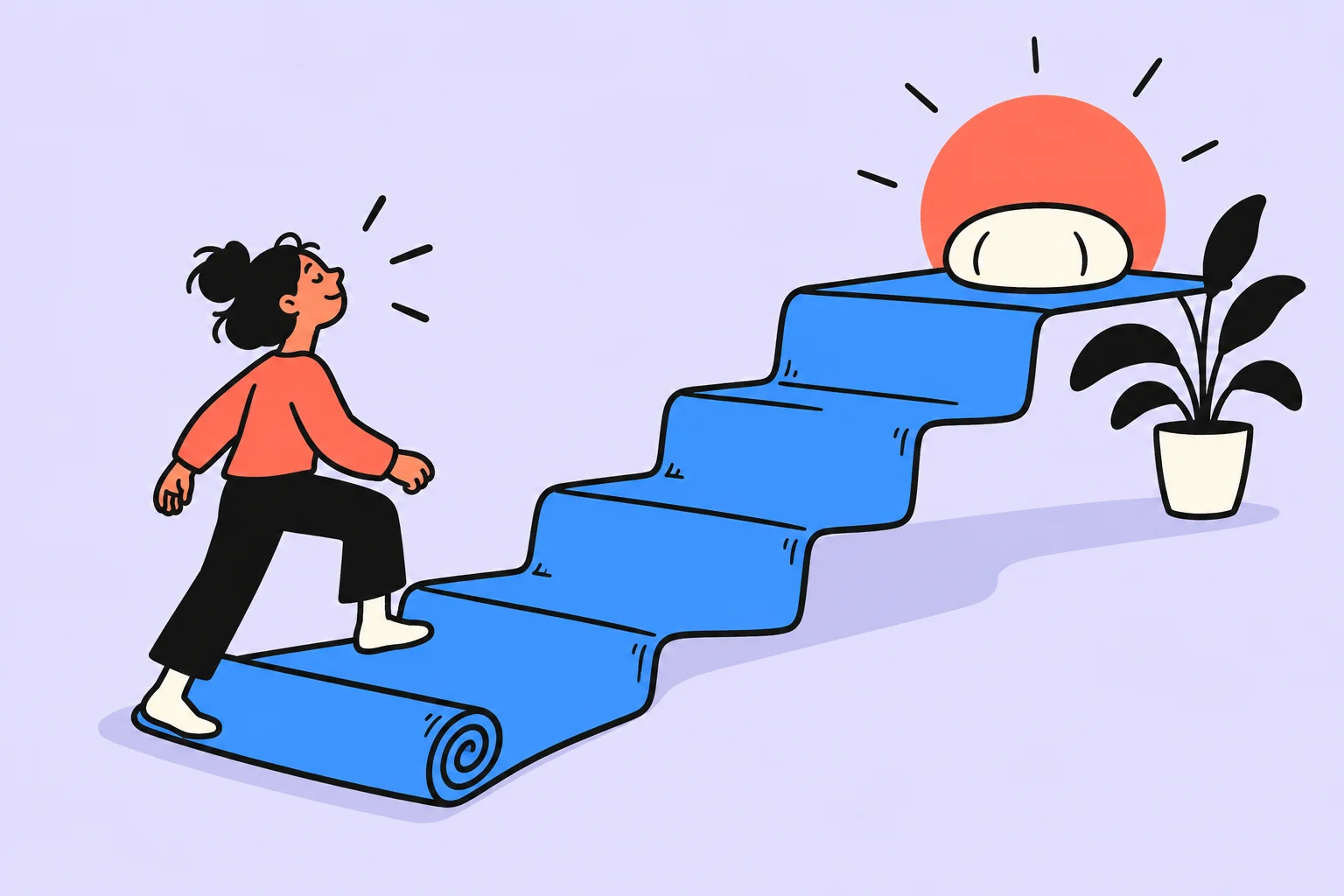
Meditation for beginners: a complete step-by-step guide
How to start meditating from scratch: step-by-step instructions, meditation types, scientific evidence, and beginner mistakes. Mindfulness practices for every day.
Read article →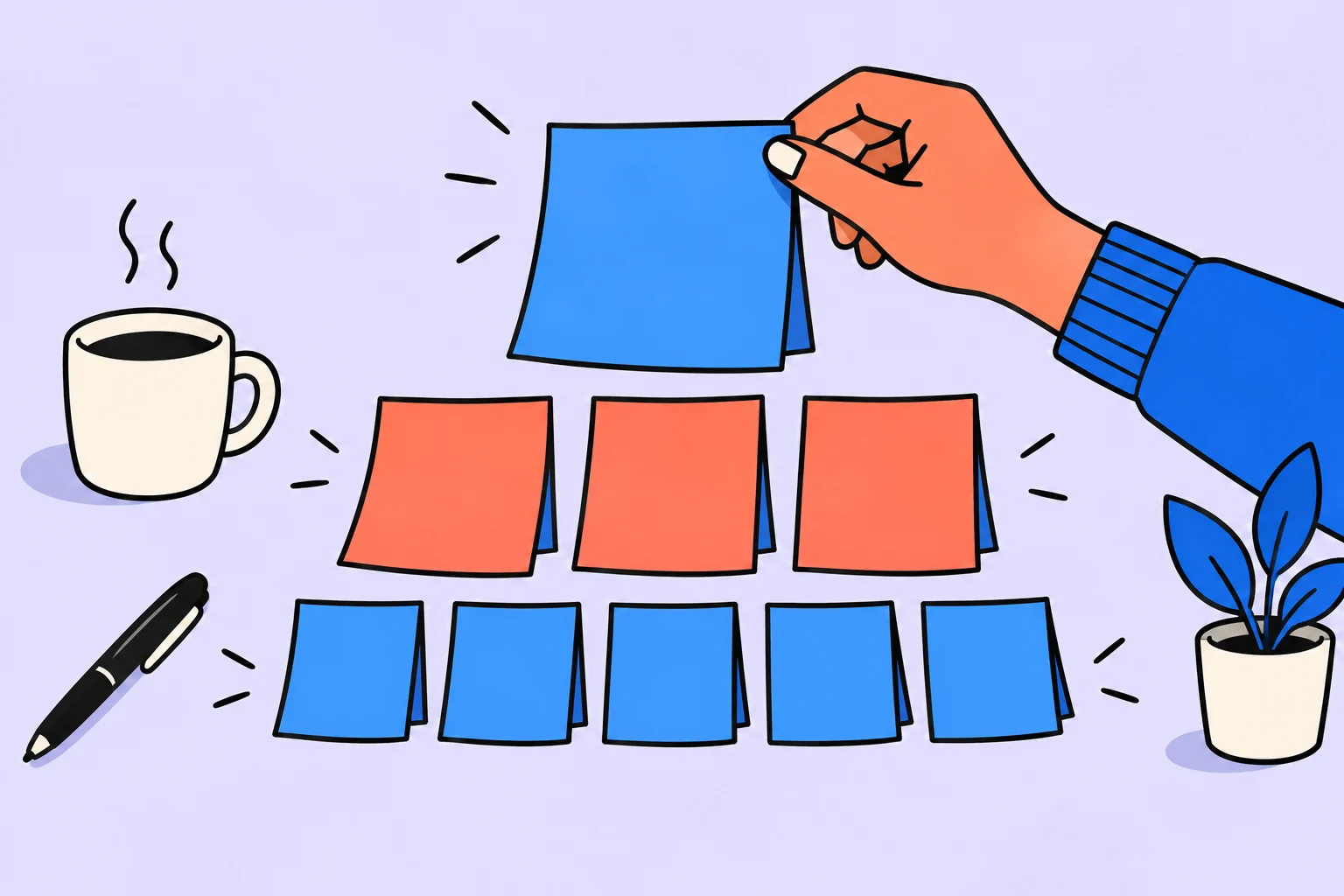
The 1-3-5 method for planning your day
The 1-3-5 method: a simple daily planning system. 1 main task, 3 medium tasks, 5 small tasks. How to use it, examples, and integration with trackers and AI planners.
Read article →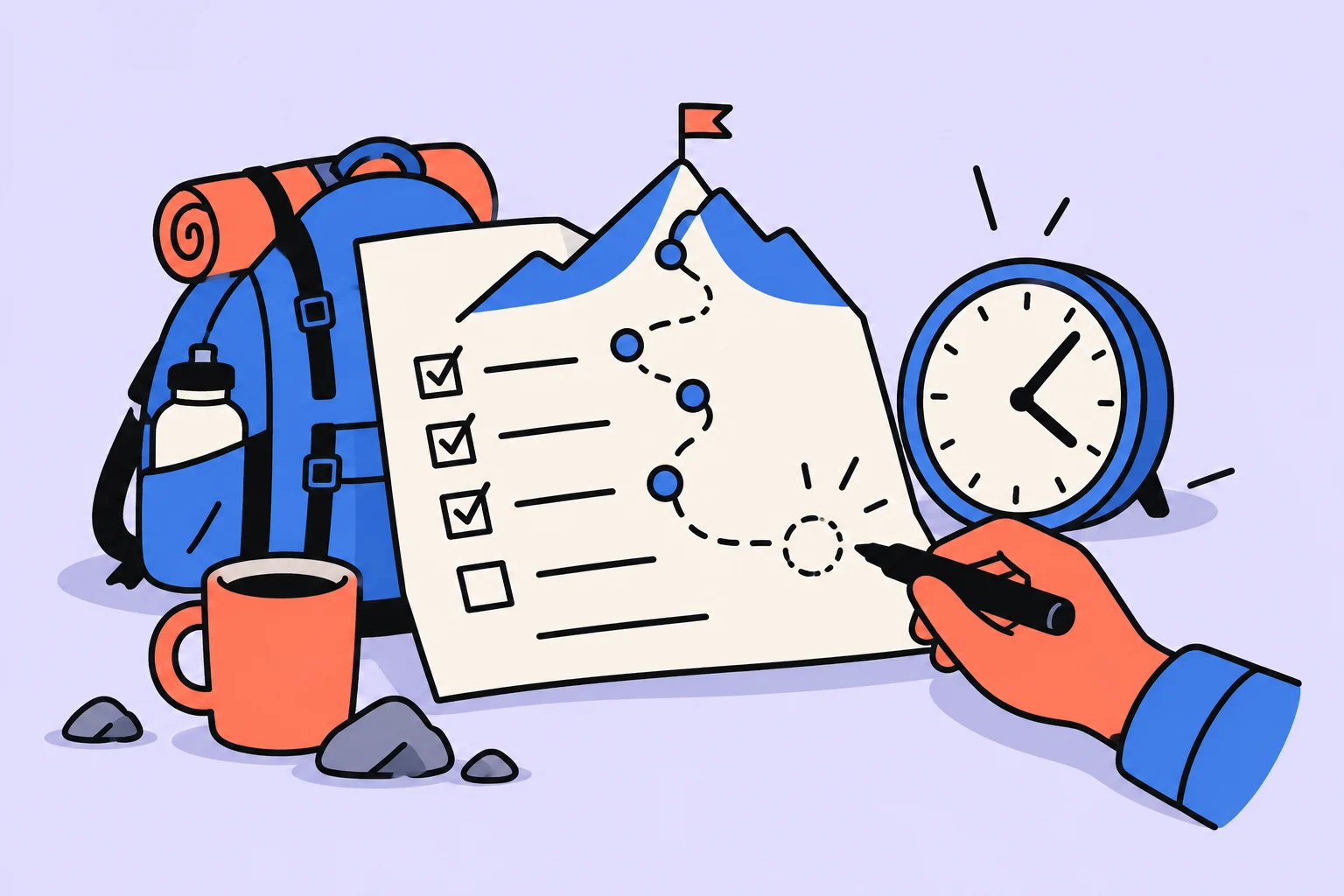
The ALPEN method: a daily plan with a buffer and review
Five ALPEN steps in a complete example: estimate tasks, leave a buffer, revise overload, and compare the plan with actual results in the evening.
Read article →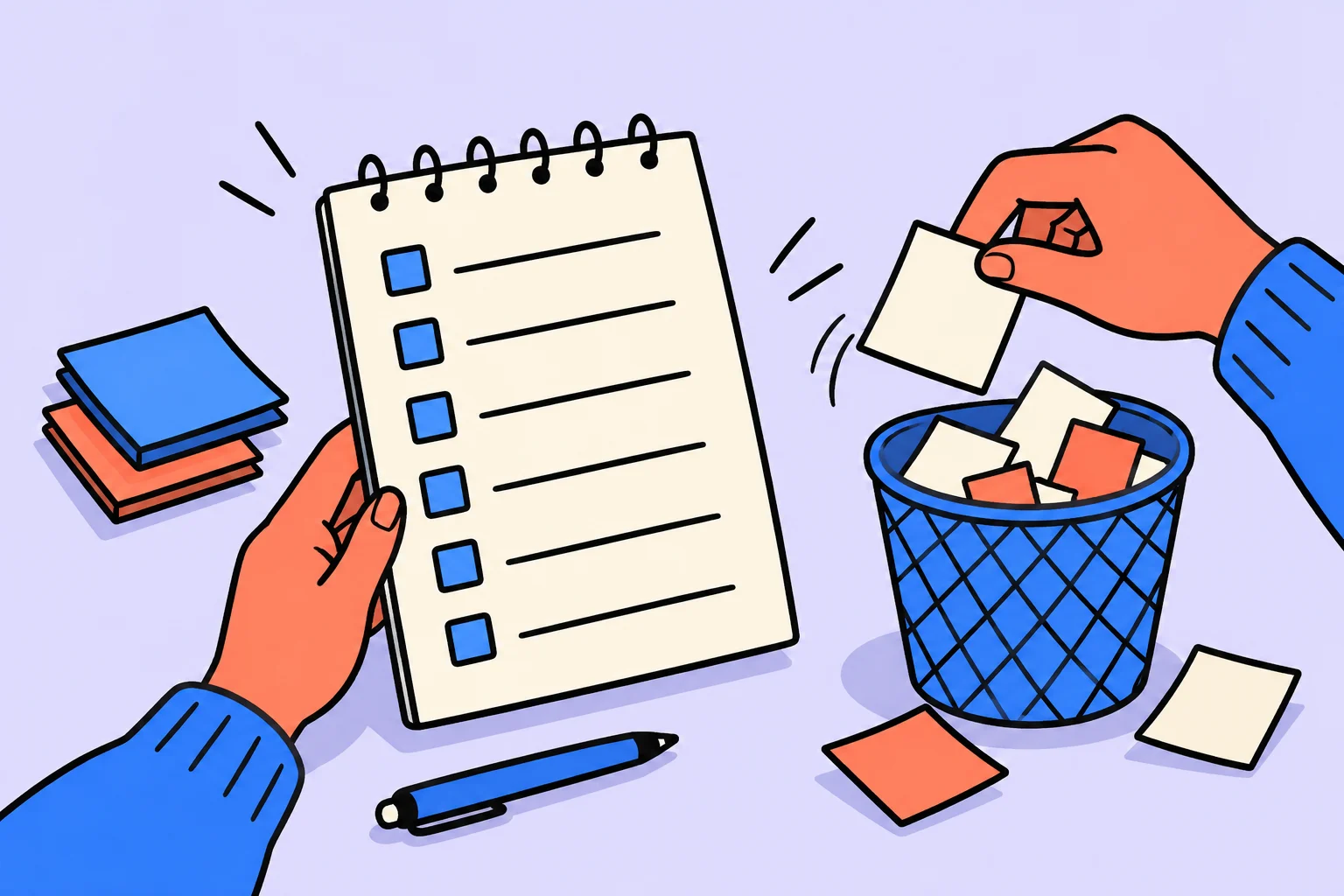
The Ivy Lee method: six tasks for tomorrow without promising to do everything
Choose a short list for tomorrow, decide its order and review unfinished items. The limits of the popular Ivy Lee method.
Read article →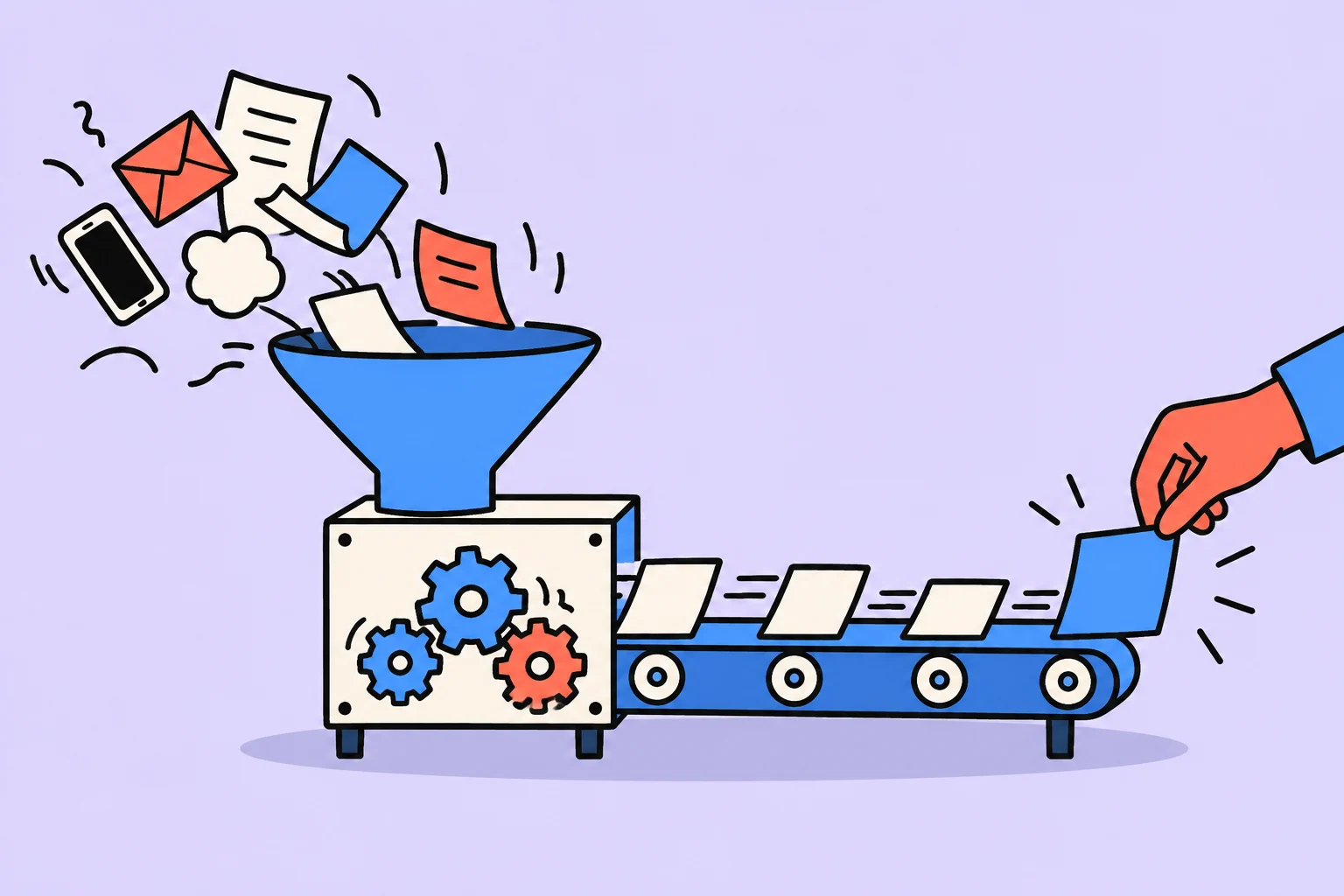
GTD: a planning system explained simply, with a diagram and example
How the GTD planning system works: a five-step diagram, processing your inbox, and a project example. Where to start, where to record the next action, and when you need a calendar.
Read article →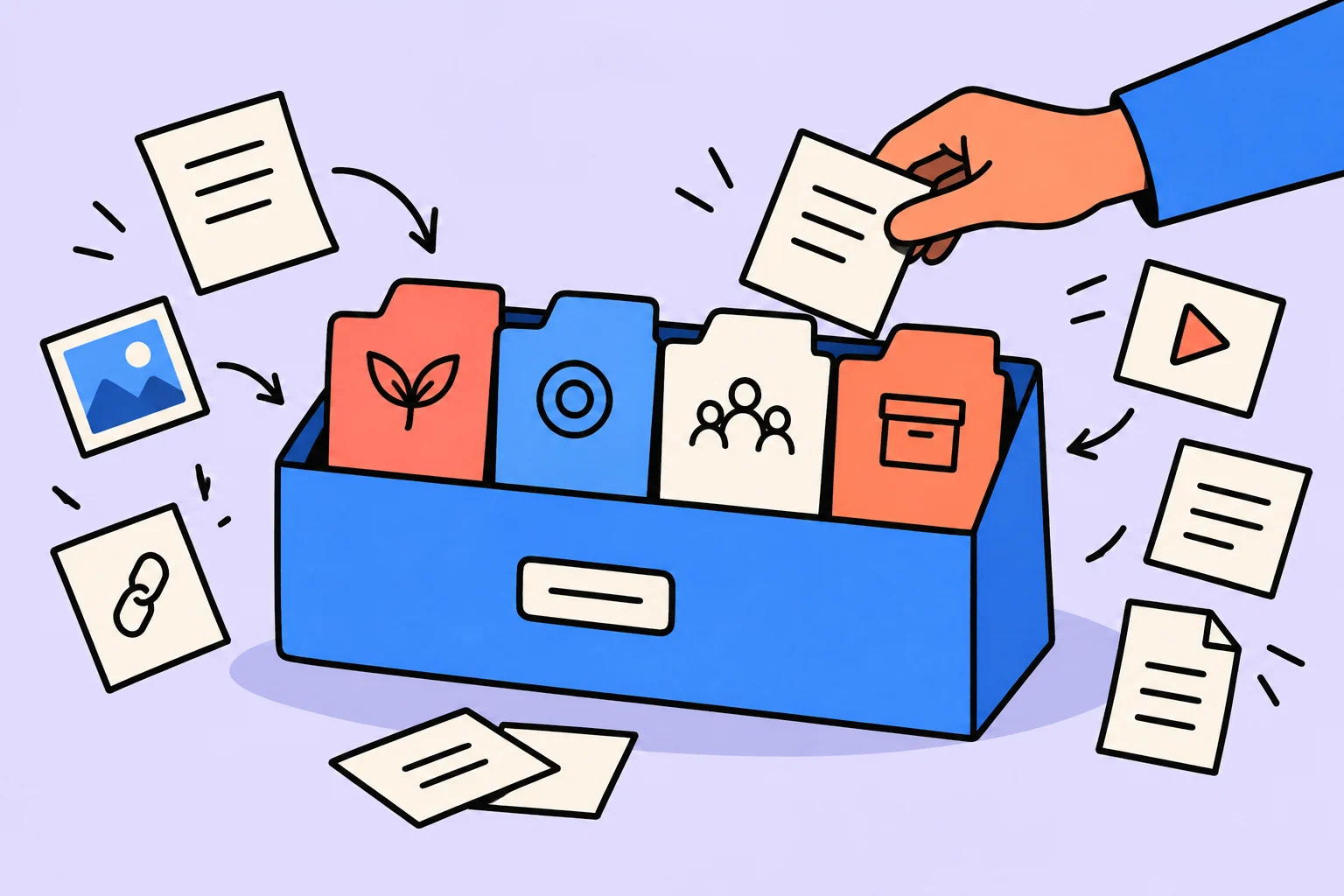
The PARA method: organize notes, projects, and materials
Four PARA categories, six worked material examples, and a decision tree. Organize one folder and decide what to retain after a project finishes.
Read article →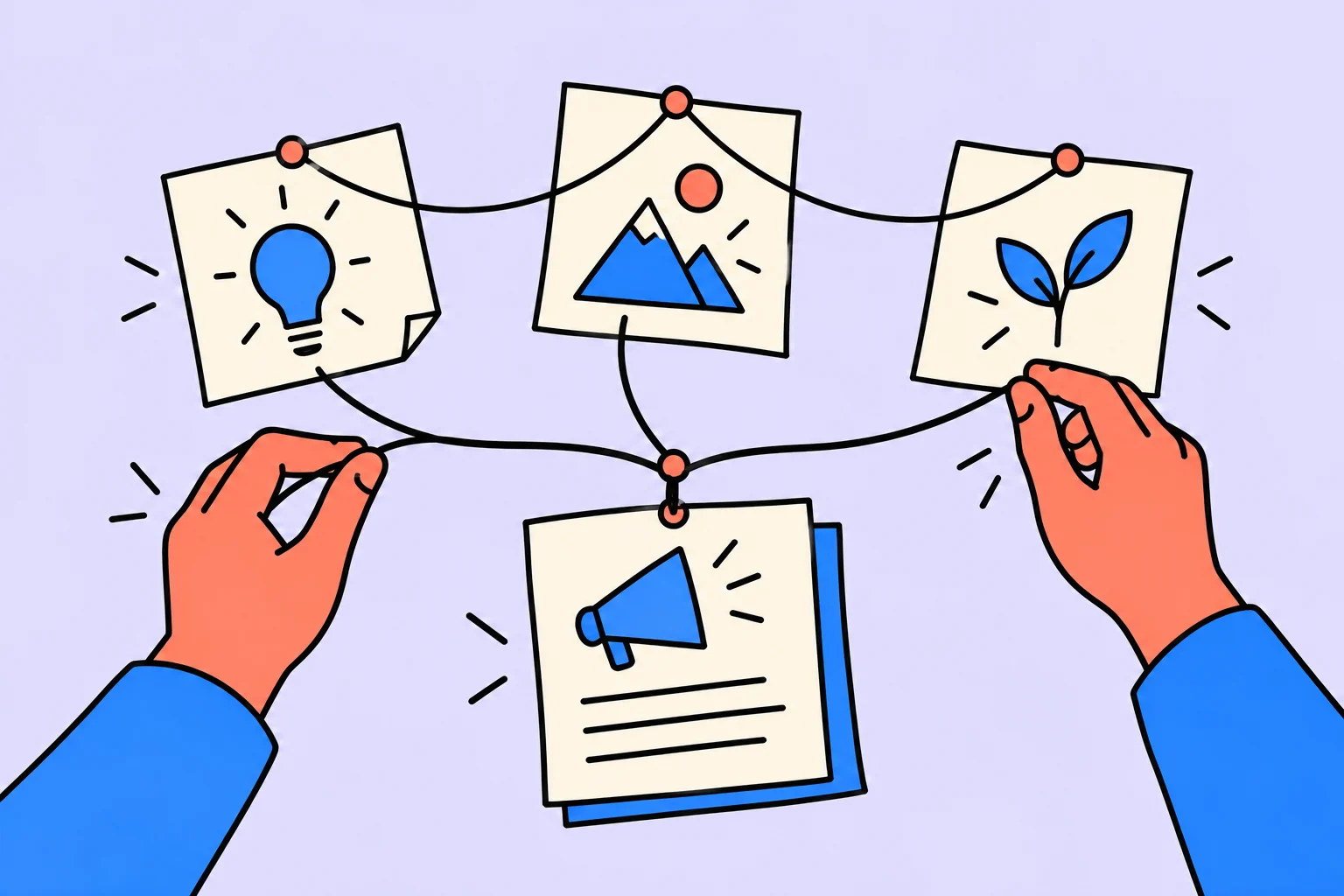
The Zettelkasten method: connect notes and build your own argument
Create three self-contained notes, label meaningful links, and build your own argument. A step-by-step example and result check without an app.
Read article →
Micro Habits That Change Your Life
What micro habits are and how small 2-minute habits change your life. The BJ Fogg method, 20 examples, habit stacking, and scientific evidence.
Read article →
Mindfulness in everyday life: 15 mindfulness practices
Mindfulness practice for every day. 15 techniques without meditation: scientific foundations, step-by-step instructions, and research findings.
Read article →
Multitasking: which switches get in the way of work
How task switching differs from doing things simultaneously. Separate calculations from chat while keeping urgent communication and quality checks.
Read article →
Motivation to study: a personal reason and a manageable format
How an adult can choose a clear reason to learn, identify a barrier, and fit sessions into available time. A practical example without pressure or promises.
Read article →
How to create an app with AI: an educational MVP from scenario to testing
Build a specification for a personal request log: screen, data, browser storage, errors, and testable acceptance criteria for a small MVP.
Read article →
How to generate a name with AI and choose a suitable option
A naming brief, different naming directions, a selection table and checks before use. No promises of uniqueness based on an AI answer.
Read article →
Website design with AI: an editable layout and state checks
A Figma AI exercise: a request-form brief, complete agent assignment, components, and mobile layout checks. An educational example without claiming a finished app.
Read article →
New Year's goals: why 92% fail and how to join the 8%
Why do 92% of people fail to reach their New Year's goals? Explore 7 mistakes and a step-by-step plan for joining the successful 8%.
Read article →
The planning fallacy: estimate deadlines from similar tasks
Why familiar tasks take longer than expected: compare past durations, justify a buffer, and separate working time from waiting for acceptance.
Read article →
Leaving Facebook and news knowledge: what the Allcott experiment measured
How the Allcott experiment measured news knowledge: participant recruitment, a quiz, a separate false-story measure, and the limits of causal inference.
Read article →
Work breaks: how to rest between mental tasks
Match pauses to the type of workload, prepare your return to the task, and check which breaks help in your own work context.
Read article →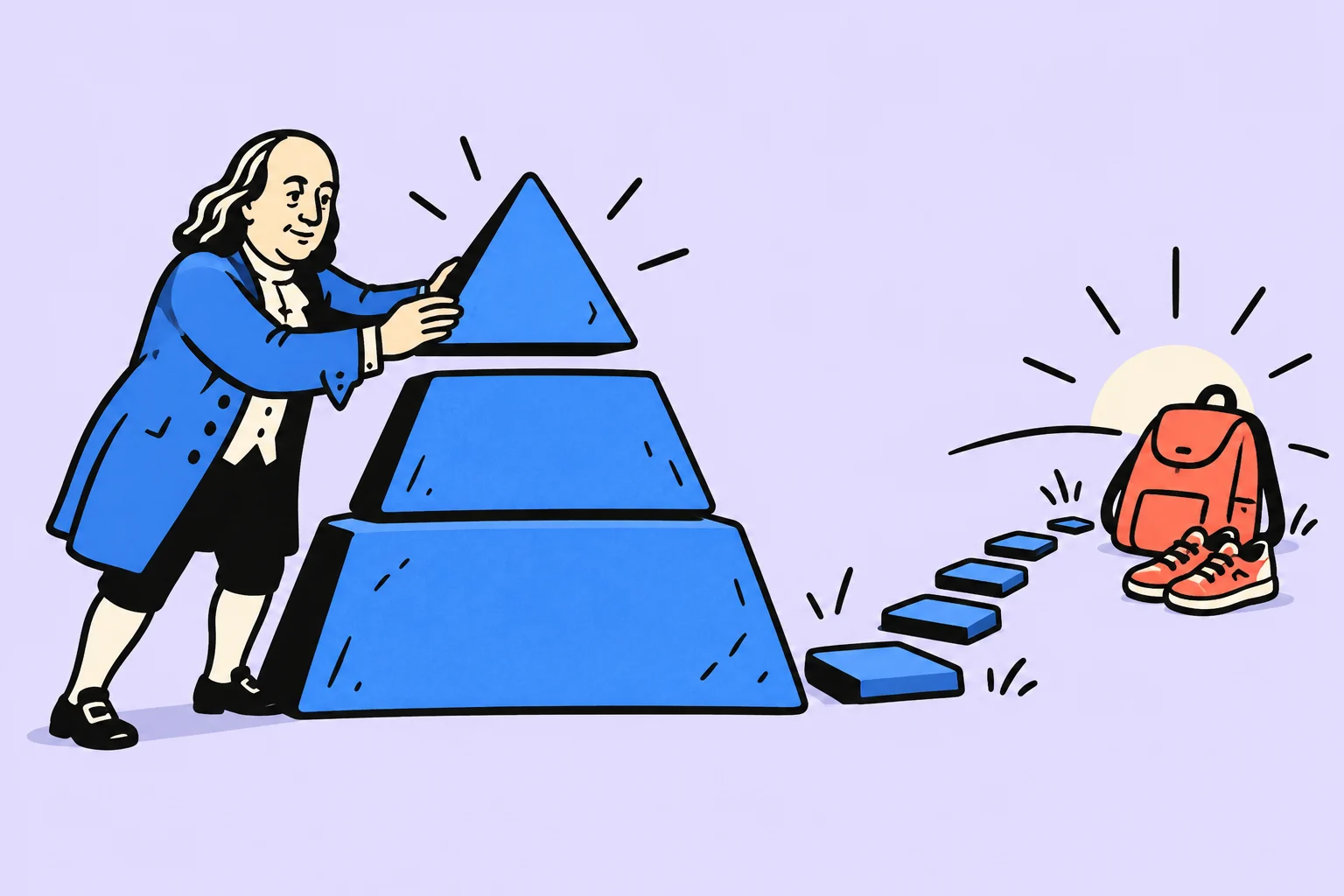
Franklin’s pyramid: connect values with your next action
Use the popular pyramid to connect values and actions. A completed example and the limits of attributing the model to Franklin.
Read article →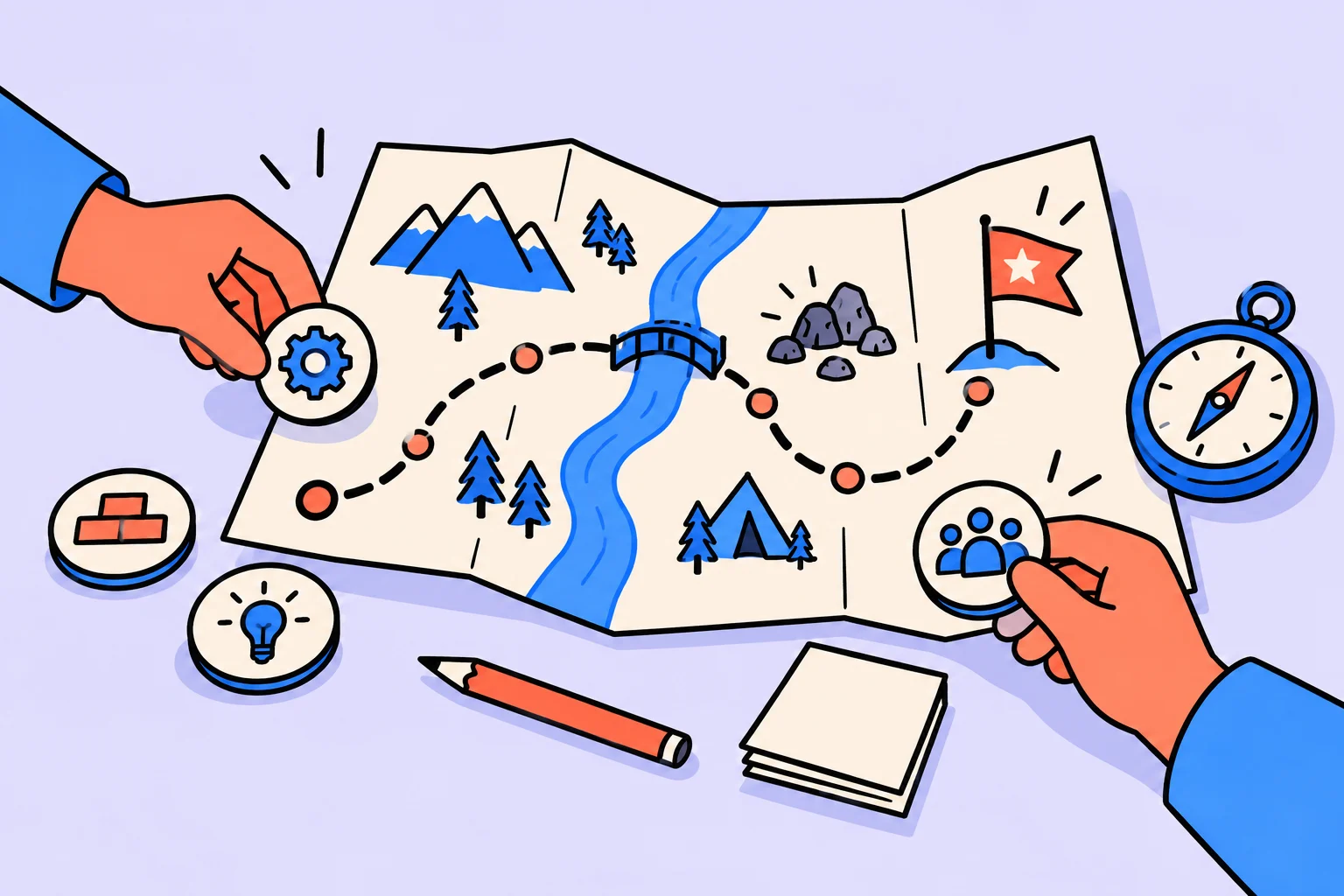
A plan for reaching a goal: dependencies, resources and review points
Build a route after setting a goal: dependencies, resources and checks. A worked plan for launching a small workshop.
Read article →
A day-off plan: tasks that fit and time to rest
Choose a household minimum, agree with loved ones, combine errands into a convenient route, and leave part of your day off free without a sense of unfinished work.
Read article →
An exam preparation plan: topics, practice and checks before the deadline
Distribute the syllabus before an exam using initial gaps and available windows. A completed plan for six topics, mixed practice and error checks.
Read article →
Why motivation does not work: a scientific explanation
Learn why motivation is unreliable from a neuroscience perspective. Habits, systems, and gamification: what actually helps you achieve goals.
Read article →
Time sinks: find unnecessary actions without total surveillance
Notice a recurring delay, distinguish it from rest and test one process change. A worked example of finding work documents.
Read article →
How to write a post with AI: from facts to publication
Define your audience, give AI verified facts, and produce a post with one clear action. A worked example, complete prompt, and editorial checks.
Read article →
The Two-Minute Rule: How to Stop Putting Things Off and Start Acting
The two-minute rule from GTD and Atomic Habits: how to use it for tasks and habits. Examples, scientific background, pitfalls and a step-by-step implementation plan.
Read article →
The Pareto 80/20 rule for tasks: find higher-return actions
Examine task returns using your own data: choose an outcome, compare costs, protect essential work, and run a small experiment.
Read article →
How to make a presentation with AI: structure, slides, and fact checks
An educational service-presentation example: prepare materials, obtain an outline and slide draft, and check figures and file usability before sending.
Read article →
20 Healthy Habits Backed by Science
20 healthy habits supported by research. Nutrition, movement, sleep, mental health, and prevention, with a step-by-step implementation plan.
Read article →
Billionaire habits: what really works
Exploring the habits of Bezos, Gates, Musk, and other billionaires. Which routines really help, and which reflect survivorship bias? A scientific analysis.
Read article →
Habits of successful people: 15 leadership habits
Which habits distinguish leaders from everyone else? 15 research-backed habits of successful people. Leaders' mornings, productivity, focus, and health.
Read article →
Productivity for People with ADHD: The Complete 2026 Guide
A complete ADHD productivity guide. 15 established strategies, tools and techniques for people with attention difficulties, from ADHD experts.
Read article →
Productivity and burnout: how to work effectively without burning out
Sustainable productivity without burnout: signs, prevention, and recovery. A scientific approach to balancing effectiveness and well-being.
Read article →
Manager productivity: how to manage time and people
A productivity guide for managers: time management, delegation, planning, and team motivation. Practical tools and methods.
Read article →
Remote-work productivity: how to work effectively from home
A practical guide to improving remote-work productivity. Setting up your workspace, planning your day, and maintaining motivation at home.
Read article →
Entrepreneur productivity: systems for sustainable business growth
A productivity guide for business founders: time management, prioritization, management systems, and work-life balance.
Read article →
An AI-assisted résumé: present real experience without invented achievements
Match your experience to a vacancy, obtain precise wording and check every claim. A résumé example, prompt and evidence table.
Read article →
An AI-assisted video script: from one idea to a shooting plan
Create a feasible short-video script: lines, shots, timing and fact checks. A worked 45-second example.
Read article →
Adult ADHD diagnosis: how to tell whether you have ADHD
A complete guide to adult ADHD diagnosis: symptoms, tests, DSM-5 criteria, and where to get assessed in Russia. An online test and expert advice.
Read article →
ADHD and Relationships: Building Healthy Connections with Your Partner
How ADHD affects relationships: common difficulties, solutions and communication with your partner. A guide for couples where one partner has ADHD.
Read article →
ADHD and productivity: how to work effectively with ADHD
A practical productivity guide for people with ADHD. 10 strategies, tools, and techniques for working effectively with attention deficit hyperactivity disorder.
Read article →
ADHD and Work: Building a Career with Attention Deficit Hyperactivity Disorder
A career with ADHD: suitable professions, workplace adjustments and productivity strategies. Employee rights and successful examples.
Read article →
ADHD and burnout: why people with ADHD burn out faster and how to protect yourself
Why people with ADHD experience burnout 3-4 times more often. The ADHD burnout cycle, early signs, 7 prevention strategies, and a recovery plan.
Read article →
Adult ADHD treatment: therapy and support in Russia
A complete guide to adult ADHD treatment in Russia: medication, psychotherapy, CBT, and lifestyle. Where to find a specialist and get support.
Read article →
Adult ADHD: signs, symptoms, and how to live with it
What ADHD means in simple terms. A full list of adult ADHD symptoms, differences between men and women, diagnosis, and strategies for living with ADHD.
Read article →
ADHD in women: symptoms and distinctive features
How ADHD appears in women: hidden symptoms, diagnostic differences, and hormonal influences. Why ADHD in women goes unnoticed.
Read article →
Impostor Syndrome: A Complete Guide to Overcoming It in 2026
What impostor syndrome is, why it happens and how to overcome it. 10 coping techniques, types, causes and when to seek professional help.
Read article →
SMART Goals: Examples, a Template and Common Goal-Setting Mistakes
How to set SMART goals properly. 15+ examples for health, career, finances and personal growth. A ready-to-use template, common mistakes explained and a free tool.
Read article →
Soft skills you need in 2026
A guide to the key soft skills for 2026: communication, leadership, adaptability, emotional intelligence, and critical thinking. How to develop soft skills.
Read article →
How to create an AI agent: a first scenario, tools, and checks
Build a simple AI agent to review a request: prepare a reference catalog, restrict actions, and check replies against five educational inquiries.
Read article →
How to create a website with AI: a local browser prototype
One HTML file without environment setup: an AI brief, educational example, opening it in a browser, and fixing an error. Publication and complex features are separate stages.
Read article →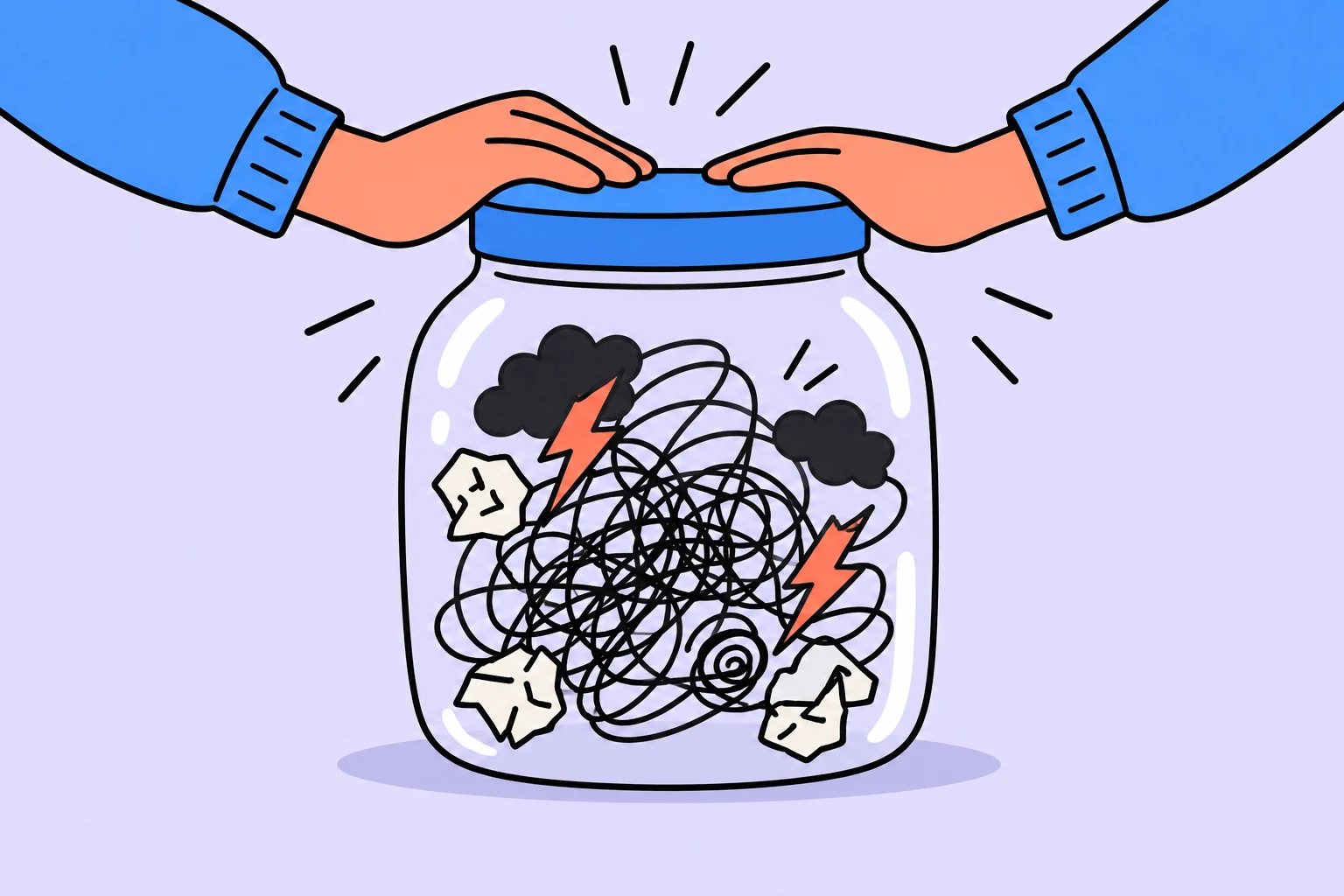
Stress Management: 12 Everyday Practices
Research-based stress-management practices: breathing techniques, meditation, cognitive reappraisal and physical activity. How to relieve stress quickly and for the long term.
Read article →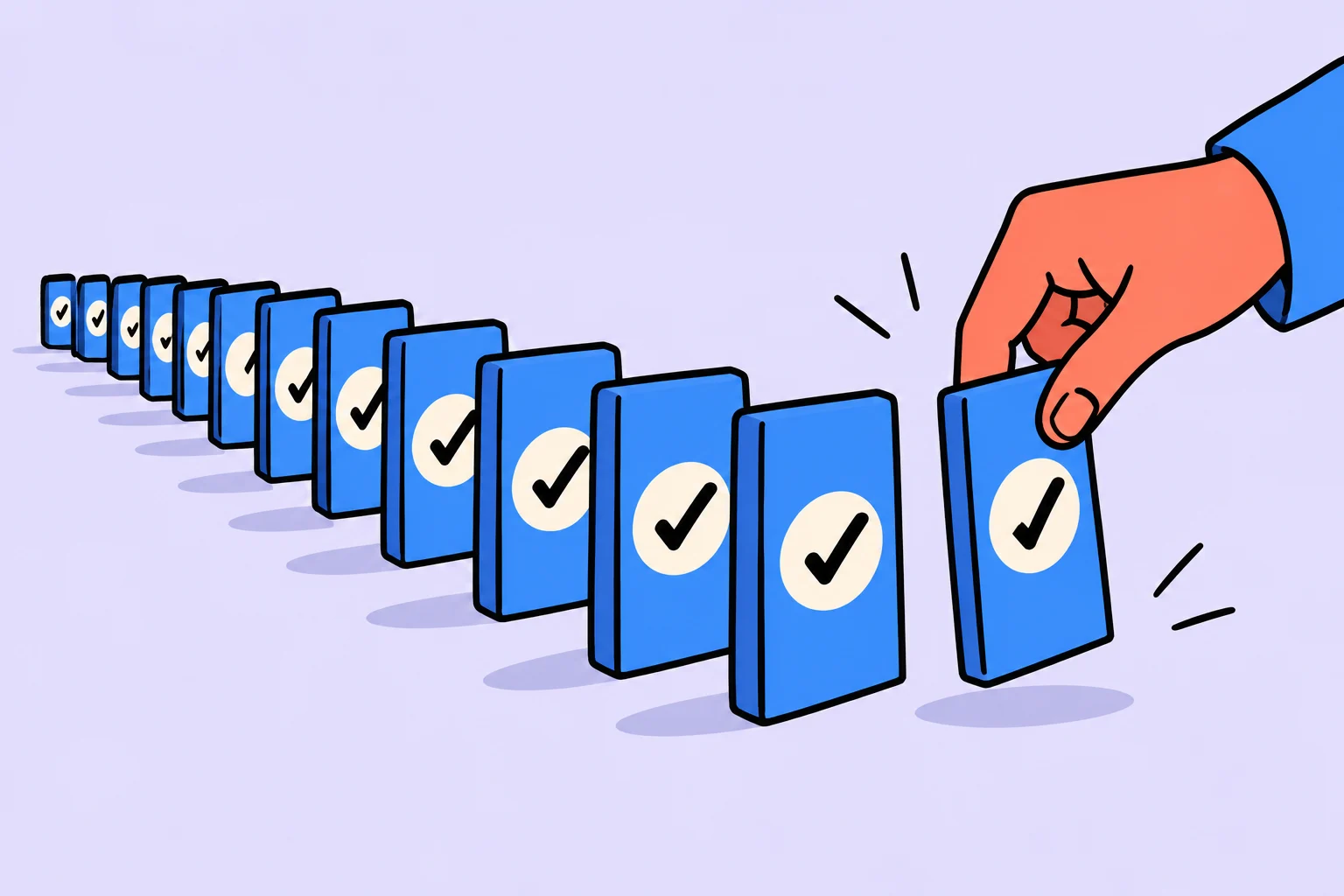
Habit streaks: how to keep your chain going—12 scientific strategies
How to maintain a habit streak: the neuroscience of streaks, 12 proven retention strategies, and what to do after a lapse. A practical guide.
Read article →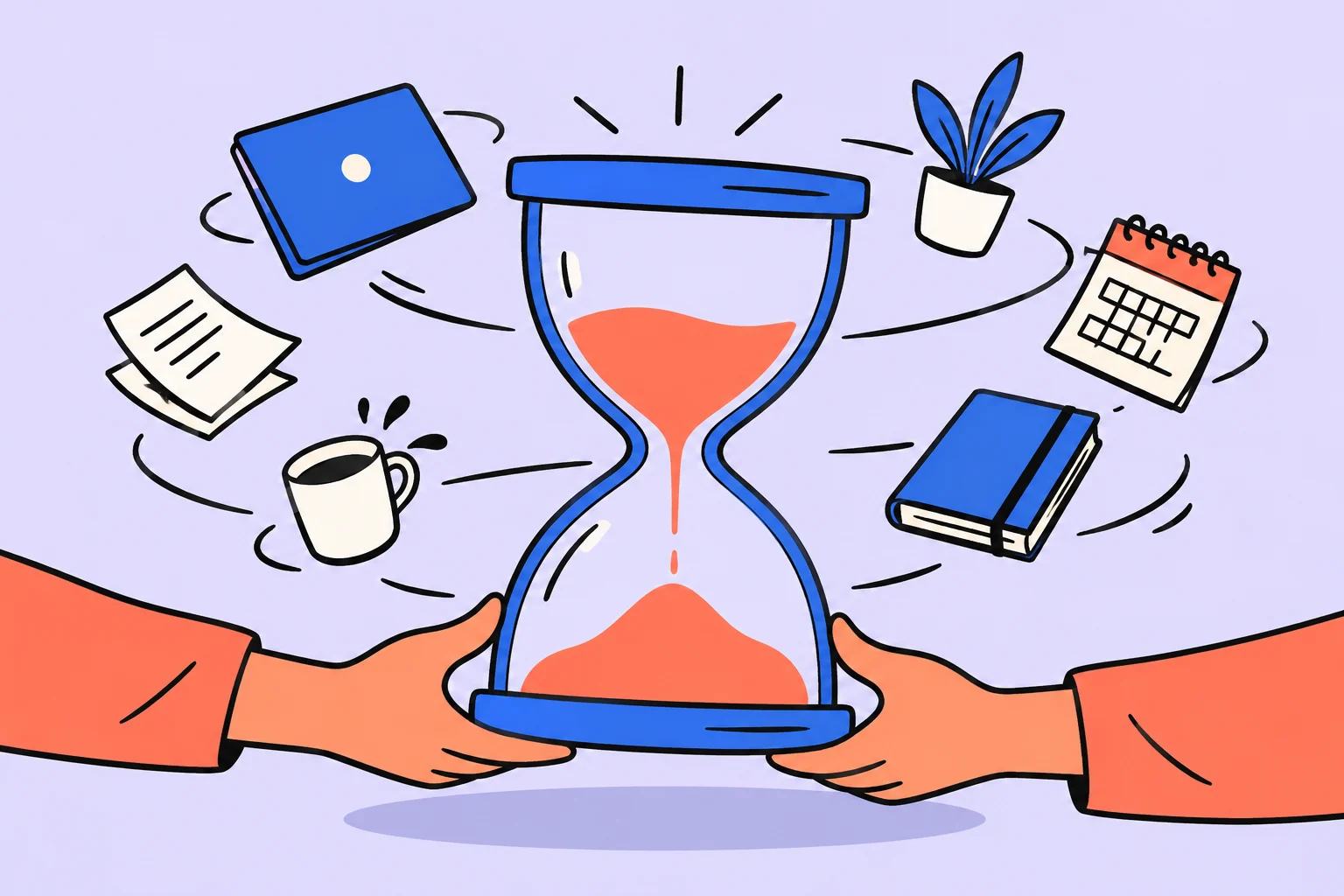
Time management for busy people: a complete guide to managing time in 2026
Time management for people with packed schedules. Practical time management techniques: batching, MITs, timeboxing, the Eisenhower matrix, and automation.
Read article →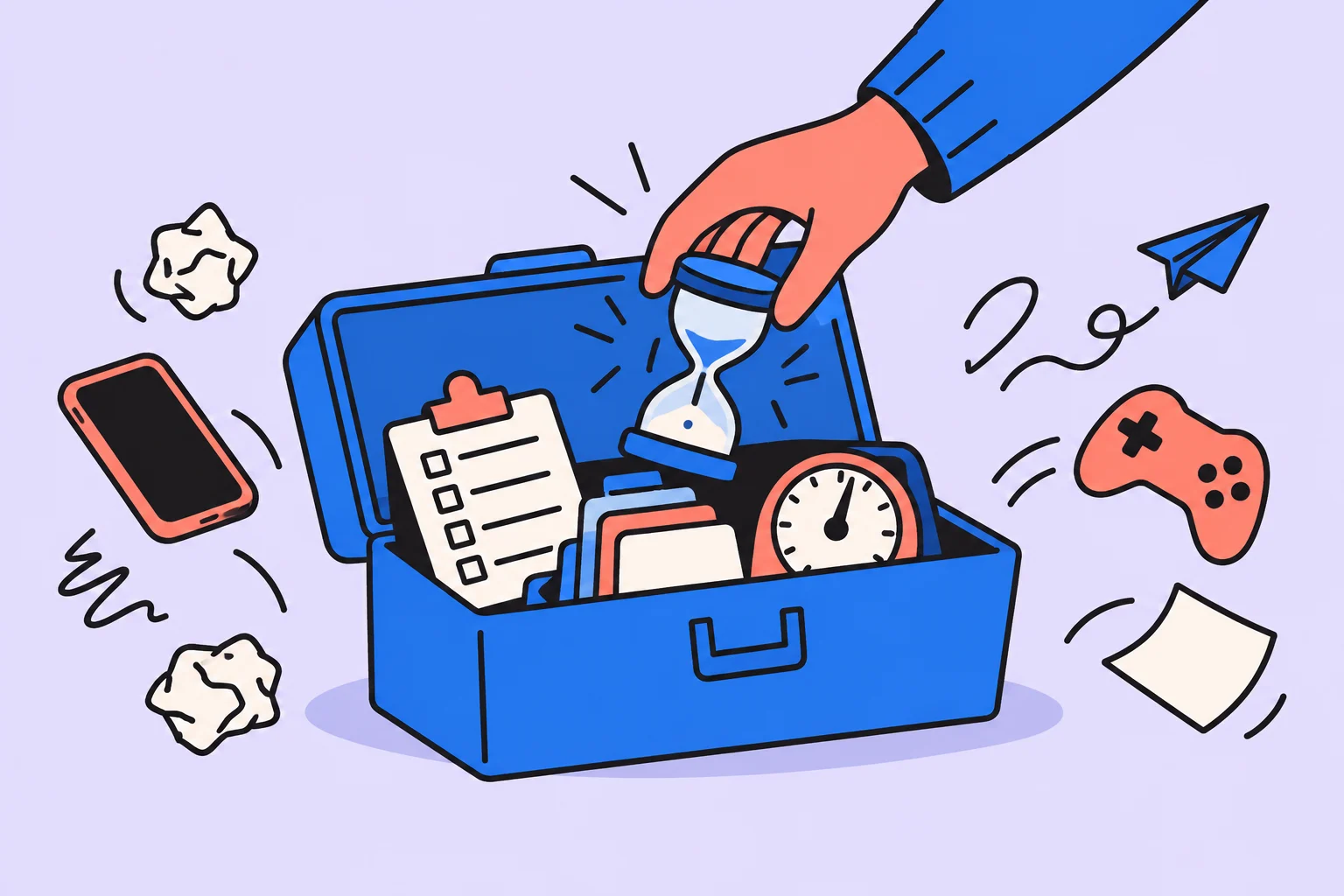
Time Management With ADHD: Systems and Tools for 2026
A complete time-management guide for people with ADHD. 10 adapted systems, tools and techniques for effective planning with attention difficulties.
Read article →
The Pomodoro Technique: A Complete Guide to Interval Productivity
A complete guide to the Pomodoro technique. How the method works, its scientific basis, step-by-step instructions, adapting intervals, and the best timers.
Read article →
Top 10 Telegram Productivity Bots in 2026
A review of the best Telegram productivity bots: habit trackers, AI coaches and task planners. Comparisons, strengths and weaknesses of each bot.
Read article →
10 habits of long-lived people: blue zone secrets
Which habits do long-lived people in blue zones share? 10 science-backed daily practices that extend life and improve its quality.
Read article →
AI transcription: turn video and audio into verifiable text
Transcribe a recording with AI: an educational passage, settings, a complete assignment, and checks for numbers and negations. Keep the summary separate from the original words.
Read article →
Habit tracker: how to choose, set up, and keep using one beyond a week
How to use a habit tracker: schedules, reminders, missed days, and a first-week review. A reading setup example.
Read article →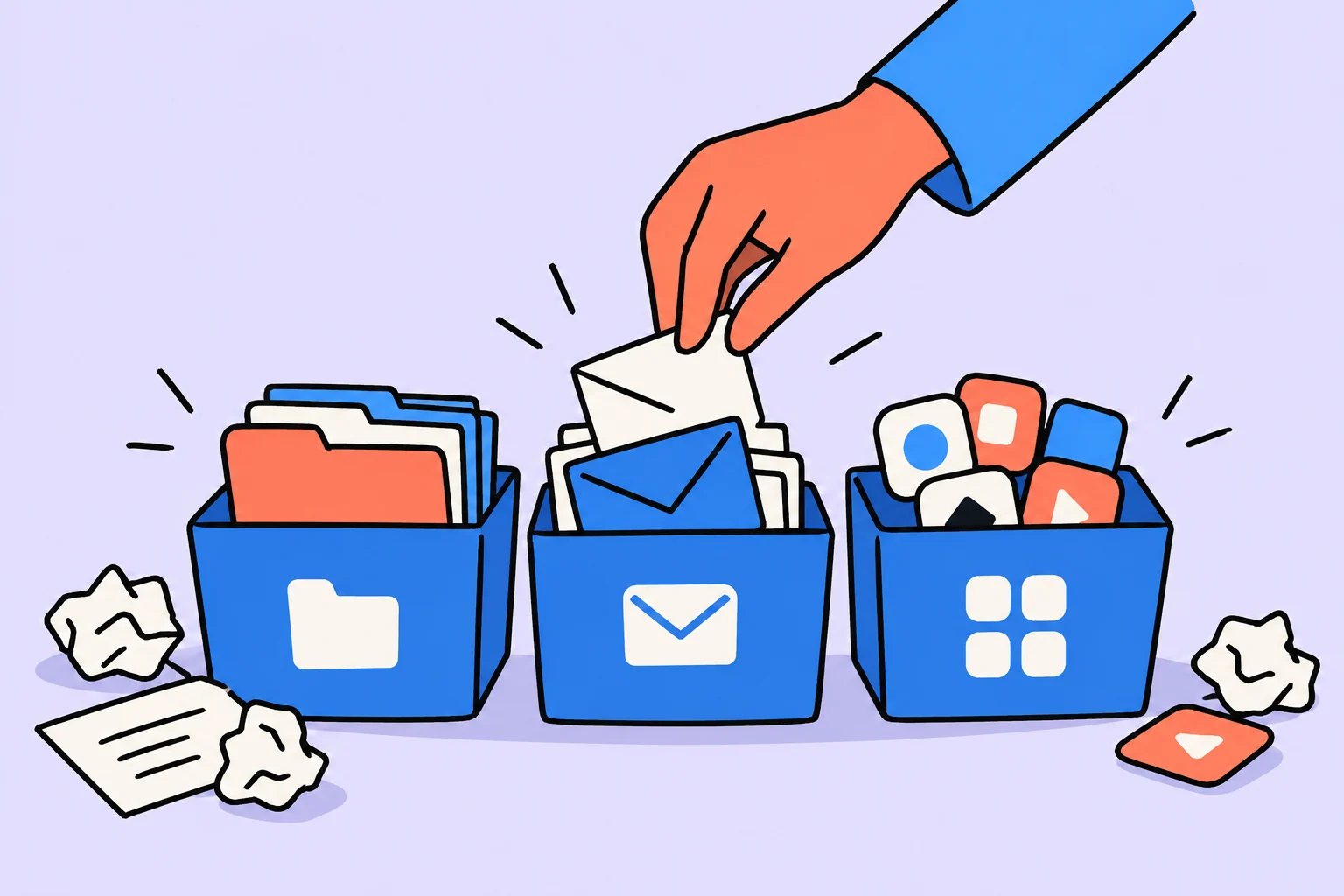
Digital order: organize your files, email, and apps
A practical guide to digital minimalism: organizing files, managing email, decluttering apps and subscriptions, and bringing order to your digital life.
Read article →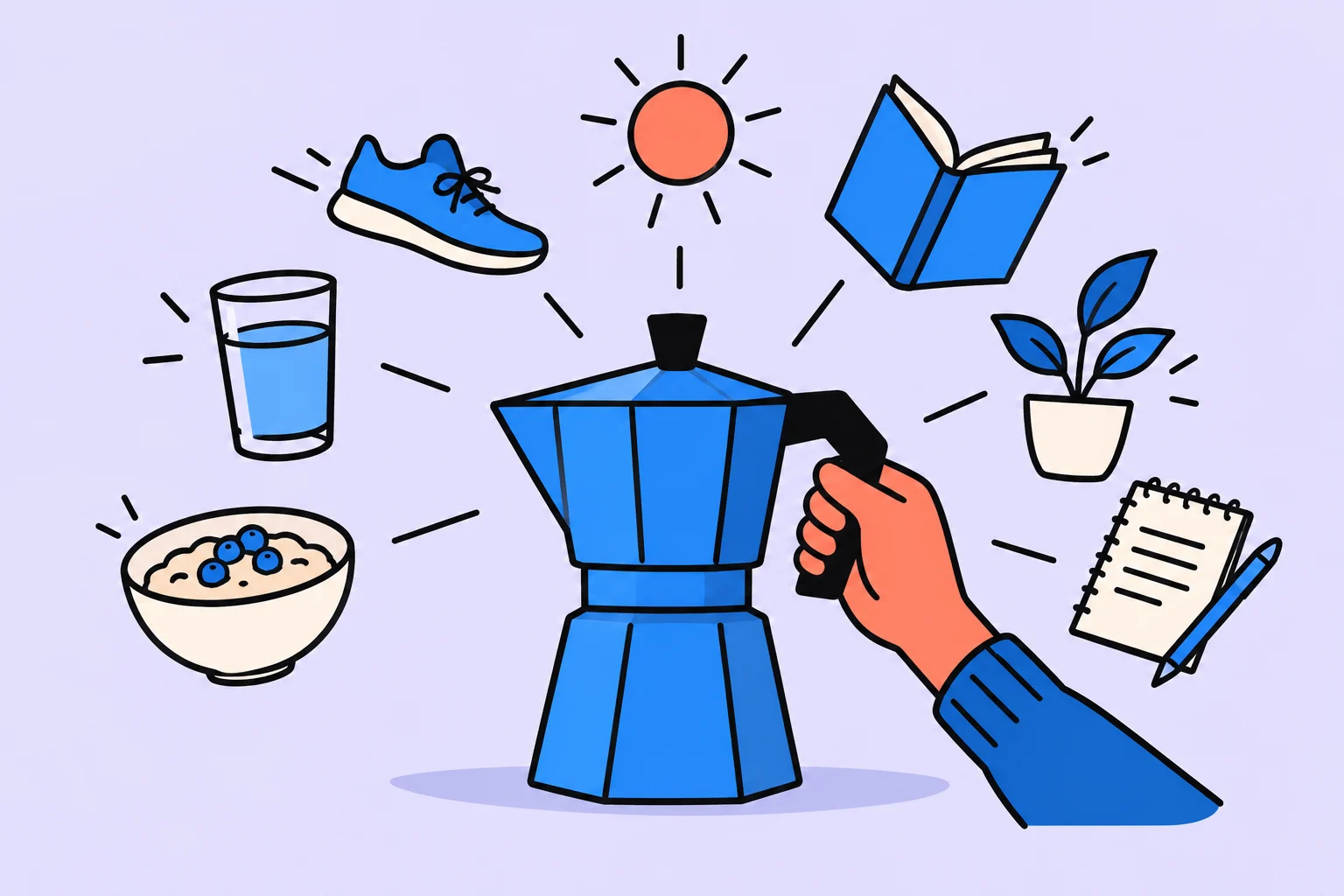
Morning rituals for productivity: 7 habits of successful people
7 scientifically grounded morning rituals of productive people. A step-by-step plan for introducing a morning routine, beginner mistakes, and Miracle Morning.
Read article →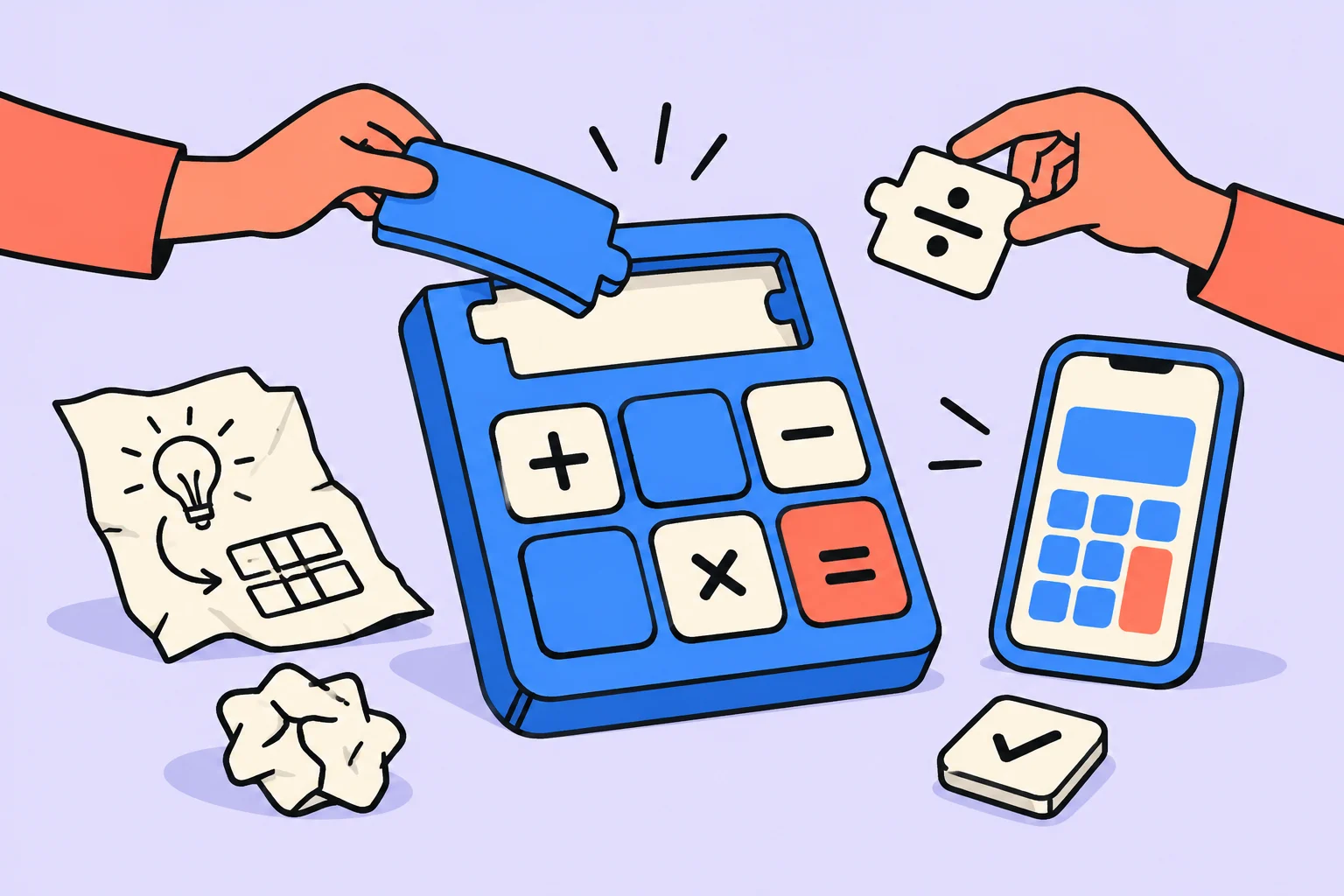
Vibe coding: what it is and how to make a first useful prototype
Explore vibe coding through a service-cost calculator: from an AI assignment to checking the formula, errors, and mobile screen.
Read article →
Evening rituals: 10 habits for quality sleep
How evening rituals improve sleep quality. 10 science-based bedtime habits, from breathing techniques to room temperature.
Read article →
Goal Visualization: 7 Science-Based Methods That Work
A scientific approach to goal visualization. Vision boards, mental rehearsal, WOOP and future journaling: 7 proven techniques with research.
Read article →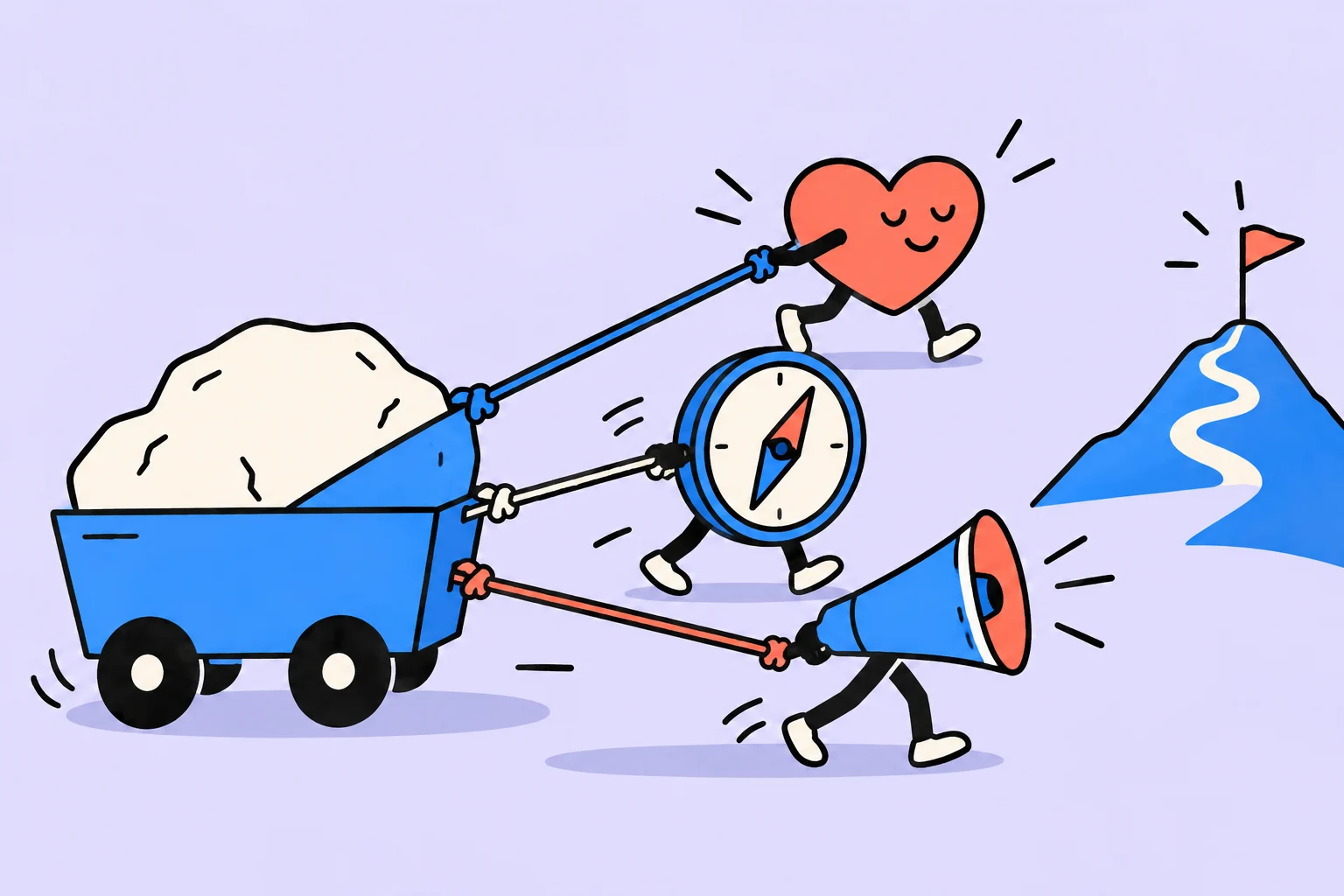
Intrinsic and extrinsic motivation: which supports help your task
Distinguish interest, personal meaning and external pressure. Examine one task and choose a change to conditions within your reach.
Read article →
Self-reflection questions: choose a question for your decision
Examine one specific choice through facts, criteria, options, unknowns, and a verifiable next step, rather than a hundred questions about everything.
Read article →
Work-Life Balance: Myth, Reality or Something Else?
Does work-life balance exist? Scientific research, alternative models and practical advice for balancing work and life.
Read article →
Parkinson’s law: give a task reasonable boundaries
Limit unnecessary revisions while keeping essential checks. Completion criteria and the limits of the popular Parkinson’s law.
Read article →
How to leave a note for returning to an interrupted task
What to record before a forced switch: where you stopped and what to do next. A complete note for an unfinished report and a process for returning.
Read article →Put ideas into practice with Sinqly
Choose one idea from an article and turn it into a task or habit. Keep your plan in Sinqly so you can come back to it.
Open Sinqly