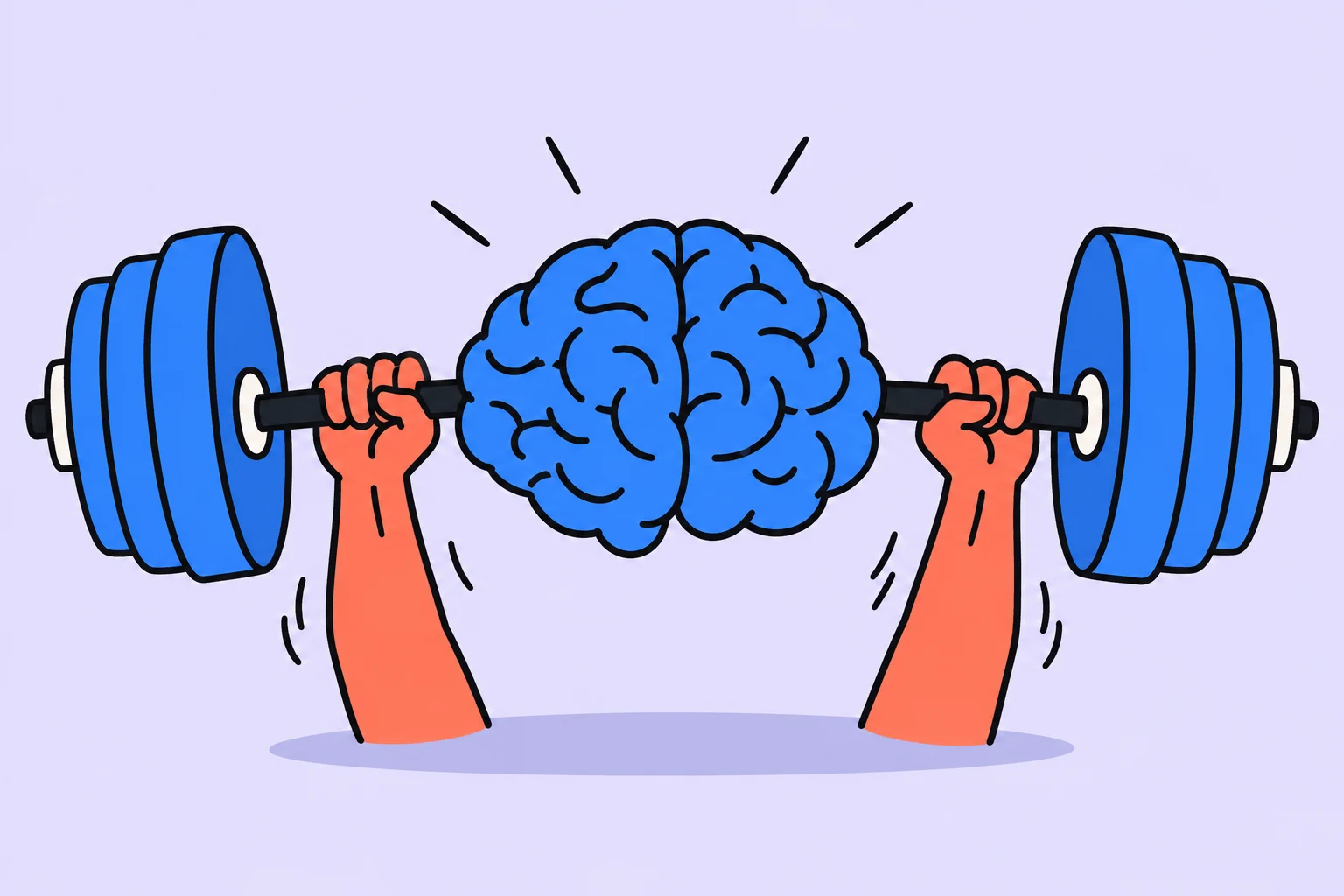
Willpower is one of the main predictors of success in life. Walter Mischel’s famous marshmallow test showed that children who could delay gratification at age 4 had better grades, better health, and higher incomes 20 years later. But willpower is not an innate trait. You can develop, train, and strengthen it. This article presents 10 scientifically grounded methods tested in research at leading universities around the world.
The science of willpower: research findings
The modern understanding of willpower began with the work of psychologist Roy Baumeister at the University of Florida. In the late 1990s, he proposed the ego depletion model: willpower is a limited resource consumed by each act of self-control. Just as a muscle tires after exertion, willpower runs down by the end of the day.
Baumeister conducted a series of experiments, the best known being the radish test. Participants were asked to sit in front of a plate of chocolate cookies and fresh radishes. Some could eat cookies; others could eat only radishes. Both groups then worked on a difficult puzzle. The radish group gave up twice as quickly: resisting the cookies had depleted their willpower.
In recent years, however, the ego depletion model has faced criticism. Large meta-analyses found that the effect is much weaker than previously believed. Stanford researchers proposed an alternative: willpower depends less on a biological reserve than on beliefs. People who believe their willpower is unlimited demonstrate significantly greater self-control. This opens up fundamentally new approaches to developing it.
Neuroscience also identifies self-control as a function of the prefrontal cortex of the brain. This region is responsible for planning, decision-making, and suppressing impulses. When it is active, we control ourselves. When it is tired or suppressed by stress, we lose control. The good news is that neuroplasticity makes it possible to strengthen this region through targeted training.
of daily decisions happen on autopilot through habits
faster giving up with depleted willpower
of people name insufficient self-control as their main barrier to goals
of regular meditation produce MRI-visible structural changes
Willpower as a muscle: training self-control
Even with the criticism of the depletion model, the muscle metaphor remains useful. Research shows that regular self-control exercises in one area carry over to others. People who monitored their posture for two weeks began controlling their eating and spending better. Those who trained their grip strength showed greater self-control in cognitive tasks.
The key principle is to start with small, easily controlled tasks. Correct your posture whenever you notice yourself slouching. Brush your teeth with your non-dominant hand. Refrain from swearing during the day. These micro-exercises train the self-control muscle without consuming significant amounts of energy.
It is important to understand that willpower, like a physical muscle, requires both exertion and recovery. You cannot train self-control 24/7: that leads to burnout. Exertion and rest cycles work here too. After a period of intense self-control, such as a deadline, diet, or difficult project, allow yourself a period of relaxation. That is how the muscle recovers and becomes stronger.
Participants who followed an exercise program for 2 months showed significant improvements in self-control in unrelated areas: they consumed less alcohol, caffeine, and fast food, read more, and procrastinated less, even though no one had asked them to do so. This confirms that self-control training transfers between different areas of life.
Everyday strategies for conserving willpower
Smart people do not spend willpower: they create conditions in which it is unnecessary. This is a key insight from modern self-control psychology. A study by Wilhelm Hofmann at the University of Chicago found that people with high self-control encounter temptation less often because they design their environment in advance.
Environment design
Remove temptations from sight. Do not buy chips just in case. Remove social media from your desktop. Put your workout clothes next to your bed. Every decision you do not have to make saves resources.
Making it a habit
Habits operate on autopilot and require no willpower. The more beneficial actions you automate, the fewer resources you spend. Use a habit tracker to reinforce new patterns.
The if-then rule
Plan your response to temptation in advance. “If colleagues invite me out for a smoke, I will take a 5-minute walk.” A ready-made script reduces the burden on self-control at the moment of choice.
Important decisions in the morning
Self-control is at its highest after sleep. Schedule difficult tasks, important conversations, and key decisions for the first half of the day. Leave routine work for the evening.
Fewer decisions
Steve Jobs wore the same clothes not to save money, but to avoid spending willpower on choosing. Automate routine decisions: your weekly menu, morning ritual, and route.
The physiology of willpower: nutrition and sleep
The brain consumes about 20% of the body’s total energy, although it accounts for only 2% of body mass. The prefrontal cortex, the area responsible for self-control, is particularly sensitive to glucose levels. Research shows that even a small rise in blood sugar restores self-control after depletion.
This does not mean you should eat candy for willpower. Balanced nutrition provides stable glucose levels: complex carbohydrates (porridge, vegetables, whole-grain bread), proteins (meat, fish, legumes), and healthy fats (nuts, avocado, olive oil). Sharp blood sugar spikes after sweets or fast food give a short-term boost, followed by a crash that depletes self-control even further.
Sleep is the other critical factor. Sleep deprivation literally switches off the prefrontal cortex. University of California research found that after one sleepless night, prefrontal cortex activity falls by 60%. A person who has not slept makes decisions at the level of someone who is mildly intoxicated.
Consistent sleep of 7–8 hours is the foundation of willpower. Go to bed and get up at the same time, even on weekends. Avoid screens for an hour before bed: blue light suppresses melatonin production. Keep the bedroom temperature at 18–20°C. These simple sleep hygiene rules improve the quality of rest and, consequently, self-control the following day.
When your willpower is at zero, your first instinct is to eat something sweet. That works for 15–20 minutes, but then blood sugar drops even lower. Instead, drink some water, take a 5-minute walk, or snack on nuts. Stable energy is better than a short-lived spike.
Meditation: a proven way to strengthen self-control
Mindfulness meditation is among the most studied self-control methods. A 2014 JAMA Internal Medicine meta-analysis, which combined data from 47 studies involving 3,500 people, found that regular meditation significantly improves attention, emotional regulation, and self-control.
The mechanism is simple: meditation trains your ability to notice impulses without acting on them. When you feel like scratching, getting up, or checking your phone during meditation, and consciously decide not to do so, you train the same muscle that helps you refrain from unwanted actions in everyday life.
You can start with 5 minutes a day. Research shows that effects appear after just 2 weeks of regular practice. After 8 weeks, MRI scans detect measurable changes in brain structure: increased gray matter density in the prefrontal cortex and anterior cingulate cortex, regions responsible for decision-making and self-control.
A beginner’s technique: sit comfortably and close your eyes. Focus on your breathing. When your attention wanders, which it will, gently bring it back. Each return is one repetition for the self-control muscle. You will complete dozens of these repetitions in 5 minutes.
Motivation versus discipline: which matters more?
Popular culture celebrates motivation through motivational videos, quotes, and speakers. But motivation is an emotion, and emotions are inconsistent. You cannot rely on motivation any more than you can rely on your mood. It is there today and gone tomorrow.
Discipline is the ability to do what needs to be done regardless of your mood. It is built not on willpower, but on systems. Systems consist of habits, schedules, commitments, and tracking tools. When you have a system, you do not need to decide anew every morning whether to exercise. The decision is already made; all that remains is to act on it.
Research shows that people who rely on willpower in the moment achieve goals much less often than those who create systems and shape their environment. It is easier to have no cookies at home than to resist eating them every evening. It is easier to set an alarm for 6:00 and put running shoes by the door than to motivate yourself to run every morning.
Stress: willpower's main enemy
Stress is the most powerful destroyer of self-control. When you are stressed, the body switches into fight-or-flight mode: blood flows away from the prefrontal cortex toward the brain’s motor areas. Literally, the brain region responsible for self-control loses resources to the area responsible for survival.
This is why it is so difficult to resist comfort food, alcohol, or mindless scrolling after a hard day. The brain seeks quick relief because stress has weakened the system responsible for long-term planning: the prefrontal cortex.
Paradoxically, those comforting actions worsen stress in the long run. American Psychological Association data show that the most popular stress-relief strategies (food, alcohol, social media, video games) are rated ineffective by the very people who use them. Effective strategies, such as physical activity, meditation, spending time with loved ones, and creativity, require more effort initially but actually lower cortisol levels.
A practical tip: prepare an anti-stress plan in advance, listing 5–7 healthy actions that relieve stress. When you are stressed, you lack the resources to invent a strategy. You need a ready-made recipe. Put the list somewhere visible or record it in task planner.
10 practical willpower exercises
Below is a set of exercises whose effectiveness is supported by research. Start with one or two and add new ones every two weeks.
- The 10-minute rule — when you want to give up, tell yourself, “Another 10 minutes.” The impulse usually passes, and you continue. This trains your ability to sit with discomfort.
- Contrast showers — a cold shower in the morning trains your ability to tolerate discomfort. Start with 15 seconds of cold water at the end of your usual shower. Increase this by 10 seconds each week.
- A self-control diary — write down situations in which you did or did not show self-control. Awareness is the first step toward change. Analyze patterns: at what time of day and under what circumstances does your self-control decline?
- A temptation map — list your typical temptations and prepare responses in advance using the if-then formula. A completed map reduces the burden at the moment of choice.
- Digital fasting : spend one day weekly without social media or entertainment content to build resistance to dopamine temptations.
- Delayed gratification — when you want to buy something impulsively, add it to your cart and wait 48 hours. According to statistics, 70% of impulse purchases are canceled after a pause.
- A morning ritual — create a fixed morning routine of 3–5 actions and follow it every day. Consistency in small things strengthens willpower for bigger ones.
- Mindful 4-7-8 breathing — inhale for 4 seconds, hold for 7 seconds, and exhale for 8 seconds. Complete four cycles. This activates the parasympathetic nervous system and restores self-control resources within minutes.
- A mini-habit — choose one action and do it at the same time every day. Start absurdly small: one push-up, one page of a book, or 30 seconds of meditation. The goal is to train habit formationrather than results.
- Visualizing your future self — imagine yourself in 5 years in two scenarios: if you develop self-control, and if you do not. Research shows that people who feel connected to their future self make more disciplined decisions.
Social environment and willpower
Willpower is contagious, in both positive and negative directions. A study published in Psychological Science found that observing someone exercising self-control increases the observer’s own self-control. Conversely, being surrounded by people with low discipline spreads a lack of discipline.
The famous Framingham study demonstrated that obesity spreads through social connections: if a close friend gains excess weight, your risk of obesity increases by 57%. The mechanism is the normalization of behavior. We unconsciously adapt to the norms of those around us.
The practical lesson is to surround yourself with people whose habits and discipline inspire you. Join communities based on shared interests: runners, entrepreneurs, or people learning foreign languages. Public commitments to a group are among the most powerful self-control tools. When you announce a goal to others, it becomes harder to back out.
Find an accountability partner: someone who is also working on discipline. Reporting to one another weekly increases the probability of achieving your goal by 65%, according to the American Society for Training and Development.
Common mistakes in developing willpower
Many people try to develop self-control but make mistakes that sabotage their progress. Here are the most common:
- All or nothing — trying to change everything at once: stop smoking, start running, go on a diet, and learn English simultaneously. Every change requires self-control resources. Make one change at a time.
- Self-punishment after setbacks — research shows that self-compassion after a setback restores willpower faster than self-criticism. People who treat lapses as a normal part of the process get back on track more quickly.
- Relying only on willpower — without a system and a supportive environment, sheer willpower loses. Do not rely solely on inner strength. Use tools: trackers, planners, reminders, and environment design.
- Underestimating sleep and nutrition — you may have iron willpower, but if you sleep for 5 hours and eat fast food, your prefrontal cortex simply does not receive enough resources to function.
- Unrealistic timelines — a habit forms not in 21 days (that is a myth), but in 66 days on average. Be patient and track progress rather than the final result.
Do not try to become superhuman in a month. Aim to become 1% better every day. Over a year, a 1% daily improvement yields 37-fold growth (1.01^365 = 37.8). Small steps add up to enormous progress. This is the principle behind James Clear's Atomic Habits.
Tools and technology for self-discipline
Modern technology can either destroy or support willpower. The key is to use it consciously. Here are categories of tools that help develop self-control:
Habit trackers — visualizing progress creates a chain effect. When you see an unbroken series of checked-off days, the desire not to break the chain becomes an additional source of motivation.
Distraction blockers — apps such as Cold Turkey and Freedom, or your phone’s focus mode, remove temptations from your environment. This is environmental design in digital form.
Pomodoro timers — work in intervals of 25 minutes with 5-minute breaks. A finite interval is psychologically easier than working until everything is finished. Each completed Pomodoro is a small victory that strengthens self-control.
Diaries and journals — reflecting on your day in the evening increases awareness and helps identify moments when self-control weakens. Write down what happened, what you felt, how you responded, and what you could have done differently.
Frequently asked questions about willpower
Can willpower be developed, or is it innate?
Willpower is a skill rather than an innate trait. Neuroplasticity research shows that the prefrontal cortex, which is responsible for self-control, changes in response to training. Regular self-control exercises, meditation, and habit formation reliably strengthen willpower over 2–3 months.
How long does developing willpower take?
The first changes become noticeable after 2 weeks of regular practice. After 8 weeks of meditation, MRI scans detect structural changes in the brain. Lasting results require 2–3 months of systematic work. The key is to increase the load gradually, just as in the gym.
Why does willpower run out by evening?
Every act of self-control consumes a limited resource. By evening, the reserve runs out. Additional factors include accumulated fatigue, declining glucose levels, and stress throughout the day. Schedule important decisions for the morning and restore your resources through sufficient sleep and proper nutrition.
Which exercises best train willpower?
The most effective methods include mindfulness meditation (5–20 minutes daily), the 10-minute rule when you feel like giving up, contrast showers, keeping a self-control journal, and forming one new mini-habit every two weeks. Combining several methods produces better results.
How does nutrition affect willpower?
The prefrontal cortex is sensitive to glucose levels. Stable blood sugar, supported by complex carbohydrates, proteins, and fats, sustains self-control. Sharp spikes from sweets provide a short-term boost followed by a crash that impairs self-control even further. Eat regularly and follow a balanced diet.
How do discipline and willpower differ?
Willpower is the ability to resist temptation in the moment. Discipline is a systematic approach to achieving goals through habits, schedules, and tools. Discipline reduces the need for willpower by making beneficial actions automatic. The ideal strategy is to develop both qualities simultaneously.
Does meditation develop willpower?
Yes, meditation is one of the most extensively researched and proven methods. A meta-analysis of 47 studies involving 3,500 participants confirmed that regular meditation improves attention, emotional regulation, and self-control. After 8 weeks, gray matter density in the prefrontal cortex increases. Start with 5 minutes a day.
Conclusion: willpower is a skill you can develop
Willpower is neither a gift of fate nor a genetic lottery. It is a skill developed through practice, reinforced by the right habits, and supported by smart systems. You will not become disciplined overnight, but each small act of self-control strengthens your ability to perform the next one.
Your plan for the coming month:
- Week 1 : begin with 5 minutes of morning meditation and evening self-control journaling.
- Week 2 : add the 10-minute rule and a temptation map.
- Week 3 : introduce a morning ritual and one weekly digital fast.
- Week 4 : review your environment, remove temptations, and create cues for useful actions.
Assess the result after a month. You will notice that situations that previously required enormous effort have become natural. That is progress: invisible in the moment but powerful over the long run.
Turn an idea into action
Was this helpful?
Rate the article and tell us what was missing. Your feedback goes to the Sinqly team and will not be published on the site.
Atomic Habits: A Summary of James Clear’s Book
A summary of Atomic Habits: the 4 laws of behavior change, the 1% principle, the habit loop, and practical ways to apply Clear’s ideas.

Procrastination: 12 science-based ways to stop putting things off
Why we procrastinate and how to stop putting things off. 12 scientifically grounded methods for tackling procrastination, from the two-minute rule to cognitive therapy.

How to stop comparing yourself with others
The psychology of social comparison: why we compare ourselves with others, how social media intensifies it, and 10 science-based strategies for breaking free.