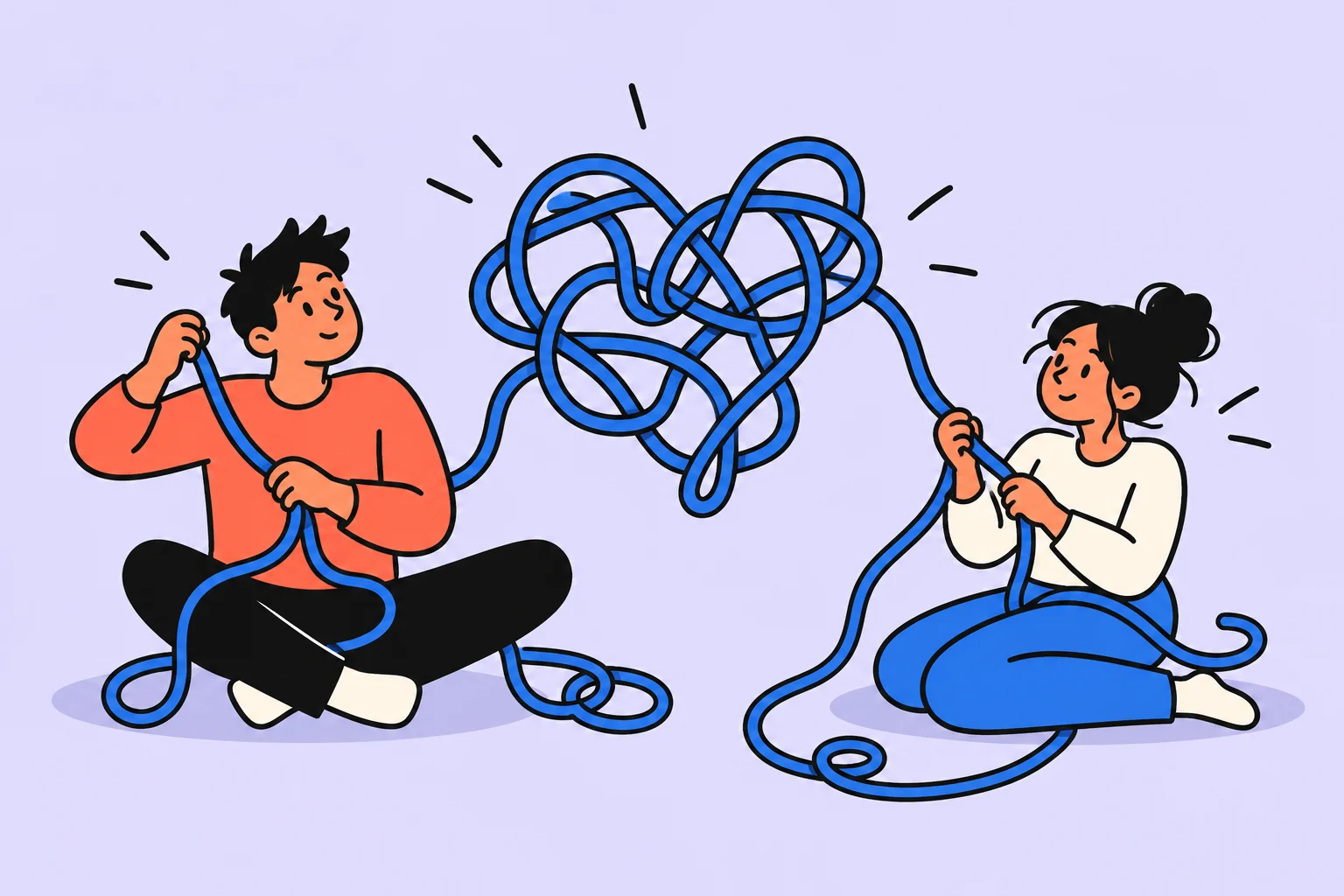
"He does not love me: he forgot our anniversary." "She never listens: she is always distracted." "Why can't you just put it in the calendar?" Couples where one partner has ADHD often hear these phrases. Attention deficit hyperactivity disorder creates unique relationship challenges, but with understanding and the right approach, people with ADHD can build strong, loving connections. This guide explains how ADHD affects relationships, common problems and established strategies for a happy partnership.
Adults with ADHD who divorce, compared with 20% of the general population
Greater risk of family conflict in couples affected by ADHD
Improvement in relationships after a partner understands ADHD
How ADHD affects relationships: key challenges
ADHD affects relationships through three main mechanisms: impaired executive functions such as planning, organization and memory; emotional dysregulation involving intense emotions and impulsivity; and attention difficulties such as distractibility and hyperfocus. These neurobiological differences create behavioral patterns a partner may interpret as inattentiveness, selfishness or unwillingness to try.
Forgetfulness is one of the most painful aspects. Someone with ADHD may forget an important anniversary, a partner's birthday or a promise to collect the children from school. Their partner sees this as proof they do not matter. The actual problem is working memory: the ADHD brain literally loses information despite the sincerest intentions.
Emotional intensity is another source of conflict. People with ADHD feel emotions at 200%: joy, sadness, irritation and love all feel deeper and more vivid. A partner may feel trapped on an emotional roller coaster without understanding what causes such abrupt mood swings. Adult ADHD symptoms help explain these differences.
It is important to understand that relationship behavior in people with ADHD does not reflect their feelings for their partner. Forgetfulness, distractibility and impulsivity are symptoms of a neurobiological condition, rather than a lack of love or respect.
Common relationship problems with ADHD
Chronic lateness creates ongoing tension in a couple. Someone with ADHD struggles to estimate time, known as time blindness, gets distracted on the way or forgets to allow for traffic. Their partner feels disrespected, especially when they are late for important events. "If he really wanted to, he would arrive on time" is a typical thought that damages trust.
Financial impulsivity is a serious source of conflict. People with ADHD may make spontaneous purchases, forget bills and struggle to budget. A dopamine deficit drives a search for immediate pleasure, and shopping provides a temporary high. A partner sees irresponsibility where there is a neurochemical imbalance.
Interrupting conversations is a frequent complaint from partners of people with ADHD. Impulsivity makes waiting for a turn difficult: a thought may be forgotten unless expressed immediately. Their partner feels unheard and believes their opinion is not valued. In reality, someone with ADHD may be deeply interested but unable to control the impulse to speak.
Time difficulties
Chronic lateness, underestimating time and forgetting appointments create relationship tension.
Financial difficulties
Impulsive purchases, forgotten payments and budgeting difficulties affect stability.
Communication challenges
Interrupting your partner, getting distracted during conversations and difficulty with active listening.
Household difficulties
Forgetting household responsibilities, clutter and procrastination on important tasks.
Emotional dysregulation in relationships
Emotional dysregulation in ADHD can turn minor disagreements into serious conflicts. Someone with ADHD may explode over something small, such as a partner putting a cup in the wrong place, then genuinely fail to understand the conflict an hour later. The emotional intensity during the conflict is real but passes quickly.
Rejection sensitive dysphoria is particularly painful in relationships. Any criticism, even constructive feedback, feels like rejection of the person. "You forgot to buy milk" may sound like "You are a bad person and a terrible partner." This leads to defensive reactions such as anger, withdrawal and counterattacks.
Hyperfocus can be both an advantage and a problem in relationships. Someone with ADHD may spend hours on an interesting project, forgetting their partner and family. "You love your work more than me" is a common complaint. Explain the nature of hyperfocus to your partner and find ways to manage it.
Strategies for the partner of someone with ADHD
Understanding and education are the foundation of a supportive relationship. Partners should learn about ADHD from reliable sources and understand the neurobiological nature of symptoms. Books by Russell Barkley, Melissa Orlov and Edward Hallowell help build empathy and identify effective support strategies.
Not taking symptoms personally is a key skill for partners of people with ADHD. Forgetfulness does not mean you do not matter. Distractibility does not mean your partner finds you boring. Emotional outbursts do not mean you are unloved. These are expressions of neurobiological differences rather than feelings toward you.
Provide external support structures: help with reminders without becoming a parent, create organizational systems such as shared calendars and to-do lists, encourage treatment and therapy, and praise effort as well as results. Use a task manager for shared planning.
Learn about ADHD
Read scientific literature and articles, and attend support groups. Understanding the neurobiology helps develop empathy.
Develop patience
Remember that change takes time. ADHD symptoms will not disappear in a week, but they can improve with the right support.
Practice clear communication
Make specific requests, use visual reminders and confirm important information in writing.
Take care of yourself
A relationship with someone who has ADHD can be draining. Seek support, maintain your own interests and avoid sacrificing yourself.
Focus on strengths
People with ADHD are often creative, spontaneous and empathetic. Appreciate these qualities while working on difficulties.
How to tell your partner about your ADHD
Being open about ADHD takes courage but usually brings enormous relief to both partners. Choose a calm time to talk, without stress or conflict. Start by saying that you have learned something important about yourself and want to share it. Avoid apologizing for your nature: ADHD is a difference, not your fault.
Explain that ADHD is a medical condition rather than a character flaw. Share specific examples of its effect on your behavior: "When I forget our plans, it is not because they do not matter to me, but because I struggle with working memory." Give your partner articles, books and videos to explore.
Discuss an action plan: what you are doing to manage ADHD through treatment, therapy and strategies, how your partner can help and what relationship changes are needed. Emphasize that the diagnosis does not excuse irresponsible behavior: you are committing to working on your symptoms. ADHD treatment should become a priority.
Communication with ADHD: effective techniques for couples
Effective communication in a couple affected by ADHD requires specific techniques. Use I-statements instead of accusations: "I feel unimportant when you are late" rather than "You are always late." This reduces defensive reactions and rejection sensitive dysphoria in a partner with ADHD.
Practice time-outs when emotions overheat. If a conversation becomes heated, pause for 20-30 minutes to calm down. This is especially important for people with ADHD, who may say something impulsively. Agree on a time-out signal that does not feel like rejection.
Create structure for important conversations: choose a time when the partner with ADHD is most focused, remove distractions such as phones and television, and use written notes for important points. Check understanding: "Have I understood correctly that you meant...?"
Managing relationship conflict with ADHD
Conflicts in couples affected by ADHD often escalate more quickly because of emotional dysregulation. Learn to recognize early warning signs and use de-escalation techniques. Focus on specific behavior rather than personality: "When you interrupt me" instead of "You never listen."
Avoid trigger words that activate rejection sensitive dysphoria: "always," "never," "you are like that" and "you are incapable." These phrases provoke defensive reactions and block productive problem-solving. Focus on the future: "How can we handle this next time?" instead of "Why did you do that again?"
Practice active listening: repeat what you heard before responding. This is especially important for people with ADHD because of impulsivity. "So you are saying you feel unheard when I get distracted by my phone. Is that right?" This shows respect and prevents misunderstandings.
The 24-hour rule: if a conflict is not resolved in one conversation, take a day-long break. This gives you time to cool down, reconsider the situation and find compromises. It is especially useful with ADHD when emotions become overwhelming.
ADHD and intimacy in relationships
ADHD can affect intimacy through several mechanisms. Distractibility makes staying present difficult: thoughts may drift to work problems even during intimate moments. This does not mean a lack of attraction or love for your partner; it reflects how the ADHD brain works.
Side effects of ADHD medication can affect libido. Stimulants sometimes reduce sexual desire or make orgasm more difficult. Discuss these issues openly with your partner and doctor. Adjusting the dose or changing medication may be possible.
Stress from other relationship problems, such as forgetfulness, conflict and financial difficulties, also affects intimacy. It is difficult to feel close when resentment and misunderstandings accumulate. Working on shared ADHD-related difficulties often naturally improves intimacy.
Family planning and ADHD: special considerations
Family planning with ADHD requires attention to several issues. Genetics: ADHD is inherited in 70-80% of cases; if one parent has ADHD, a child's risk is 25-35%. Discuss with your partner how prepared you are for a potentially neurodivergent child.
Pregnancy and medication: most ADHD medications are not recommended during pregnancy or breastfeeding. A pregnancy plan should include gradually stopping medication under medical supervision and strengthening non-medication strategies. Prepare for symptoms to worsen temporarily.
Parenting with ADHD creates unique challenges: forgetfulness can affect a child's safety, emotional instability can affect the family atmosphere and organizational difficulties can affect home life. However, parents with ADHD are often more creative, empathetic and understanding of neurodivergent children's difficulties. ADHD in women explores the particular challenges of motherhood.
Financial planning for couples affected by ADHD
Financial impulsivity is a serious problem for many people with ADHD. A dopamine deficit drives a search for immediate pleasure, and shopping provides a temporary high. Create safeguards: separate cards with spending limits for impulse purchases, and a 24-hour pause before major purchases.
Automate finances wherever possible: automatic payments for regular bills such as utilities, loans and insurance, and automatic transfers to savings. This compensates for forgetfulness and reduces the risk of late payments. Use spending-tracking apps with push notifications.
Divide financial roles: the more organized partner can manage the main budget while the partner with ADHD focuses on earning or other areas. Avoid excluding them completely, which can feel controlling and infantilizing. Discuss household finances regularly.
Creating a supportive home environment
Your physical home environment can support or worsen ADHD symptoms. Create a place for everything: keys always in one bowl by the door, documents in a specific folder and medication somewhere visible in the bathroom. This reduces the daily stress of searching for lost items.
Minimize visual distractions: remove unnecessary clutter, use closed storage and create calm areas for work and rest. Excessive environmental stimulation can be exhausting for people with ADHD. Avoid going too far, however: a completely sterile environment can feel depressing.
Use visual reminders: a calendar on the refrigerator, sticky notes with important tasks and different colors for different activities. Technology also helps: a shared Google Calendar, reminder apps and smart speakers for voice notes. Ease of use matters most.
A couple's social life with ADHD
ADHD can affect a couple's social life in several ways. Social situations can exhaust people with ADHD because they must control impulsivity, sustain attention in conversations and remember names and details. They may need recovery time afterward.
Forgetfulness can create awkward situations: forgetting an acquaintance's name, failing to bring a promised item or arriving late. A partner may feel embarrassed or obliged to cover for the behavior. Discuss strategies: save names in your phone, use reminders and arrive before the scheduled time.
Choose ADHD-friendly social activities: small groups rather than large parties, active pursuits rather than sitting around and familiar people rather than strangers. Make an escape plan so you can leave early if things become difficult. A partner should understand and support these needs.
When to see a couples therapist
Couples therapy can be very effective when one partner has ADHD. Seek a therapist if conflicts become frequent and destructive, one partner feels constantly overwhelmed, you are considering divorce or you cannot find workable strategies on your own.
A good couples therapist should understand ADHD and its effect on relationships. Not every therapist has experience with neurodivergence; look for specialists who mention ADHD in their practice. Therapy can improve communication, identify effective strategies and reduce conflict.
Couples therapy for ADHD usually focuses on ADHD education, building empathy in the partner without ADHD, creating support structures, addressing emotional dysregulation, improving communication and resolving accumulated resentment. Therapy is an investment in relationship quality rather than a sign of failure.
The strengths people with ADHD bring to relationships
Despite the challenges, people with ADHD bring unique strengths to relationships. Creativity and spontaneity make life more colorful: impromptu trips, unusual date ideas and unconventional solutions. A partner never knows what surprise awaits at home.
Emotional intensity, which can create difficulties, also means depth of feeling. People with ADHD love passionately, experience sincere joy and feel deep empathy. Their emotional openness and vulnerability can create special closeness.
Hyperfocus directed toward a partner can be incredibly powerful. When someone with ADHD focuses on the relationship, they can be exceptionally attentive, caring and present. These moments of deep connection compensate for periods of distraction and forgetfulness.
A Journal of Clinical Psychology study (2019) found that couples where one partner has ADHD, given mutual understanding and support, demonstrate greater creativity in problem-solving and greater relationship satisfaction than neurotypical couples.
Long-term strategies for successful relationships
Successful relationships with ADHD require a long-term approach and ongoing effort from both partners. Acceptance is the foundation: the partner without ADHD must accept their partner's differences, while the person with ADHD must take responsibility for managing symptoms. This means a realistic view of what can change rather than resignation.
Keep learning and adapting: ADHD presents differently across life stages, including stress, hormonal changes and job changes. Strategies that worked a year ago may need adjustment. Be willing to experiment and change.
Build a support team: a psychiatrist for medication management, a psychotherapist for individual work, a couples therapist for relationship work and support groups for sharing experiences. Do not try to manage alone; ADHD is better managed with professional help.
Frequently asked questions about ADHD in relationships
How does ADHD affect relationships?
ADHD can create challenges through forgetfulness, interpreted as indifference; impulsivity, leading to hasty decisions; emotional instability, causing conflict; and organizational difficulties, affecting household life. But with understanding and support, people with ADHD can build strong, loving relationships.
Should you tell your partner about ADHD?
Being open about ADHD usually improves relationships. Your partner stops interpreting symptoms as personal disrespect or unwillingness to try. Understanding ADHD's neurobiological nature helps build empathy and identify effective support strategies instead of blaming one another.
What relationship problems are common with ADHD?
Main challenges include forgetting important dates and agreements, chronic lateness, difficulty managing the home, financial impulsivity, emotional outbursts, interrupting conversations, putting off important tasks and an uneven division of household responsibilities.
How can you support a partner with ADHD?
Learn about ADHD, develop empathy, avoid taking symptoms personally, help with organization through calendars and reminders, praise effort and successes, practice patience, use I-statements, support your partner's treatment and take care of your own mental health.
Can you build a happy marriage with ADHD?
Yes. Many couples where one or both partners have ADHD build strong, happy relationships. Key factors include mutual understanding, open communication, accepting each other's differences, developing support strategies, focusing on strengths and professional help when needed.
How can you manage conflict with ADHD?
Conflict-resolution strategies include time-outs when emotions overheat, focusing on specific behavior rather than personality, practicing active listening, avoiding trigger words such as always and never, finding compromises and seeing a couples therapist for serious problems.
Does ADHD affect intimacy in relationships?
ADHD can affect intimacy through distractibility and difficulty staying present, medication side effects such as reduced libido, and stress from other relationship problems. Open discussion, planning intimate moments and reducing distractions can help.
How does ADHD affect parenting?
ADHD can create parenting challenges, including forgetfulness, organizational difficulties and emotional instability. However, parents with ADHD are often more creative, empathetic and understanding of neurodivergent children. External structures, a partner's support, acceptance of your differences and a focus on strengths are important.
Turn an idea into action
Was this helpful?
Rate the article and tell us what was missing. Your feedback goes to the Sinqly team and will not be published on the site.
Focus techniques for ADHD: what really works in 2026
Scientifically grounded methods for improving focus with ADHD. 12 proven concentration techniques, exercises, and tools for people with attention deficits.
Productivity for People with ADHD: The Complete 2026 Guide
A complete ADHD productivity guide. 15 established strategies, tools and techniques for people with attention difficulties, from ADHD experts.
ADHD and productivity: how to work effectively with ADHD
A practical productivity guide for people with ADHD. 10 strategies, tools, and techniques for working effectively with attention deficit hyperactivity disorder.