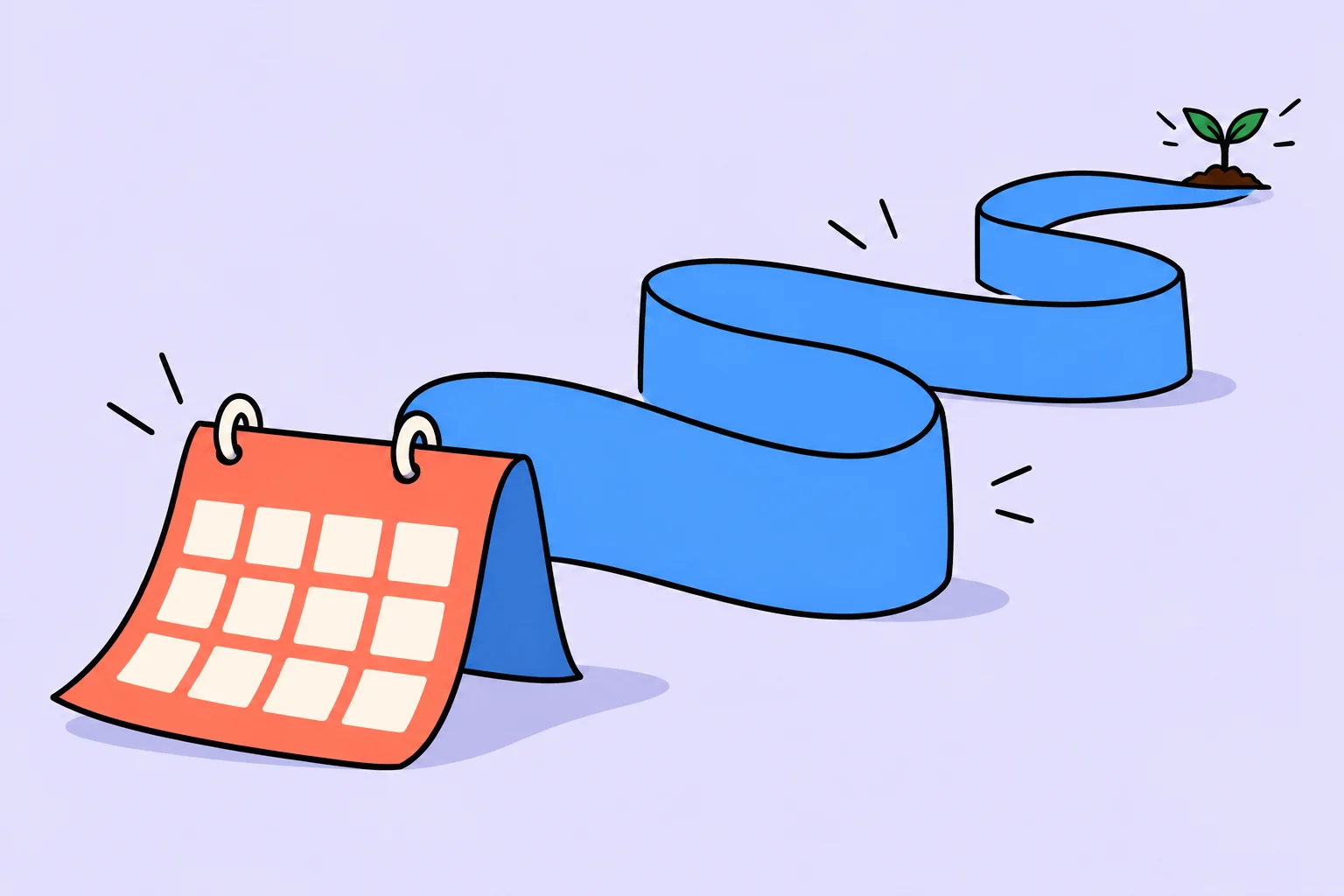
"Just 21 days and you have a new habit!" This phrase appears everywhere: self-improvement books, motivational posts and magazine covers. But how accurate is it? Let us examine the science, where the myth originated, what research actually shows and how long new behavior really takes to establish.
The popular habit-formation myth
The actual average timeline (UCL, 2009)
Range of days depending on complexity
Participants in Phillippa Lally's study
Where the 21-day myth began
It began with Maxwell Maltz, an American plastic surgeon who published "Psycho-Cybernetics" in 1960. He noticed that phantom sensations after limb amputation persisted for approximately 21 days. Plastic-surgery patients needed about the same time to adjust to their new reflection.
Maltz wrote that these and many other observations suggested it took at least about 21 daysfor an old mental image to dissolve and a new one to form. Notice the two key ideas: he referred to a minimum and a mental imagerather than behavioral habits. But popular culture heard only "21 days," and the idea spread.
For decades, bestselling authors, personal-development trainers and marketers of habit-trackingapps repeated the number. It seemed ideal: short enough to inspire and long enough to sound credible. By the 2000s, the 21-day rule was so widespread that people treated it as scientific fact.
The 21-day rule is a classic information cascade. A surgeon's observation, rather than a behavioral scientist's finding, was taken out of context, simplified and spread through millions of books, articles and posts. By the time scientists conducted a real study, the myth was firmly established.
What science says: Phillippa Lally's UCL study
Phillippa Lally and colleagues at University College London conducted the first large-scale scientific study of habit formation. The results, published in European Journal of Social Psychology in 2009, transformed understanding of timelines.
The 96 volunteers chose one new behavior, ranging from drinking water after breakfast to running for 15 minutes before dinner. Over 12 weeks, they reported daily how automatic the action felt using the Self-Report Habit Index (SRHI), a validated automaticity measure.
Average time to automaticity: 66 days. The range was 18 to 254 days. Simple actions such as drinking water formed in 18–30 days. Complex physical exercise required up to 254 days. One missed day did not destroy automaticity, but two or more consecutive gaps substantially slowed the process. The formation curve was asymptotic: rapid initial growth followed by gradual leveling.
The actual average is three times longer than the popular myth promises. The variation is enormous: someone may need two and a half weeks, while another needs more than eight months. Complexity, individual differences and context all matter.
Limitations of Lally's study
Despite its importance, the study has limitations. First, its sample of 96 people is relatively small by modern standards. Second, participants were university students or employees, not a representative cross-section of the population.
Third, it measured subjective automaticity: how automatic participants felt their behavior was. Objective neuroimaging data such as fMRI was not used. Neural patterns might form faster or slower than subjective feelings suggest.
Later research by Benjamin Gardner at King's College London partly confirmed and refined Lally's findings. Gardner found that consistent context, including time, place and trigger, reduces formation time by 30-40%. With good habit design, the average of 66 days can fall to 40-50 days.
Average timeline (Lally, 2009)
With stable context, according to Gardner
Acceleration when linked to a trigger
Why the 21-day myth persists
Several psychological factors explain the 21-day myth's persistence. First is anchoring bias : once a specific number is heard, the brain uses it as a reference point. Second, 21 days sounds optimistic: just three weeks. People prefer believing in quick results to a long process.
Third is confirmation bias: people who establish a simple habit in three weeks loudly share success. Those who quit on day 22 stay silent or blame their willpower. This creates the illusion that the formula works for everyone.
Fourth is the false-consensus effect: repeat a myth often enough and people believe everyone knows about 21 days. New authors cite older books, creating a circular chain that looks like many sources even though all trace back to Maltz's observation.
Finally, the self-improvement industry actively uses this myth. A 21-day challenge sounds like a concrete plan with a finish line. Working on habits without a deadline is less appealing in marketing but much closer to reality.
What other studies say about timelines
Lally's is not the only scientific study of habit-formation timelines. Other studies add context and explain how habits develop in different conditions.
Armitage's study (2005) in the Journal of Applied Social Psychology examined healthy-eating habits. Its 264 participants used implementation intentions, if-then plans similar to habit anchoring. Among those using specific plans, 80% maintained the habit after 8 weeks, compared with 40% in the control group.
Judah et al. (2013), in the British Journal of Health Psychology, studied flossing habits specifically. The 50 participants linked flossing to brushing. Automaticity developed in an average of 36 days, much faster than Lally's 66 days, supporting the idea that simple hygiene habits form faster.
Work by Vernier and Stanford (2020) found that digital-device habits such as checking social media and scrolling form especially quickly, in 10-14 days. Each new post, like or message provides a small dopamine reward. Understanding this reinforcement lets you use it constructively by adding immediate rewards to helpful habits.
What affects habit-formation speed?
The range of 18 to 254 days is not random. Specific, measurable factors affect formation speed. Understanding them lets you deliberately accelerate the process.
Action complexity
Drinking water is a simple motor action taking 10 seconds. Running for 30 minutes is complex, energy-intensive and requires preparation. More friction between you and the action means longer formation. This explains why micro habits form much faster: they minimize friction.
Emotional reward
Immediate pleasure, such as a delicious post-workout smoothie, strengthens the habit loop faster. Delayed rewards, such as weight-loss results months later, slow it down. This is the reward gap. Research shows that adding an immediate small reward can shorten formation time by 25%.
Trigger strength and consistency
A clear, repeated trigger such as an alarm or finishing lunch works better than an abstract intention to act when you feel like it. Research by Wendy Wood at USC found context stability to be a key predictor of successful habit formation. A consistent environment helps the brain recognize a trigger and initiate an automatic response.
Individual differences
Neuroplasticity, stress, sleep quality and genetic predisposition all affect learning speed. Chronic stress slows habit formation because cortisol suppresses neuroplasticity in the hippocampus and prefrontal cortex.
Social environment
Support from loved ones and an AI coach can significantly accelerate the process, while criticism and isolation slow it down. An MIT study (2012) found socially supported habits form 40% faster than habits developed alone.
How habits actually form: neuroscience
Neuroscience describes formation through the habit loop: trigger, action and reward. Each repetition strengthens a neural pathway in the basal ganglia, the region responsible for automatic actions.
The key point: automaticity develops through a certain number of high-quality repetitions in a stable context rather than a fixed number of days. Meditating every morning after coffee in the same place builds a habit faster than meditating at random times and in changing circumstances.
Habit formation has three neural phases. In the first, days 1-14, the prefrontal cortex is active as you consciously decide to act. This is the most energy-demanding stage and when most people quit. In the second, days 14-40, control begins moving to the striatum: action takes less effort but is not yet automatic. In the third, days 40+, the basal ganglia take on most of the work and action becomes automatic.
An fMRI study by Tricomi et al. (2009) found that activity shifts from the ventromedial prefrontal cortex, associated with planning, to the dorsolateral striatum, associated with automatic behavior, as habits form. This gradual neural relocation explains why habits cannot form instantly: the brain must physically restructure connections.
Habit neuroscience also explains why old habits are difficult to break. Once formed in the basal ganglia, a neural pathway does not disappear. Without reinforcement it can weaken, but remains recorded. This explains why someone who quit smoking years ago can relapse after one cigarette.
The same mechanism also helps positive habits. If you ran daily for a year and paused for a month, restarting is much easier than starting from scratch. The neural pathway remains and needs reactivation. This explains why returning to a habit after a break is faster than its initial formation.
A practical plan: 90 days instead of 21
Instead of an unrealistic 21-day challenge, try a 90-day plan, covering the formation of moderately complex habits for most people.
A 90-day habit-building plan
Phase 1: Initiation (days 1-14)
Start with a micro version taking less than 2 minutes. Link it to an anchor action. Focus on daily completion rather than quality. Use a tracker to visualize your streak. Avoid missing any days.
Phase 2: Building up (days 15-40)
Increase duration or complexity gradually, by no more than 10-15% weekly. If resistance appears, return to the minimum. Add a small immediate reward after completion. One missed day is acceptable; two in a row are not.
Phase 3: Stabilization (days 41-66)
The action should feel increasingly automatic. You notice yourself doing it on autopilot. Experiment with different times or places to strengthen flexibility.
Phase 4: Establishment (days 67-90)
The habit becomes part of your identity. You are no longer trying to meditate; you are someone who meditates. Consider the next habit, using the current one as an anchor for stacking.
Remember that 90 days is a reference point, not a deadline. If after 90 days the habit is not fully automatic, continue. Every repetition strengthens the neural pathway even if you still feel you are making yourself act.
Keep a brief automaticity journal. Weekly, rate how automatic the action feels from 1 to 10: 1 means making yourself do it every time, and 10 means acting without thinking. Consistent ratings of 8-9 indicate an established habit.
Habits across life areas: realistic formation timelines
Formation time depends on the life area as well as the individual. Below are realistic timelines based on research and clinical practice.
Physical habits
- Morning water: 18-25 days
- 5 minutes of exercise: 30-50 days
- 20-30-minute run: 90-180 days
- A full gym workout: 120-254 days
Mental habits
- Gratitude journal (1 min): 20-35 days
- Meditation for 5 minutes: 40-66 days
- Journaling for 15 minutes: 50-90 days
- Mindfulness throughout the day: 90-150 days
Productivity habits
- Daily planning (2 min): 20-30 days
- A 30-minute deep-work block: 40-66 days
- Deep work for 2 hours: 66-120 days
- Waking up early (2+ hours earlier): 90-200 days
These are reference points rather than deadlines. Taking longer does not mean you are doing something wrong: your brain works at its own pace. Plan realistically: to establish running by summer, start at least 3-4 months ahead rather than 3 weeks.
Tools for tracking habit-formation progress
Visual tracking is a powerful habit-building tool. Seeing an uninterrupted chain of completed days, astreak, activates the sunk-cost effect: you do not want to lose accumulated progress.
A Journal of Consumer Research study found that visual tracking increases habit-maintenance likelihood by 42%. Format matters: a simple checklist works better than complex charts and metrics. Initially, the only question is whether you did it.
Choose a small action and record which event will precede it. Create a task in Sinqly; registration is free.
Other habit-formation myths
The 21-day myth is not the only misconception. Here are other common myths that prevent lasting habits.
Myth: You need iron willpower. Willpower is a depletable resource, according to the ego-depletion model. Roy Baumeister's research found that each decision uses self-control reserves. Successful people design their environment to require less willpower rather than having more. Put running shoes by the door instead of forcing yourself to run.
Myth: Motivation is the key to success. Motivation fluctuates with mood, sleep and weather. Systems are more consistent. James Clear describes people as falling to the level of their systems rather than rising to their goals. A micro habit linked to a trigger is a system independent of motivation.
Myth: Miss a day and start over. Lally's study is clear: one missed day does not erase progress. The neural pathway remains. The danger is psychological: deciding everything is ruined and quitting. Never missing twice counters this myth.
Myth: A habit means repeating an action 21/30/66 times. Repetition count is not the main factor. Quality matters: stable context, emotional reward and low stress. Doing something 30 times at different times and places is less effective than 20 repetitions at the same time and place.
Why habit timelines differ for everyone
Beyond complexity, rewards and triggers, less obvious variables affect habit-formation speed.
Age. Neuroplasticity decreases with age but does not disappear. Studies suggest people aged 50+ need 20-30% more time than 20-year-olds to establish a new habit. Older people benefit from greater self-discipline and motivation. Those aged 40-60 more often achieve automaticity even when it takes longer.
Personality. Introverts and extroverts form habits at different speeds depending on type. Social habits such as networking and conversation develop faster for extroverts; individual habits such as meditation and journaling develop faster for introverts. Understanding your type helps choose habits that form more quickly.
Emotional context. Habits associated with positive emotions form faster than obligations. If you hate running, the habit develops painfully slowly. If you love swimming, that habit forms faster. Choose an activity you enjoyrather than one considered most beneficial.
Previous experience. After successfully forming habits, later ones become easier. The brain learns to learn, becoming more efficient at creating neural pathways each time. This is called metaplasticity.
Sleep. Memory consolidation, including procedural memory underlying habits, happens mainly during sleep. Chronic sleep deprivation slows formation by 30-50%. If you are serious about habits, prioritize sleep quality.
Stress. Chronic stress increases cortisol, suppressing neuroplasticity and making new patterns harder to form. Paradoxically, when stressed we most want change but are least able to implement it. Consider a stress-reducing first habit such as breathing, walking or a reflection journal.
Why 21-day challenges still have value
Although 21 days is a myth for automaticity, 21-day challenges have value. They lower the barrier to starting rather than fully establishing a habit. Trying something for 21 days sounds less intimidating than changing your life forever.
Psychologically, 3 weeks is an experiment. You are trying something rather than committing for life. This reduces resistance and helps you start, the hardest part. If after 21 days you feel benefits, you continue because you want to rather than because you must.
Treat a 21-day challenge as the first of three phases rather than enough time to form a habit. Phase 1, days 1-21: try and adapt. Phase 2, days 22-60: reinforce and build. Phase 3, days 61-90+: establish automaticity. This preserves the challenge's motivational effect while adding realistic expectations.
How to apply this knowledge
Realistic timelines are a planning tool rather than a reason to feel discouraged. Here are recommendations based on the combined research:
Start absurdly small. BJ Fogg's method starts with an anchor habit so small you cannot refuse it. Replace meditating for 20 minutes with sitting on the cushion, or reading for an hour with opening a book. The minimum action develops automaticity that can be expanded later. Read more in our article on micro habits.
Link it to an existing habit. Habit stacking uses "After [existing action], I will [new action]." Contextual anchoring accelerates automaticity by 30-40%. Read more about habit formation.
Track progress visually. The streak effect is a powerful motivator.
Keep going after a missed day. One gap is not a disaster; two consecutive gaps are a warning. Never miss twice in a row. After a missed day, return to the minimum version even if you usually do more.
Plan for 90 days rather than 21. Set a realistic horizon. Knowing you have 3 months ahead prevents quitting on day 22 because it is not working. You are still getting started.
How to keep a habit beyond 21 days
Day 22 is particularly dangerous. People who believe the myth expect automaticity on day 22. When it does not happen, disappointment follows: "I did everything right for 21 days, but nothing changed." They quit halfway toward genuine automaticity.
Avoid this trap by remembering that automaticity develops graduallyrather than at one moment. You will not wake on day 67 declaring your habit established. One day you will notice yourself acting without thought. It may happen on day 30 or day 120; both are normal.
Practical strategies from researchers studying lasting habitsinclude lowering the bar on difficult days, such as replacing 20 minutes of running with 5 minutes of walking, visual streak tracking and an accountability partner. Most importantly, do not interpret low motivation as a signal to stop. Motivation follows action rather than causing it.
Realistic timelines: what to expect
- Simple habits such as morning water, vitamins or 5 minutes of reading: 18–40 days
- Moderate habits such as 20 minutes of walking, journaling or meditation for 10 minutes: 40–90 days
- Complex habits such as running for 30+ minutes, language learning or early waking: 90–254 days
Avoid fixating on a number. Focus on the process: every repetition strengthens the pathway even before automaticity is noticeable. James Clear describes people as falling to the level of their systems rather than rising to their goals. A micro habit linked to an anchor and reinforced by tracking is a system. Atomic Habits is an excellent book for exploring this further.
Frequently asked questions
How many days does it take to build a habit?
According to UCL research by Phillippa Lally (2009), the average is 66 days, ranging from 18 to 254 depending on complexity and individual differences. Simple habits form in 3-4 weeks; complex ones take 3-8 months.
Where did the 21-day myth come from?
It came from plastic surgeon Maxwell Maltz's "Psycho-Cybernetics" (1960). He observed that patients needed at least 21 days to adjust to their appearance after surgery. Popular culture turned this observation into a universal formula unsupported by scientific evidence.
Can you build a habit faster than 66 days?
Yes. Simple habits form in 18–30 days. Stable context with the same time and place, a clear trigger, immediate rewards and visual tracking can accelerate formation. Context stability reduces the timeline by 30-40%.
Does missing one day destroy a habit?
No. UCL research found that a single missed day does not affect automaticity. Avoiding two or more consecutive gaps is crucial. After a missed day, return to the minimum version the following day.
Which habit tracker should you use?
A digital tracker with reminders and analytics is more effective than paper, increasing success likelihood by 42%.
Why do some people form habits faster than others?
Factors include complexity, emotional reward, trigger strength, age, sleep quality, stress and previous habit-building experience. Chronic sleep deprivation slows formation by 30-50%.
How long does a daily running habit take?
According to Lally's study, complex physical habits such as daily running require 90 to 254 days. Regular running averages around 150 days with a stable time and route. Start with putting on running shoes after breakfast, which forms in 20-30 days, then expand to running.
Observing progress without a 21-day promise
Choose a small repeatable step and track its conditions as well as completion. If the action always requires complicated preparation, simplify that preparation. If the timing does not work, change it. Automaticity develops at different speeds; a calendar mark does not prove a habit is established.
Morning walks keep falling through because getting ready is difficult. Instead of concluding that you lack discipline, prepare clothes the evening before and try a shorter route. Observe whether starting becomes easier without promising yourself a fixed timeline.
- Compare the same actions in similar circumstances.
- Avoid drawing conclusions from one good or bad day.
- Use your notes to choose the next small experiment.
Was this helpful?
Rate the article and tell us what was missing. Your feedback goes to the Sinqly team and will not be published on the site.
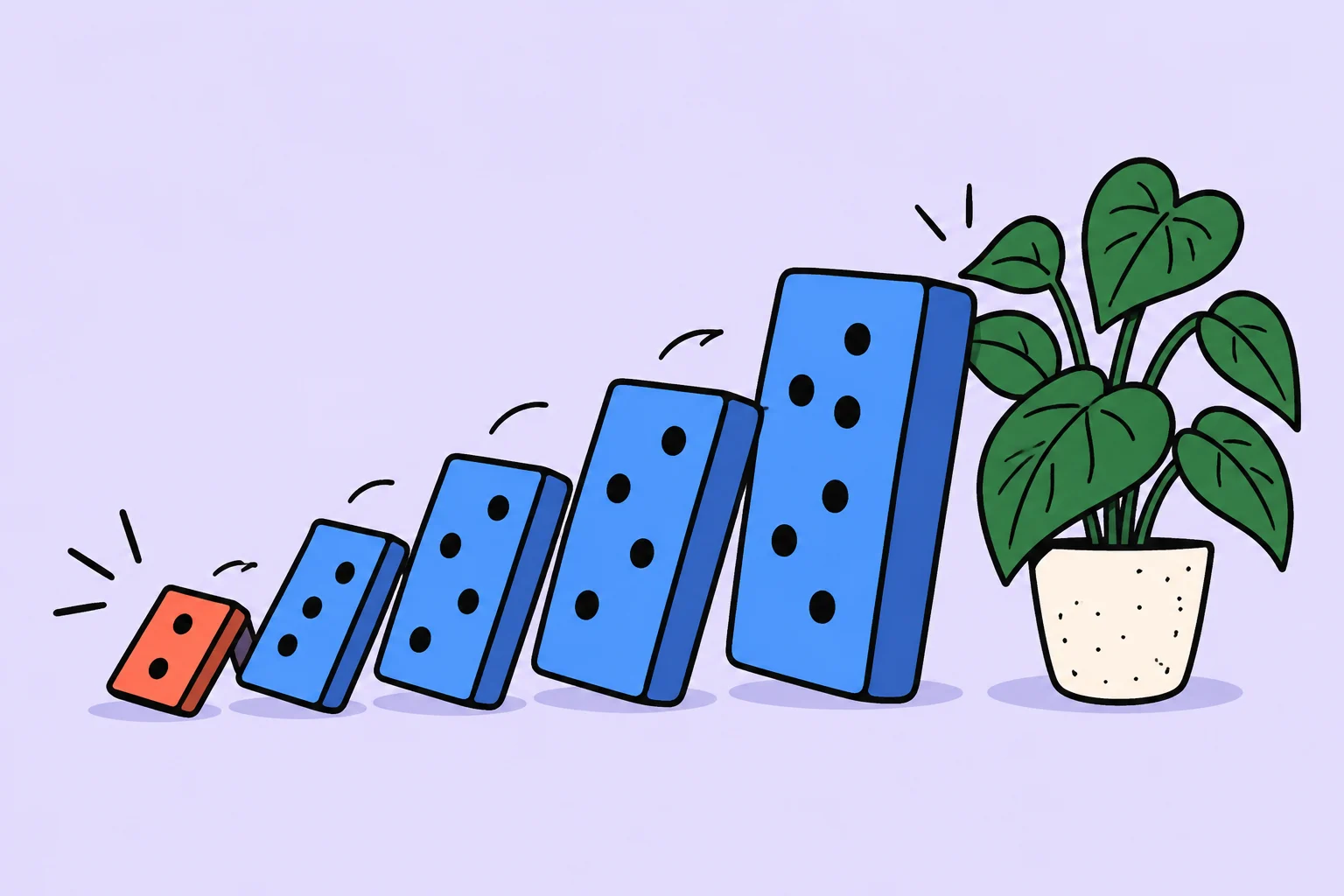
Atomic Habits: A Summary of James Clear’s Book
A summary of Atomic Habits: the 4 laws of behavior change, the 1% principle, the habit loop, and practical ways to apply Clear’s ideas.
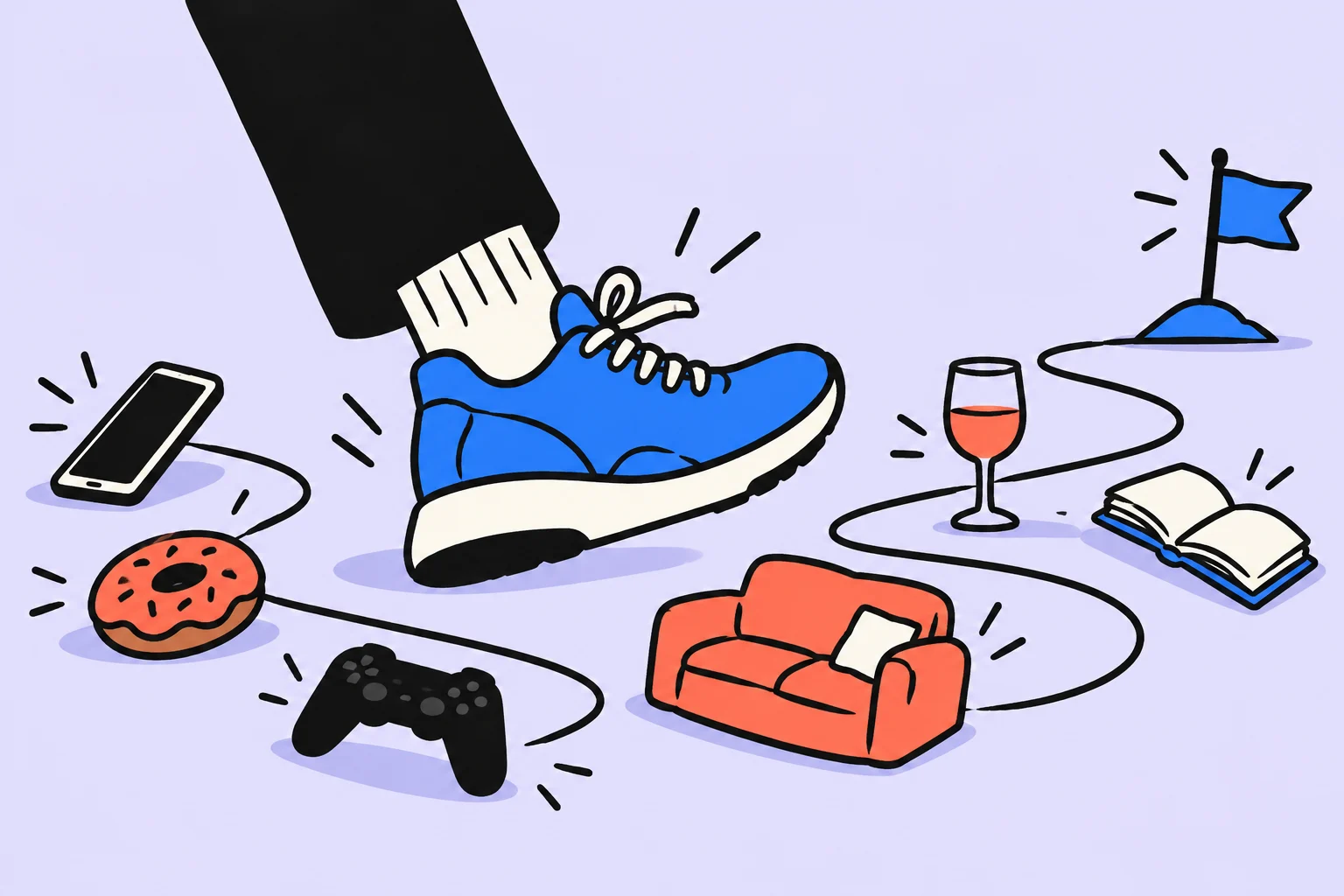
How to stick with a habit: 8 science-based strategies
Why 80% of people abandon habits within 2 weeks and how to avoid it. 8 strategies for maintaining habits supported by neuroscience and behavioral psychology.
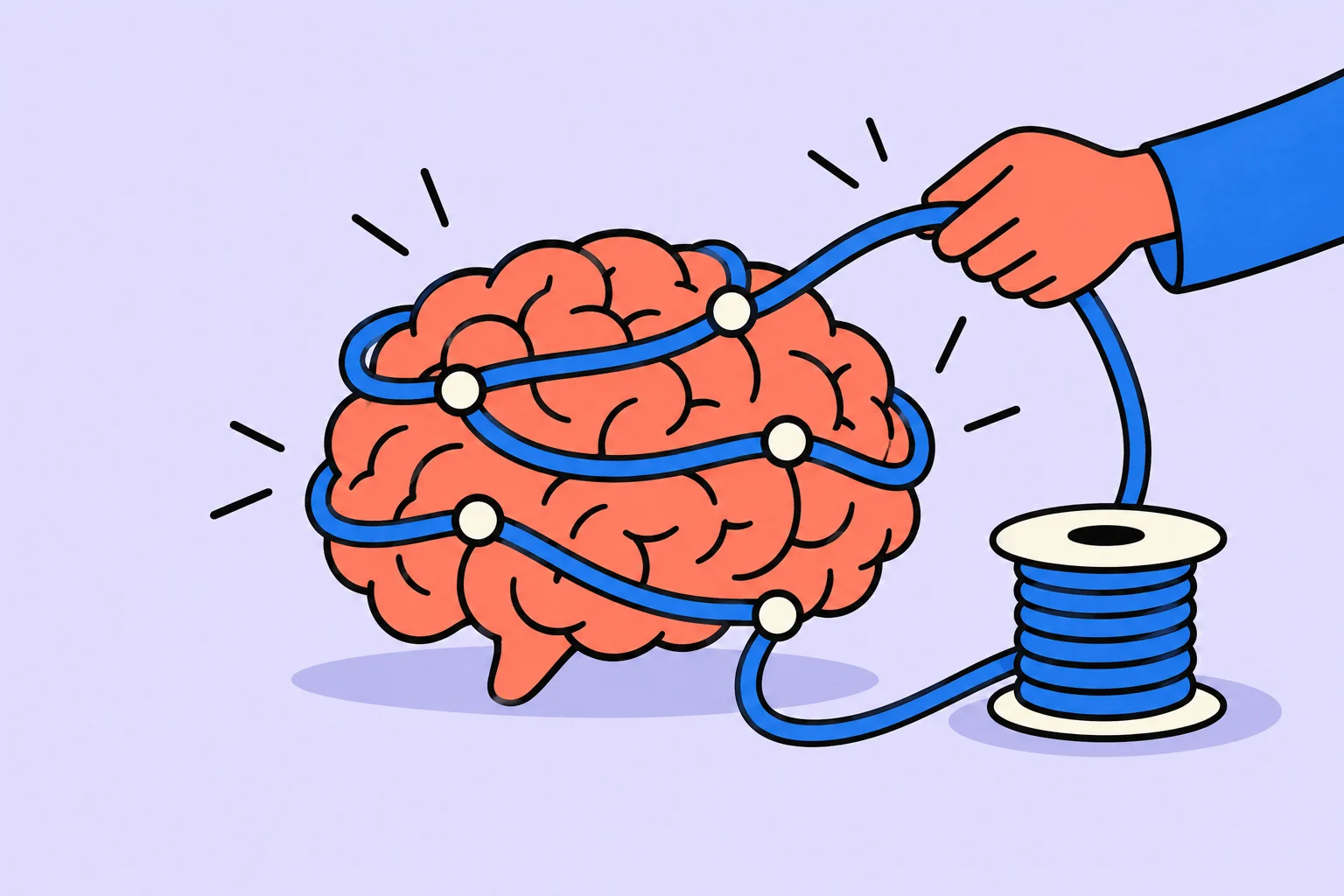
How habits change the brain: habit neuroscience in simple terms
What happens in the brain when we form habits? The basal ganglia, myelination, dopamine, and the habit loop: neuroscience explained accessibly.