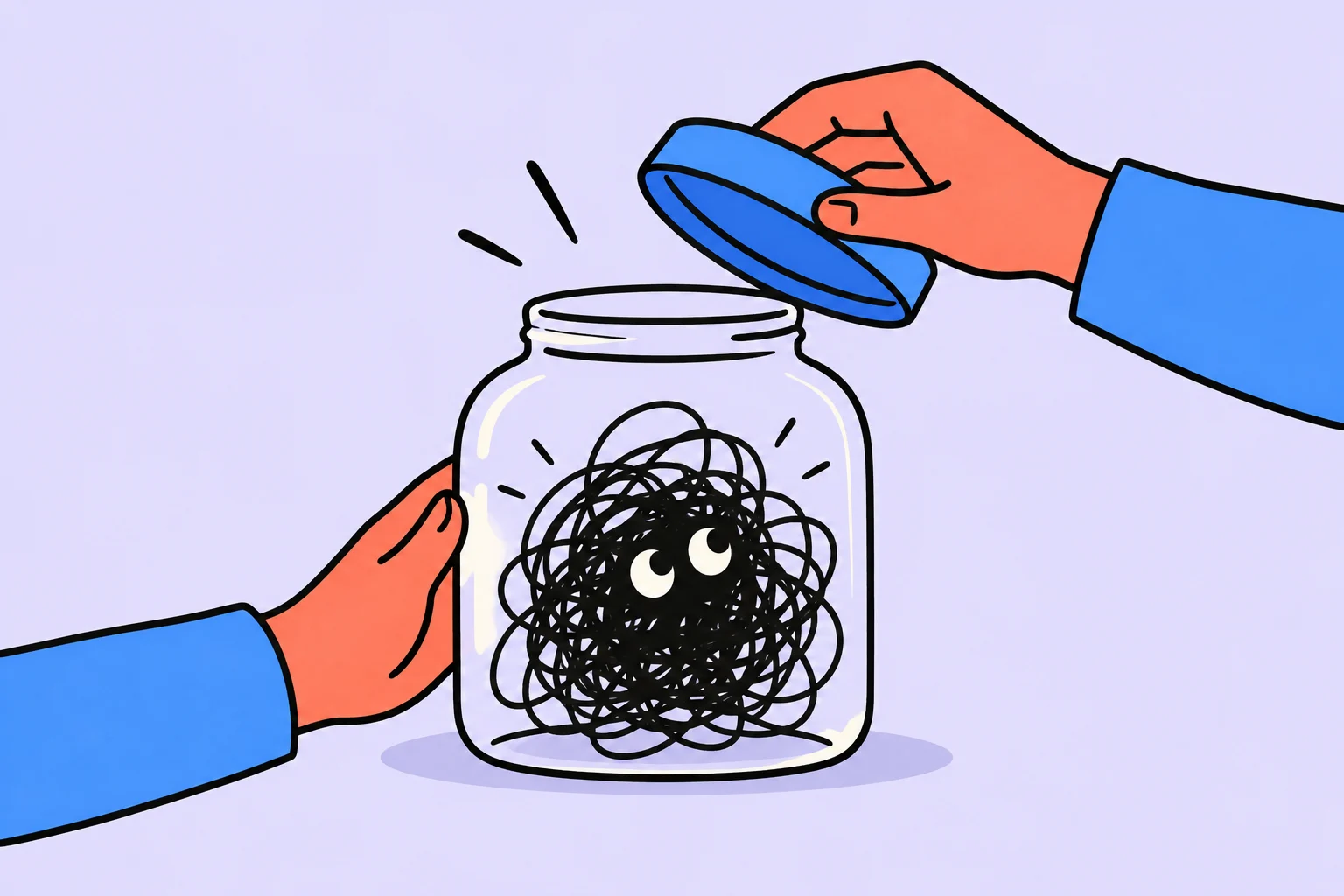
Anxiety is one of the main psychological problems of the twenty-first century. According to the WHO, more than 300 million people worldwide have anxiety disorders, and that number grows every year. Uncertainty, information overload, and social pressure all create ideal conditions for chronic anxiety. If you are looking for an answer to how to manage anxiety, this article provides specific, scientifically grounded tools. It offers step-by-step methods you can apply today, rather than abstract advice to simply relax.
What is persistent anxiety, and how does it differ from situational anxiety?
Before exploring how to manage anxiety, it is important to distinguish situational anxiety from persistent anxiety. Situational anxiety is an emotion: nervousness before an exam, worry before an interview, or fear before a presentation. It fits the situation and passes once it is resolved. Persistent anxiety is a chronic state where worry is not tied to a specific threat or is disproportionate to it. You worry about everything, cannot relax, and constantly expect the worst.
An anxiety disorder is a clinical diagnosis made when anxiety significantly impairs a person's daily functioning for 6 months or more. There are several forms: generalized anxiety disorder (GAD), panic disorder, social phobia, specific phobias, and obsessive-compulsive disorder. Each form has its own characteristics, but the basic mechanisms for reducing anxiety work with any variant.
Physical manifestations of anxiety vary: rapid heartbeat, shallow breathing, muscle tension (particularly the neck, shoulders, and jaw), gastrointestinal problems, insomnia, sweating, dizziness, and a lump-in-the-throat sensation. Psychological manifestations include intrusive thoughts, difficulty concentrating, irritability, a sense of impending catastrophe, and avoiding uncomfortable situations. Many people live with these symptoms for years without realizing they have an anxiety disorder that can be addressed.
people worldwide live with an anxiety disorder (WHO, 2023)
Russians report increased anxiety over the past 3 years
anxiety cases respond to therapy without medication
minimum symptom duration for a GAD diagnosis
Why anxiety develops: causes and risk factors
Anxiety results from the interaction of genetics, environment, and personal experience. Twin studies show that anxiety disorders have a heritability of 30–40%. This means genetics creates a predisposition rather than a sentence: lifestyle and self-regulation skills play a decisive role. Key risk factors include:
Childhood experience. Overprotection, critical parenting, and insecure attachment create an anxious model of the world, where danger lurks everywhere. A child constantly told “be careful,” “you will not manage,” and “the world is dangerous” grows into an adult who perceives normal situations as threatening.
Chronic stress. Prolonged exposure to a stressful situation, such as a difficult job, financial problems, or conflicted relationships, exhausts the nervous system. With chronic stress, cortisol, the stress hormone, stays elevated, literally reshaping the brain: the amygdala (the fear center) enlarges, while the prefrontal cortex (the center of rational control) weakens.
Information overload. A constant stream of news, notifications, and social media creates a sense of unending threat. The brain does not distinguish between actual danger and a news item you read: the stress response is the same. According to American Psychological Association, 56% of people who regularly read the news experience increased anxiety.
Caffeine blocks adenosine receptors and stimulates adrenaline release, the same hormones activated during anxiety. If you are prone to anxiety, limit caffeine to 200 mg daily (about 2 cups of coffee) and do not drink coffee after 14:00. For many people, simply reducing caffeine lowers anxiety by 20–30%.
Cognitive techniques for reducing anxiety
Cognitive behavioral therapy (CBT) is the gold standard for treating anxiety disorders, with an evidence base of hundreds of randomized studies. CBT's central idea is that our interpretation of events causes anxiety, rather than the events themselves. The anxious brain systematically distorts reality, exaggerating threats and underestimating its own resources. Here are three key techniques you can practice independently.
Cognitive reappraisal
When an anxious thought appears, do not try to suppress it: suppression only increases its intensity. Instead, ask three questions: what evidence supports this thought? What evidence contradicts it? What is the most realistic outcome, rather than the worst or best? For example, the thought “I will be fired.” Supporting evidence: the manager looked gloomy yesterday. Contradicting evidence: the last performance review was positive, I was assigned an important project, and there were no warnings. Realistic outcome: the manager was gloomy for personal reasons. Write down this analysis: writing works significantly better than doing it mentally.
Decatastrophizing
The anxious brain tends to build chains of catastrophes: a presentation mistake → dismissal → lost income → losing your apartment → a ruined life. Every step feels inevitable, but objectively this is a chain of unlikely events. For each step, ask: “What is the real probability?” By the third or fourth link, the probability becomes negligible. This is rational, fact-based assessment rather than positive thinking.
Exposure: gradually facing fear
Avoidance is anxiety's main fuel tank. The more situations you avoid, the stronger anxiety becomes. Exposure, a gradual and controlled encounter with frightening situations, breaks this cycle. Create a hierarchy of fears from least to most frightening, and start at the bottom. Each time you go through an anxious situation and nothing terrible happens, your brain updates its threat map.
When anxiety takes hold, ask yourself how you will feel about this in 10 minutes, in 10 months, and in 10 years. Most anxious thoughts lose power when you expand the time horizon. What seems catastrophic now will be a forgotten episode in a year.
Breathing techniques: quick help for anxiety
Breathing is the only autonomic function you can consciously control. Through breathing, you influence the entire autonomic nervous system. When you slow your exhalation, the parasympathetic system activates, and the body receives the message: there is no danger, you can relax. This is not a metaphor: the vagus nerve directly connects the diaphragm to the brain.
The 4-7-8 technique
Breathe in through your nose for 4 counts → hold for 7 counts → slowly breathe out through your mouth for 8 counts. Repeat 4 cycles. Developed by Dr. Andrew Weil. A long exhalation activates the vagus nerve, reducing heart rate and blood pressure. The effect begins after the first cycle.
Diaphragmatic breathing
Place a hand on your abdomen. Breathe in so your abdomen rises while your chest stays still. Breathe out slowly. 5–10 minutes reduces cortisol by 20–25%. Practice daily, rather than only during anxiety.
Coherent breathing
Breathe at a rate of 5–6 breaths per minute: inhale for 5 seconds, exhale for 5 seconds. This rate synchronizes breathing, heart rate, and blood pressure, creating a state of coherence. Studies show a 44% reduction in anxiety after 4 weeks of practice.
5-4-3-2-1 grounding
Name 5 things you can see, 4 you can hear, 3 you can feel through touch, 2 smells, and 1 taste. The technique brings attention back from an imagined future, where anxiety lives, to the present moment, where things are usually all right.
The key rule: practice breathing techniques every day while calm. Then, when anxiety occurs, the skill will be established and you can use it automatically. Try adding 5-minute coherent breathing as a morning ritual using a habit tracker.
Habits that reduce anxiety: everyday prevention
How do you manage anxiety over the long term? Through systematic lifestyle changes. Anxiety cannot be cured by one technique or one conversation with a therapist. It is a state regulated by everyday habits. Certain practices, performed regularly, lower baseline stress enough that everyday triggers stop provoking an excessive response.
Physical activity
30 minutes of aerobic exercise (running, swimming, or walking) reduces anxiety as effectively as an anxiolytic. A meta-analysis of 49 studies confirms that regular exercise increases BDNF and protects the brain from stress.
Mindfulness meditation
An 8-week MBSR program reduces anxiety by 30–40%. Even 10 minutes of daily meditation produces a noticeable effect after 2–3 weeks. The point is training attention rather than emptying the mind.
Journaling
Writing down anxious thoughts reduces their intensity. 15–20 minutes of expressive writing for 4 consecutive days significantly reduces stress (Pennebaker's research) and even improves immunity.
Limiting news
Information anxiety is real. Set a news budget: no more than 15–20 minutes daily, from reliable sources, neither in the morning nor before bed. Endless scrolling is a direct channel of anxiety into the brain.
Quality sleep
One sleepless night increases amygdala activity by 60%. A fixed schedule, a cool room, and avoiding screens for an hour before bed are basic hygiene against anxiety.
Social connections
Isolation increases anxiety. Oxytocin produced during trusting communication directly suppresses the stress response. Even one candid conversation per week lowers cortisol.
You do not need to introduce every habit at once: that would itself become a source of stress. Choose one or two, practice for 3–4 weeks until automatic, then add the next. For systematic tracking of habits , use digital tools: a visual progress bar motivates you to stick with them.
Body-based practices for anxiety disorders
Anxiety lives in the body as well as the head. Tense muscles, a rigid posture, and clenched teeth all signal danger to the brain. Working with the body breaks this cycle. Jacobson's progressive muscle relaxation (PMR) is one of the most studied body-based techniques for reducing anxiety.
PMR involves sequentially tensing and relaxing muscle groups. Start with your fists: clench for 5 seconds, then release abruptly and feel the contrast. Move to your forearms, shoulders, face, neck, back, abdomen, and legs. The whole cycle takes 15–20 minutes. A meta-analysis (PubMed, 2020) found that PMR reduces anxiety scores by 0.57 on Cohen's d scale, a medium-to-large effect.
Yoga combines physical activity, breath control, and a meditative component. In a small randomized study by Streeter and colleagues (2010), healthy adults reported a greater reduction in anxiety and improvement in mood after 12 weeks of yoga than the walking group. This does not establish treatment for an anxiety disorder and does not replace professional help. Choose a manageable practice suited to your condition.
A simple but effective practice is a daily 20-minute walk in nature. Stanford University studies found that even a 90-minute walk in a park reduces activity in the subgenual prefrontal cortex, a brain region linked to rumination, the obsessive replaying of negative thoughts. Nature literally resets the brain.
Nutrition and anxiety: the gut-brain axis
The connection between gut and brain is one of neuroscience's hottest research areas. Up to 95% of serotonin (the neurotransmitter of calm and well-being) is produced in the gut rather than the brain. The gut microbiome directly influences anxiety levels through the vagus nerve, immune system, and neurotransmitter production.
What should you eat to reduce anxiety? Magnesium-rich foods such as dark chocolate, nuts, spinach, and avocado: magnesium is called a natural tranquilizer, and its deficiency correlates with increased anxiety. Omega-3 fatty acids from oily fish, flaxseed, and walnuts: a meta-analysis of 19 studies found that taking omega-3 reduces clinical anxiety. Fermented foods such as kefir, sauerkraut, and kimchi support a healthy microbiome.
What to limit: refined sugar (causes glucose spikes that mimic anxiety symptoms), alcohol (although it produces brief relaxation, it increases anxiety by 20–30% over the long term), and ultra-processed foods (disrupt the microbiome's balance). A study The Lancet Psychiatry found that a Mediterranean diet reduces the risk of developing anxiety disorders by 33%.
A systematic review of 18 studies (Nutrients, 2017) found that magnesium supplementation has a positive effect on subjective anxiety, particularly in people with premenstrual syndrome, postpartum anxiety, and generalized anxiety. The recommended dosage is 200–400 mg of magnesium glycinate daily. Consult a doctor before starting supplementation.
How to manage anxiety: digital tools and AI support
Technology can increase or reduce anxiety: it depends on how you use it. Uncontrolled social-media scrolling increases anxiety, while conscious use of digital tools helps manage it. Here are several strategies for using technology to tackle anxiety.
Habit tracking. Tracking anxiety-reducing habits such as meditation, exercise, and journaling increases the likelihood of completing them by 40%. A visual progress bar creates positive reinforcement.
AI coaching. Cognitive reappraisal is a powerful technique, but during anxiety it is hard to be objective about your own thoughts. An AI coach can guide you through reappraisal: ask the right questions, help find evidence contradicting an anxious thought, and suggest an alternative interpretation. This is accessible support at any time of day, rather than a replacement for a therapist.
Structuring the day. A chaotic schedule increases anxiety. Planning the day with clear blocks for work, rest, physical activity, and social contact provides a sense of control, and control is the best antidote to anxiety. Use a daily planner to structure your routine.
Social support and healthy boundaries with anxiety
Isolation is both a symptom and an amplifier of anxiety. The anxious brain feels it is better to be alone, but that is a trap. Social connection is one of the most powerful antidotes to stress. Oxytocin produced during trusting communication directly suppresses the stress response and lowers cortisol.
However, communication is not always beneficial. People and situations that systematically increase your anxiety are toxic triggers. Learn to say no without guilt. Limit contact with people who dismiss your feelings (“Come on, that is nothing!”) or, conversely, fuel anxiety. This is mental-health hygiene rather than selfishness. You do not feel guilty about brushing your teeth, and caring for your boundaries is equally important.
If sharing worries with loved ones is hard, start small: tell one trusted person how you feel. Simply verbalizing anxiety reduces its intensity. UCLA neuroimaging studies confirmed this, showing that naming an emotion reduces amygdala activity. Saying “I am anxious right now because...” literally weakens the brain's anxiety response.
Anxiety disorder: when professional help is needed
Self-help works with moderate anxiety. However, some situations require professional help. How do you know it is time to consult a specialist? Look for these markers: anxiety interferes with work, relationships, or everyday life for more than 2 weeks; you avoid more and more situations out of fear; panic attacks have become regular; you use alcohol or substances to calm yourself; anxiety is accompanied by depression, suicidal thoughts, or self-harm.
Whom should you consult? A psychotherapist (clinical psychologist) provides CBT, EMDR, ACT, and other therapies. This is the main specialist for working with anxiety. A psychiatrist prescribes medication if therapy is insufficiently effective. Modern medicines (SSRIs and SNRIs) have moderate side effects and help create a window of opportunity for therapeutic work. Seeking help is a sign of strength rather than weakness.
CBT effectiveness for anxiety disorders
CBT sessions are usually enough for significant improvement
people feel improvement after 4–6 therapy sessions
A step-by-step 30-day plan for tackling anxiety
If you do not know where to start, here is a structured plan for reducing anxiety. It is based on gradual additions: do not try everything at once, as that will only increase anxiety. Each week you add one new element to those already mastered.
Week 1: breathing and awareness
Practice the 4-7-8 technique twice daily, in the morning and before bed. Start an anxious-thought diary: each evening, write down the day's 3 main worries. Limit news to 15 minutes a day.
Week 2: add movement
Add 30 minutes of physical activity 5 times a week to your breathing practice. Running, swimming, brisk walking, or yoga: choose what you enjoy. Begin cognitive reappraisal for 1 anxious thought daily.
Week 3: meditation and nutrition
Add a 10-minute mindfulness meditation. Increase magnesium intake with nuts, dark chocolate, and green vegetables. Reduce caffeine to 1–2 cups in the first half of the day. Practice PMR before bed.
Week 4: social connections and assessment
Have at least 2 quality conversations with loved ones. Assess your progress: compare anxiety levels with the beginning of the month on a scale of 1 to 10. Decide whether you need professional help.
Common mistakes when tackling anxiety
Many people trying to manage anxiety make mistakes that worsen their condition. The first and main one is suppressing anxiety. Trying not to think about anxious thoughts has a paradoxical effect: the thought returns with twice the force (Wegner's white bear effect). Instead of suppressing it, observe the thought from the outside, like a cloud floating across the sky.
The second mistake is alcohol as medicine. Alcohol does relieve anxiety for 2–3 hours, but then causes rebound anxiety: worry rises 20–30% above its original level. Regular use leads to tolerance and the need to increase the dose, a direct route to dependence.
The third is perfectionism in self-help. “I must meditate every day or it is all pointless.” “I missed a workout, so I am a failure.” This approach turns anxiety-reduction tools into a new source of anxiety. Be flexible: if you miss meditation, it is all right, continue tomorrow. Progress does not have to be linear.
The fourth is seeking guarantees. The anxious brain constantly seeks confirmation of safety: googling symptoms, asking loved ones again, and double-checking. Every check provides short-term relief but reinforces anxiety over the long term. Learn to live with a reasonable degree of uncertainty: this is a key skill.
Frequently asked questions about anxiety
How can you quickly manage anxiety during an episode?
Use the 4-7-8 breathing technique: breathe in for 4 counts, hold for 7, and breathe out for 8. Repeat 4 cycles. At the same time, use 5-4-3-2-1 grounding: name 5 objects you can see, 4 sounds, 3 tactile sensations, 2 smells, and 1 taste. This shifts attention from an imagined future to the present moment, where there is usually no actual threat.
How does anxiety differ from an anxiety disorder?
Anxiety is a normal emotional response to stress. An anxiety disorder is a clinical condition in which anxiety is disproportionate to the situation, lasts more than 6 months, and significantly disrupts daily life. A psychiatrist or clinical psychologist makes the diagnosis using standardized criteria (ICD-10 or DSM-5).
Which habits help reduce anxiety?
Proven habits include regular aerobic exercise for 30 minutes 5 times a week, daily meditation for at least 10 minutes, keeping an anxious-thought diary, limiting news, sufficient sleep of 7–9 hours, limiting caffeine and alcohol, and walks in nature.
Does CBT help with an anxiety disorder?
Yes, cognitive behavioral therapy is the gold standard for treating anxiety disorders. Meta-analyses show 60–80% effectiveness. CBT teaches you to recognize automatic negative thoughts, reduces catastrophizing, and builds adaptive behavioral strategies. Usually 12–16 sessions are enough for significant improvement.
When should you consult a doctor about anxiety?
Consult a specialist if anxiety interferes with work and relationships for more than 2 weeks, you avoid familiar situations out of fear, panic attacks occur regularly, you use alcohol to calm yourself, or anxiety is accompanied by depression or thoughts of self-harm.
Can you eliminate anxiety completely?
Eliminating anxiety completely is neither possible nor necessary: it is a basic protective emotion that helps survival. The goal is to reduce anxiety to an adaptive level where it does not interfere with life. With the right approach (CBT + stress management + medication when needed), 70–80% of people achieve sustained remission.
How are anxiety and sleep connected?
Anxiety and poor sleep form a vicious cycle: anxiety prevents sleep, and sleep deprivation increases anxiety. One sleepless night increases amygdala activity (the anxiety center) by 60%. Breaking the cycle requires sleep hygiene: fixed bedtimes and wake times, a cool dark room, no screens for an hour before bed, and no caffeine after lunch.
Anxiety can be managed, and you are stronger than it
How can you manage anxiety? By understanding its mechanisms, practicing cognitive techniques, breathing exercises, and healthy habits, and obtaining professional help when needed. Anxiety is neither a sentence nor an unchangeable character trait. It is a nervous-system response that can be regulated and trained.
Start with one step: try the 4-7-8 technique right now. Build a habit of 10-minute meditation and write anxious thoughts in a diary.
Turn an idea into action
Was this helpful?
Rate the article and tell us what was missing. Your feedback goes to the Sinqly team and will not be published on the site.
Gratitude Journaling: Science, Practice and a Template
How to keep a gratitude journal based on research: studies, step-by-step instructions, entry templates, mistakes and variations on the practice. A guide to gratitude journaling.

Procrastination: 12 science-based ways to stop putting things off
Why we procrastinate and how to stop putting things off. 12 scientifically grounded methods for tackling procrastination, from the two-minute rule to cognitive therapy.
How to develop willpower: 10 scientific methods and exercises
Scientific methods for developing willpower: Baumeister's research, self-control strategies, and links between habits and discipline. Practical exercises and tools.