Where to start
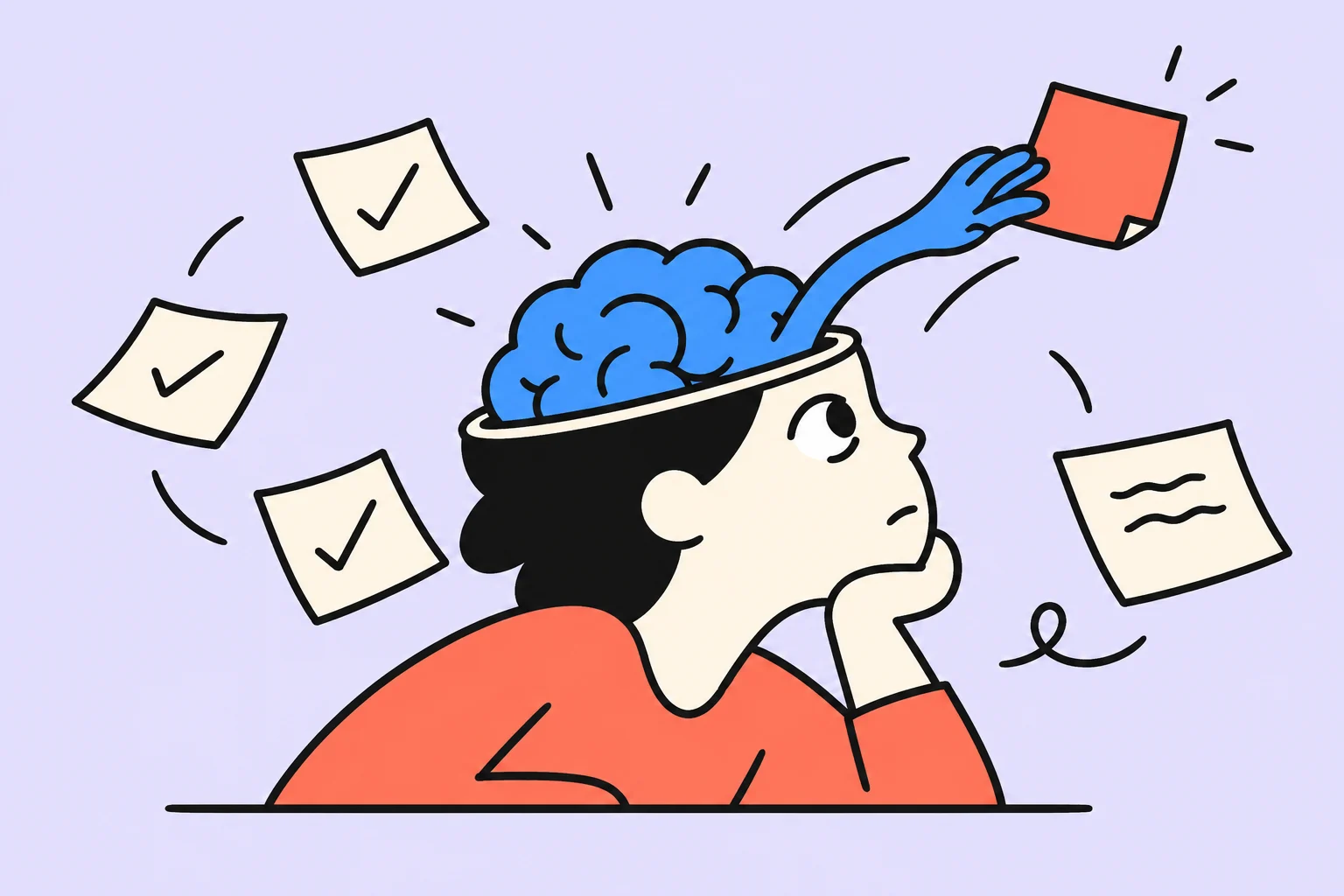
The Zeigarnik effect is often explained as “Unfinished tasks are necessarily remembered better”. The research picture is more complex. Distinguish memory for an interrupted task, the wish to resume it and thoughts about an unfinished goal. These phenomena do not justify deriving a universal productivity technique from one label.
What is called the effect?
The classic effect concerns memory for interrupted tasks; the wish to resume an action is studied separately. The classic hypothesis compares recall of interrupted and completed assignments. This is a specific question: what does a participant recall after performing a set of tasks? It is not identical to feeling that chores have piled up at home and does not automatically explain every tension around a commitment list.
The wish to resume an interrupted action is usually discussed separately in connection with the Ovsiankina effect. A person may want to return without remembering the task better. Mixing these results can produce a convincing story that no longer matches what was measured.
How universal is it?
A modern meta-analysis does not support an overall recall advantage for unfinished tasks. Ghibellini and Meier’s meta-analysis, published in 2025, examines memory and resumption in the interrupted-task paradigm. Its findings do not support a general advantage in recalling unfinished work. The claim that “The brain always retains open tasks better than finished ones” is therefore not used here.
The absence of an overall effect does not mean a particular person never remembers unfinished work. It limits the universal conclusion available from the collected studies. Task conditions, motivation and testing methods can differ; a personal example does not remove that uncertainty or replace a research result.
Working through an example
The following situation is invented for illustration; it is neither a user story nor a measurement of product effectiveness. Pavel interrupted a budget calculation while checking formulas. He writes, “Rows 1–12 checked; next, check delivery expenses”. The note is useful as a state marker. This does not establish that the brain necessarily remembered the interruption better or that pressure from unfinished work will disappear.
Distinguish “Can I find where to continue?” from “Do I remember the interrupted task better?” Pavel checks the first, so a clear note is enough. The second would require a different comparison. If thoughts about the calculation keep disturbing his rest, the note is not a universal remedy for them.
| Claim | What was tested | Conclusion boundary |
|---|---|---|
| Memory for unfinished work | Interrupted and completed assignments | An overall effect is not supported |
| Wish to resume | Returning to the assignment | Not the same as a memory advantage |
| A next-step plan | Separate experiments involving goals | Not a universal guarantee |
What do plans have to do with it?
Plans were examined in separate experiments on unfinished goals; those findings must not be confused with proof of the classic effect. Masicampo and Baumeister’s 2011 paper studied cognitive consequences of unfinished goals and plan-making. This is a different set of experiments, rather than direct proof of every popular version of the Zeigarnik effect. Under certain conditions, planning changed measured consequences of incompletion; that does not imply a promise to clear the mind completely.
In practice, a useful organizational technique can be separated from an explanation invoking a famous effect. If work is interrupted, a brief state note helps show where to continue. Its usefulness can be assessed through ease of returning without attributing a universal effect on memory or anxiety.
What can you try without the myth?
Without relying on the myth, record the work’s current state and next step as an organizational technique, rather than a promise to clear memory. Do not deliberately leave tasks unfinished merely for a supposed memory boost. That strategy can create extra work, especially when deadlines and dependencies accumulate. First address the actual question: should you finish, defer with a clear note or give up the commitment?
In Pavel’s example, the record includes checked rows and the next check. If he understands the calculation’s state more quickly after a break, that is an observation about a specific aid. It neither proves the classic effect nor guarantees that every troubling thought will disappear. Separating fact from explanation keeps the practice honest.
Checking the decision in your own situation
| Observation | A cautious conclusion | An excessive conclusion |
|---|---|---|
| The checking point is recorded | There is an external state marker | The brain necessarily remembers better |
| It is clear where to continue | The note helped in this task | The classic effect is proven |
| Thoughts about work remain | Check other causes and conditions | The note should have removed every thought |
| The work is finished | This calculation is complete | Every unfinished task was harmful |
At the next interruption, record the work’s state and one return step. Later, check whether it is clear how to continue. Use the record as organizational support rather than a promise to change how memory works. When explaining research, keep each finding’s question, method and limitations separate.
Sources
Turn an idea into action
Was this helpful?
Rate the article and tell us what was missing. Your feedback goes to the Sinqly team and will not be published on the site.

Bullet Journal: quick notes and deliberate task migration without decoration
A minimal Bullet Journal: tasks, events, notes and deliberate migration. A monthly review example without decorative requirements.

Deep Work: a complete guide to deep, focused work
A complete guide to Cal Newport's Deep Work. How to practice deep work, 4 strategies, focus rituals, and the science of concentration.
How to clear your head: capture tasks and unfinished decisions
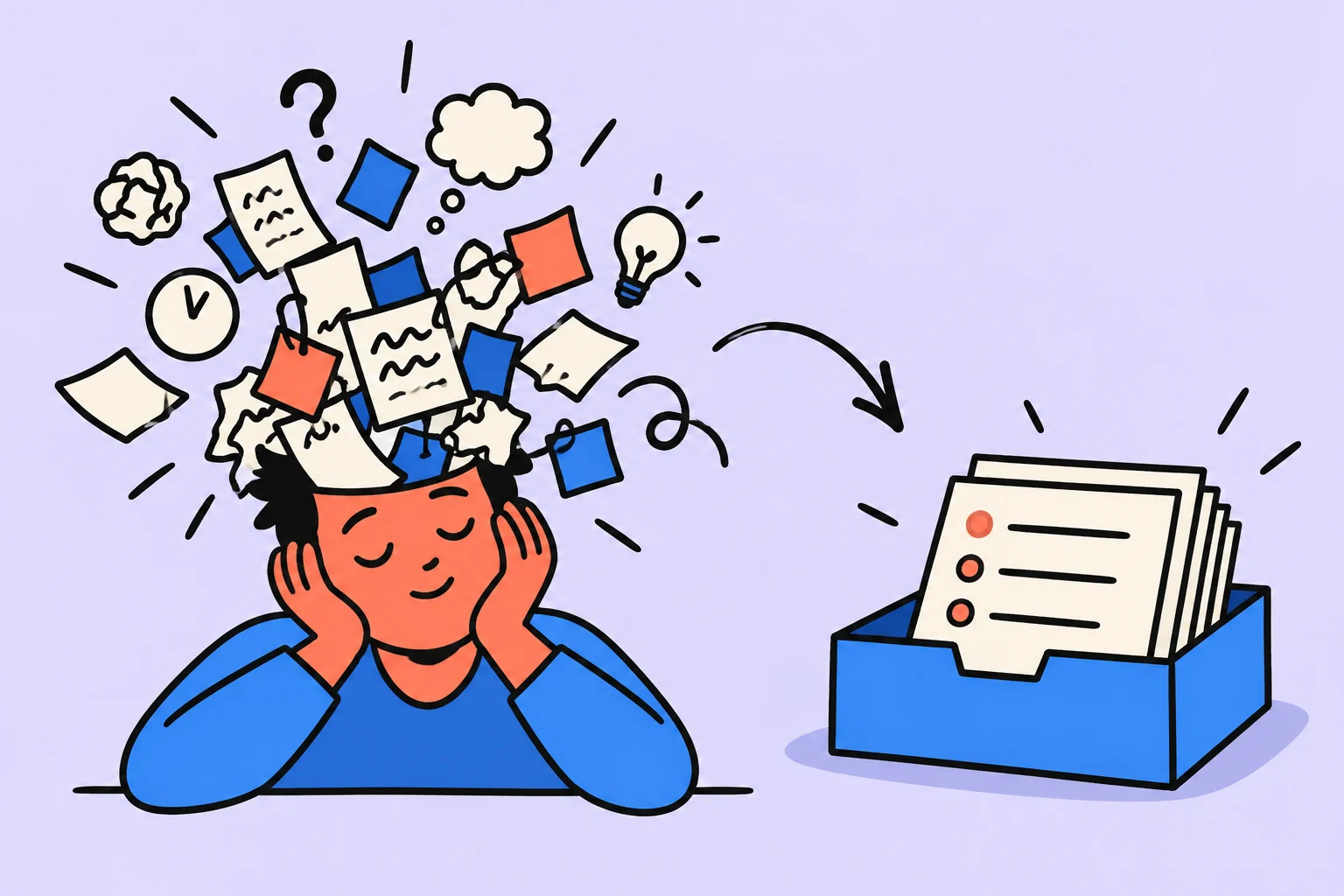
Sort what you are trying to remember: actions, questions, waiting, and ideas. An example of turning rough notes into a short list of next steps.