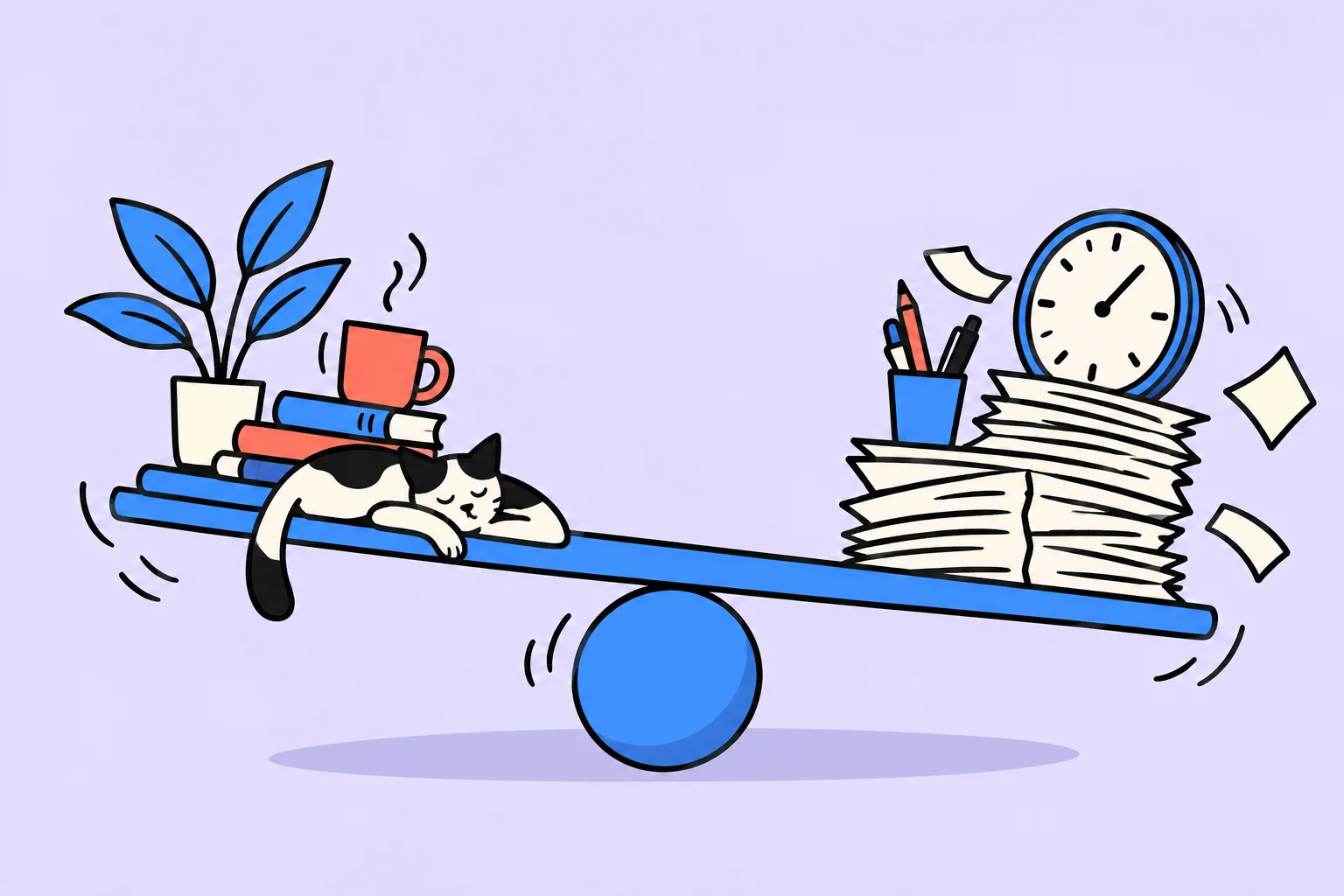
Work-life balance is one of the most discussed concepts in productivity and well-being. Some consider it essential for happiness; others see an unattainable ideal or marketing myth. Research suggests more than two-thirds of working people name work-life balance as the main factor in satisfaction. But what does the term really mean? Let us examine the science and find a practical approach to harmony between professional activity and personal life.
Workers consider work-life balance the main factor in satisfaction
Archetypes of work relationships: each has its own route to balance
Higher productivity among people with autonomy over their schedules
Where the term work-life balance came from
The concept emerged in Britain during the 1980s as a response to overwork culture. Women in Management first raised the need to combine careers and family harmoniously. The idea was simple: work and personal life are two sides of a scale to keep in equilibrium. Yet the metaphor already contains a problem: scales imply more of one means less of the other.
During the 1990s, the concept moved to the United States and became part of corporate culture. Companies began offering flexible schedules, paid parental leave and wellness programs. By the 2010s, work-life balance was a major labor-market demand: candidates chose employers partly to protect personal time.
Remote work and flexible schedules blurred the boundary between work and life. Checking email at dinner, work calls at weekends and learning in free time: where is the line? The 2020 pandemic made clear that the classic model needed rethinking. Perhaps it is time to reconsider the model itself.
Why classic work-life balance does not work
Research suggests pursuing perfect 50/50 balance often produces the opposite result: guilt and dissatisfaction. At work, you feel guilty about life; while resting, about not working enough. Psychologists call this the balance paradox: the harder someone pursues equilibrium, the further away it becomes.
The problem is the scale metaphor itself. Life has more than two sectors: health, relationships, hobbies, self-development, spirituality, finances, career and social contribution. Reducing everything to work versus life inevitably oversimplifies reality. Try the wheel of life : it shows 8 areas and reveals the full picture rather than only work versus non-work.
Classic balance also ignores individual differences. For an introvert, balance means a quiet evening with a book; for an extrovert, a lively party with friends. A young startup founder may gain energy from a 70-hour week, while a parent of three may face burnout. No universal formula exists.
Perfect-balance syndrome is a common trap. Striving for absolute equilibrium can become another stressor. Seek flexible harmony that adapts to current circumstances and priorities rather than rigid balance.
An alternative: work-life integration and a new generation of balance
Modern researchers propose integration: deliberately interweaving work and life. Wharton professor Stewart Friedman introduced total leadership, where four life domains—work, family, community and self—reinforce rather than compete with one another.
Integration does not mean working everywhere, all the time. It means distributing energy flexibly: exercise in the morning, deep work during the day, family in the evening and 30 minutes of a creative project later. Give each block your full attention rather than splitting yourself across tasks.
Integration works when priorities are clear and you know where your time goes. Without awareness, it becomes chaos in which work consumes every other area.
What science says about work-life balance
A 2024 meta-analysis (Journal of Applied Psychology) with 150 000 participants found that autonomy, not working hours, determines satisfaction. People controlling their schedules are happier than those working fewer hours on someone else's timetable. Autonomy was three times more important than the amount of free time.
Another study (Harvard Business Review) identified four work-relationship archetypes: separators, with clear work-life boundaries; integrators, who mix areas flexibly; cyclers, alternating intense work and recovery; and focusers, immersing themselves in one area before switching. All four can be equally happy: knowing your archetype and organizing life accordingly matters.
Gallup research from 2023 found that employee engagement predicts well-being more accurately than working hours. People engaged in their work experience less work-life conflict even when working above-average hours. The issue is work's quality and meaning rather than its quantity.
A Journal of Applied Psychology meta-analysis (2024, 150 000 participants) found that autonomy, not working hours, is the key satisfaction factor. People controlling their schedules are 23% more productive and 31% more satisfied, even when working the same hours as colleagues on fixed schedules. Work-life balance is primarily about control rather than counting hours.
Four work-life balance archetypes
Understanding your archetype is the first step toward personal balance. There is no correct type, only one that fits your nature and circumstances.
Separators
Clear boundaries between work and personal life. They leave at exactly 18:00 and do not check email at home. Ideal for people who value predictability and stability.
Integrators
Mix work and life flexibly throughout the day. They may answer email at 22:00 but attend yoga at 15:00. Overall satisfaction matters more than hours.
Cyclers
Alternate intense work with deep rest. They work 14-hour days near a deadline, then take a full recovery week.
Focusers
Immerse themselves entirely in one area, then switch. Six months of career growth, followed by six months of family and travel. Suits entrepreneurs.
Find your archetype through observation: under which arrangement are you happiest and most productive? Forcing someone else's style on yourself—for example, strict hours on an integrator—creates stress and reduces productivity.
Work-life balance across professions
Balance looks different for developers, doctors and freelancers. For IT specialists working remotely, physical workspace boundaries and start/end rituals are crucial. A separate desk, a closed door or changing clothes helps the brain switch contexts. Read more in Sinqly for developers.
For entrepreneurs, balance often means equal attention rather than equal time. A 60-hour week is acceptable if you remain fully present with family, care for your health and avoid burnout. Periodically review how you feel in each area rather than merely counting work hours.
Freelancers face a distinct challenge: no external structure. Without a boss, colleagues or an office, separating work from non-work is difficult. Build that structure yourself: fixed hours, morning planning, an evening review and a weekly AI coaching session for reflection.
Signs of disrupted work-life balance
Imbalance means more than fatigue. Watch a range of physical, emotional and behavioral signals. These are the most typical:
Chronic fatigue
You do not recover even after weekends or vacations. You wake already tired, and coffee stops helping.
Irritability and conflict
You snap at loved ones and get irritated by small things. Family and friends notice a change, and conflicts increase.
Loss of interest in hobbies
Exercise, books and music that once brought joy no longer appeal. You spend free time stuck on your phone.
Health problems
Frequent colds, headaches, sleep problems and weight gain. The body signals depleted resources.
A sense of meaninglessness
Work feels useless and life empty. You wonder, “What is the point?” This is a serious signal needing attention.
If you recognize three or more signs, your balance is disrupted. This calls for action rather than panic. Begin with an assessment: take the wheel-of-life assessmentto see which particular areas are struggling.
Practical strategies for work-life balance
Theory without practice is useless. Here are specific, research-supported strategies you can start today.
1. Set firm boundaries. Choose time you protect under all circumstances. For example: “19:00 to 21:00 is family time, with the phone on "Do Not Disturb".” Or: “Sunday has no work matters.” Begin with one boundary and expand gradually. University of Illinois research found that even one firm boundary reduces stress by 18%.
2. Practice transition rituals. A walk after work, changing clothes, 5 minutes of meditation or a cup of tea signals a new context. This matters particularly for remote workers: without a physical office-to-home transition, the brain does not switch automatically.
3. Create an energy budget. Count energy rather than hours. Each day offers limited mental, emotional and physical energy. Allocate it deliberately: deep work requires more than routine tasks. Schedule difficult work at energy peaks and routine tasks during dips.
4. Use two lists. Each morning, make a work list with 3 main tasks and a personal list with 1-2 things for yourself. The personal list matters just as much. A walk, a call to a friend or a book chapter is not an indulgence, but an investment in sustainable productivity.
Seasonal work-life balance
Balance changes with life stage, season and circumstances. Some periods demand more work attention: project launches, career changes and deadlines. Others prioritize personal life: a child's birth, recovery from illness or moving home.
Flexible switching is normal and healthy. Chronic imbalance, not temporary imbalance, is the danger. If you have “temporarily” worked 12-hour days for a year, that is a habit rather than a season. If you have planned to start exercising for six months, health is consistently neglected.
Regular reviews reveal these patterns early. Each week ask: “Which area of life received the most attention? Which received the least?”
Try the three-month rule: every 90 days, review your overall balance. Rate each of the 8 areas on a 10-point scale. If the gap between the highest and lowest exceeds 5 points, a chronic imbalance needs attention.
Technology's role in work-life balance
Technology both causes imbalance and helps solve it. A smartphone erases boundaries but can also help restore them. Conscious use is key.
Technology disrupting balance: constant notifications, work chats running 24/7, email access and social media that make everyone seem more accomplished than you. Configure technology rather than rejecting it: scheduled Do Not Disturb, disabled non-urgent notifications and separate work/personal devices.
Technology restoring balance: habit trackers remind you of important things, meditation apps reduce stress and AI coaches analyze your state objectively.
How employers can support employees' work-life balance
Balance is not solely the employee's responsibility. Research by Gallup State of the Global Workplace found that organizational culture affects balance more strongly than personal strategies. Even the most disciplined employee cannot maintain balance in a toxic environment.
Managers can offer genuinely flexible hours, avoid celebrating overwork heroics, respect non-working time, set clear task expectations because uncertainty undermines balance, and support the right to disconnect.
Companies with strong work-life balance cultures show 21% higher profitability, 41% less absenteeism and 59% lower turnover. Supporting balance is a strategic advantage rather than charity.
A step-by-step 30-day plan to restore work-life balance
If you recognize imbalance, here is a concrete recovery plan. It requires consistent small steps rather than radical changes.
Week 1: Review, days 1-7
Assess your current state across 8 areas through the wheel of life. Record how you spend each day without judgment, just facts. By week-end, you will have an objective picture.
Week 2: One boundary, days 8-14
Set one firm boundary: no work after 20:00, or no Sunday email. Follow it strictly for 7 consecutive days and tell colleagues.
Week 3: One habit, days 15-21
Add one daily habit for a neglected area: 20 minutes of exercise, 15 minutes of reading or a call to a friend. Attach it to an existing ritual, after morning coffee or before lunch.
Week 4: Review and adjust, days 22-30
Repeat the wheel-of-life assessment and compare it with week one. Adjust boundaries and habits based on results. Plan the next 30-day cycle.
Sinqly tools for managing work-life balance
Wheel of life
Visualize 8 areas of life and immediately see where adjustments are needed. Regular assessment underpins lasting balance.
Weekly review
The AI coach reviews your work-life balance weekly and suggests specific adjustments for the following week.
Smart reminders
Reminders about neglected life areas help prevent chronic imbalance. The system considers your rhythms without overloading you with notifications.
Habit tracker
Track daily habits for every life area. Visual progress motivates and helps establish lasting rituals.
Frequently asked questions about work-life balance
What is work-life balance in simple terms?
Work-life balance is harmony between professional activity and personal life, with satisfaction in both. It need not mean a 50/50 split: it is a subjective sense of control. Each person defines balance differently: a strict 9-to-18 schedule for one, flexible switching between tasks for another.
How can I tell if my work-life balance is disrupted?
Main signs include chronic fatigue after weekends, irritability at home, lost interest in hobbies, sleep problems, frequent illness and feeling stuck on a treadmill. Three or more signs lasting over a month indicate imbalance needing attention. Wheel of life helps identify which life areas are struggling.
Can you achieve a perfect balance between work and life?
Perfect static balance is a myth. Balance is a dynamic process requiring continual adjustment based on life stage, profession, values and circumstances. Seek good-enough balance rather than perfection: overall satisfaction with how you distribute energy.
How does work-life balance differ from work-life integration?
Work-life balance clearly separates work and personal life into different zones. Integration deliberately interweaves them, allocating time flexibly without rigid boundaries. Integration better suits freelancers and remote workers; separation suits fixed-hours office work.
Which professions are most vulnerable to imbalance?
IT specialists facing remote work and blurred boundaries, doctors and healthcare workers, entrepreneurs, lawyers and teachers are most vulnerable. High responsibility, emotional demands and irregular schedules are common factors. Each profession needs its own strategies; there is no universal solution.
How can I begin restoring work-life balance?
Begin with a review of 8 life areas. Choose one neglected area and give it at least 30 minutes daily. Set one firm boundary, such as no work email after 20:00. Add a second boundary a week later. Gradual change is key to lasting results.
Do work-life balance tracking apps help?
Yes, apps reveal where time and energy go. AI platforms analyze several life areas, identify persistent imbalances and suggest concrete steps. Do not make tracking another stressor. Choose one tool and use it consistently.
Conclusion: work-life balance is a process, not a result
Work-life balance is ongoing adjustment rather than a fixed point. You do not achieve it once and forever like a degree or an apartment. It resembles health: you maintain it daily through food, movement, sleep and attention to yourself.
Each week ask: “Am I satisfied with how I distribute my energy? What needs adjusting?” This simple ritual helps maintain control. For a systematic approach, try AI coaching in Sinqly: it acts as an attentive observer and points out when balance begins shifting.
Work-life balance is neither a myth nor an unattainable ideal. It is a skill you can train. Begin now by honestly asking, “Am I happy with how I live?” If not, you are already on the right path: awareness is the first step toward change.
Turn an idea into action
Was this helpful?
Rate the article and tell us what was missing. Your feedback goes to the Sinqly team and will not be published on the site.
21 Days to Build a Habit: Myth or Reality?
Are 21 days really enough to build a habit? Exploring the UCL study, the neuroscience of automatic behavior and realistic timelines.
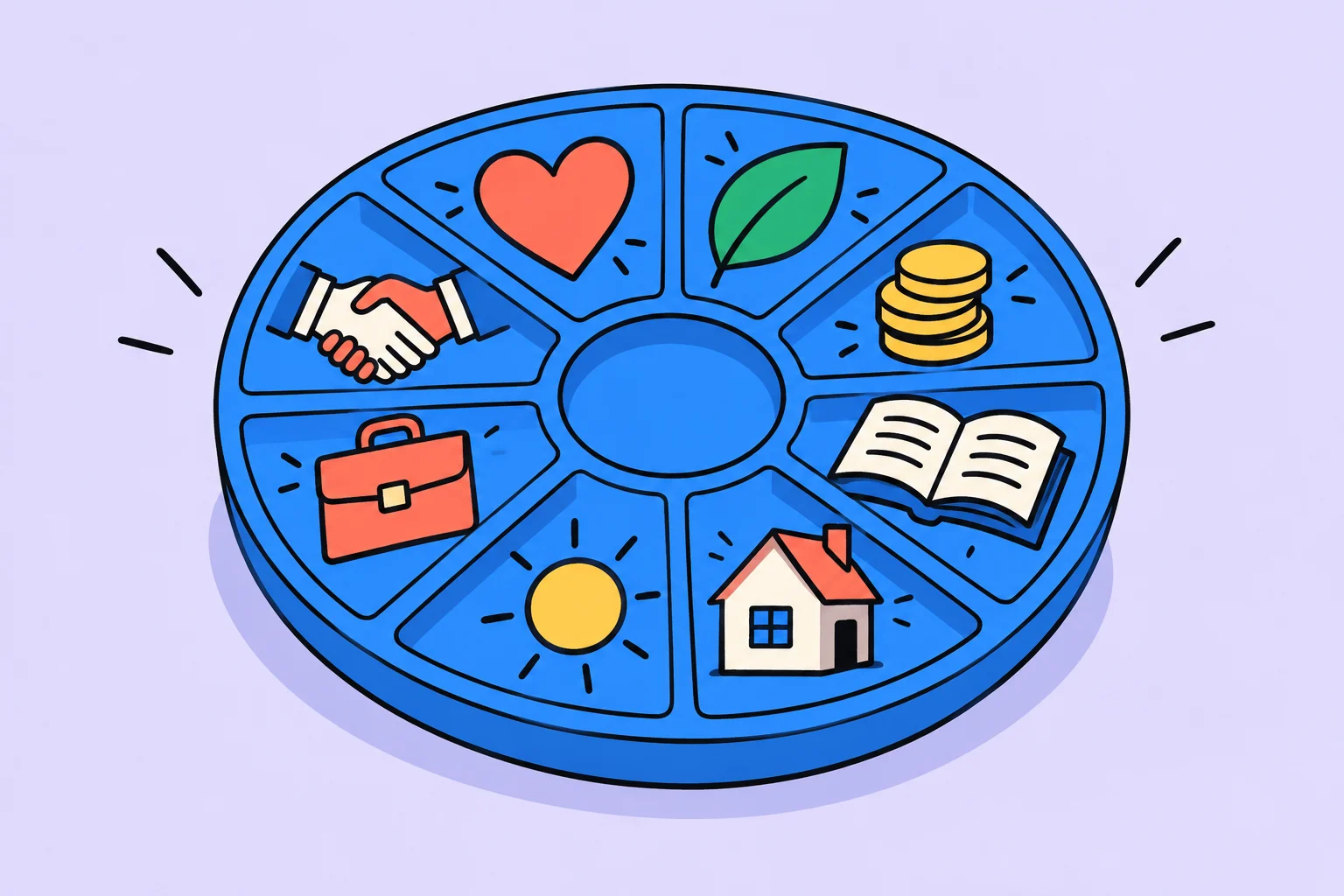
8 life areas: a complete guide to each area with examples and exercises
Explore all 8 life areas: health, finances, career, emotions, relationships, growth, creativity, and home. The 8-area wheel of life, exercises, and an action plan.
Digital detox: a complete guide
A complete guide to digital detox. Signs of information overload, dopamine dependence, weekend and week-long plans, and a family detox.