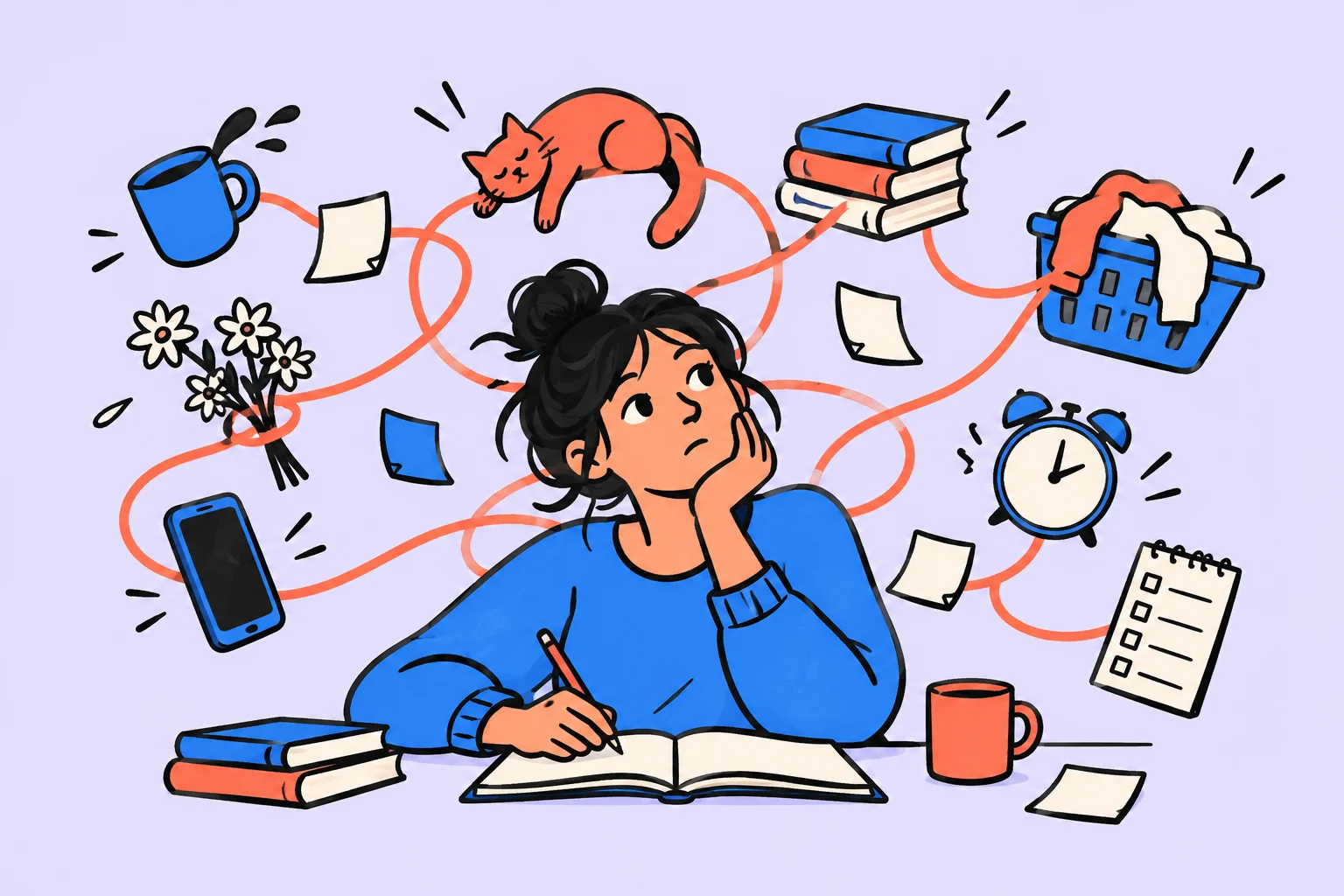
ADHD in women is a hidden epidemic. For decades, women and girls with attention deficit disorder remained invisible to medicine: symptoms were dismissed as emotionality, inattention as absent-mindedness, and organizational difficulties as a lack of skills. We now know that ADHD presents differently in women and requires a distinctive diagnostic and treatment approach. This guide covers hidden symptoms, hormonal influences, and support strategies.
ratio of diagnosed men to women with ADHD
of women with ADHD are diagnosed only in adulthood
more common depression and anxiety in women with ADHD
Why ADHD in women goes unnoticed
ADHD was long considered a boys' disorder. Early research focused on hyperactive boys who disrupted class and attracted teachers' attention. Diagnostic criteria based on this male model led to systematic underdiagnosis of women and girls.
Women more often have inattentive ADHD, previously called ADD, without obvious hyperactivity. These girls quietly daydream rather than disrupt lessons, attracting little adult attention. They are called dreamy and absent-minded rather than troublesome, and miss necessary help and support.
Social expectations also matter: girls are taught to be quiet, obedient, and avoid causing problems. Women with ADHD develop complex masking strategies to meet these expectations. They may appear successful while struggling internally with chaos, low self-esteem, and chronic stress from trying to be normal.
A Journal of Clinical Child Psychology study (2020) found that girls with ADHD are diagnosed an average of 5 years later than boys. 40% of women with ADHD are first diagnosed after ADHD is identified in their children.
How ADHD appears in women: hidden symptoms
ADHD in women often resembles other problems or personality traits. Absent-mindedness and forgetfulness are dismissed as female impracticality, emotional instability as PMS or hysteria, and organizational difficulties as poor domestic skills. These are actually manifestations of neurobiological brain differences.
Women with ADHD often describe living in a fog: difficulty concentrating, thoughts slipping away, and time passing unnoticed. They forget meetings, lose important documents, and arrive late to work. Yet interesting tasks can trigger hyperfocus, with hours of uninterrupted work and forgotten food and sleep.
Internal hyperactivity is another feature. A woman may look calm while thoughts race, restlessness persists, and relaxation feels impossible. This inner storm is exhausting and can lead to anxiety and insomnia. Read more about general symptoms in Adult ADHD: signs.
Inattentive ADHD: a female pattern
Inattentive ADHD occurs in 60–70% of women with attention deficit disorder. Main signs include difficulty sustaining attention, especially on routine or boring tasks; frequent careless mistakes at work or school; seeming not to listen when directly addressed; and leaving tasks unfinished.
Women with inattentive ADHD often lose things, forget daily responsibilities, and avoid sustained mental effort. Sounds, thoughts, and emotions easily distract them. At school, intelligence may enable strong performance initially, but they gradually fall behind as demands increase.
ADHD-related inattention is a neurobiological difficulty regulating attention. The ADHD brain cannot force itself to focus on an uninteresting task even while understanding its importance. This creates chronic stress and harms self-esteem. For living with these features, read How to organize life with ADHD.
Daydreaming
Frequently drifting into dreams and fantasies, especially during boring tasks or conversations.
Losing focus
Difficulty sustaining attention on one task, especially without an immediate reward.
Forgetfulness
Constantly losing keys and documents and forgetting appointments and important tasks.
Unfinished projects
Many started but unfinished activities, from hobbies to work projects.
Hormonal influences on ADHD in women
Some women experience changes in ADHD symptom severity across their menstrual cycle or at other life stages. Possible effects of sex hormones are being studied, but the available evidence cannot predict an individual woman's symptoms from estrogen levels alone.
Some women report more inattention, impulsivity, or emotional difficulties before menstruation. However, cycle phases do not produce the same symptom schedule for everyone. If you notice recurring changes, record them and discuss them with a doctor alongside sleep, stress, and other possible causes.
Pregnancy and the postpartum period can change well-being, sleep, and daily demands, and ADHD varies between individuals during this time. Improvement by trimester cannot be promised, and hormones should not be assumed to explain every difficulty. If you feel worse, discuss symptoms, treatment, and available support with your doctor, including help with rest and daily tasks.
If you notice a connection between symptoms and your cycle, you can record cycle days, attention, impulsivity, mood, and sleep over 2-3 months. These observations can support a conversation with your doctor, but they do not replace assessment or determine a treatment plan.
Emotional dysregulation in women with ADHD
Emotional dysregulation is an underestimated ADHD symptom, especially pronounced in women. It means difficulty managing emotional intensity and duration. Women describe emotions as too strong: joy feels euphoric, sadness feels like despair, and irritation becomes rage.
Rejection sensitive dysphoria, RSD, often accompanies ADHD in women. It is painful sensitivity to criticism, rejection, or imagined disapproval. Women with RSD may avoid new situations for fear of criticism, become people-pleasers to avoid conflict, or react excessively aggressively to perceived rejection.
Others often interpret emotional instability as female hysteria or immaturity, increasing stigma. It is a neurobiological feature: prefrontal-cortex dysfunction makes emotion regulation harder. Understanding the mechanism reduces self-blame and helps identify effective emotional-management strategies.
Masking and compensatory strategies in women
Women with ADHD often develop complex masking strategies to hide difficulties and meet expectations. Masking means constantly acting normal: copying neurotypical behavior, suppressing impulses, and overpreparing for social situations.
Common strategies include excessive planning and lists to compensate for forgetfulness, perfectionism to hide imperfections, avoiding difficult tasks to prevent failure, and social isolation to reduce judgment. These may help temporarily but exhaust mental resources.
Masking causes exhaustion from pretending: chronic fatigue from trying to appear normal. Many women describe living in a costume they cannot remove. This contributes to anxiety, depression, and burnout and delays necessary help.
Diagnosing ADHD in women
Diagnosis requires an approach that accounts for gender differences. Many standard instruments were built around a male ADHD model and may miss female patterns. Find a specialist familiar with ADHD in women.
Assessment should consider hormonal influences across the cycle, masking that makes a woman appear more organized than she is, comorbid anxiety and depression that can conceal ADHD, and childhood history focused on internal experience rather than external behavior.
Specialized questionnaires for women with ADHD may help by asking about hormones, emotional regulation, relationships, and self-esteem. Gather childhood information too: symptoms were often present without attracting adult attention. Read more about the process in Adult ADHD diagnosis.
ADHD and motherhood: unique challenges
Motherhood with ADHD creates unique challenges. Women may forget school meetings, lose children's belongings, and struggle with household organization. Comparing themselves with neurotypical mothers often makes them feel like bad mothers.
Emotional dysregulation can affect relationships with children: a mother may be excessively emotional, react unpredictably, and feel guilty about impulsivity. When the child also has ADHD, two neurodivergent family members can create chaos.
There are advantages too. Women with ADHD are often creative in parenting, empathetic toward children's difficulties, and especially able to understand neurodivergent children. Acceptance, support, and external structures such as schedules, reminders, and family help are key. With appropriate support, women with ADHD can be wonderful mothers.
Accept your characteristics
ADHD is a characteristic you can work with, rather than a failure of motherhood. Let go of perfectionism.
Create external structures
Use calendars, reminders, and task lists. Automate routines where possible.
Seek support
Connect with other mothers with ADHD, consider family therapy, and ask for help without embarrassment.
Care for yourself
Your own mental health is the foundation of good parenting. Seek treatment, rest, and have hobbies.
Use your strengths
Creativity, spontaneity, and empathy are your parenting superpowers. Develop them.
ADHD in women and relationships: effects on partnership
ADHD significantly affects women's romantic relationships. A partner may interpret forgetting an important date as indifference, emotional instability as manipulation, and impulsivity as irresponsibility. Women with ADHD often feel they are too much for their partner.
Typical difficulties include forgetting agreements, chronic lateness for dates, household-management problems, financial impulsivity, and emotional outbursts over small things. A partner may feel like the parent in the relationship, creating imbalance.
ADHD can also enrich relationships: women are often spontaneous, creative, and emotionally open. They can be passionate partners capable of deep empathy. Open communication, a partner's understanding, and support strategies are key. Read more in ADHD and relationships.
Career and work: professional challenges for women with ADHD
Women with ADHD face unique professional challenges. Traditionally female roles involving administration and multitasking expose weaknesses. They may forget deadlines, lose documents, and struggle with routine tasks.
Office environments can be hostile: open spaces increase distraction, long meetings drain attention, and multitasking overloads working memory. Visible ADHD symptoms may make women appear less competent than they are.
There are strengths too: women with ADHD are often creative, innovative, and unconventional thinkers. They may excel in crises, working with people, and creative projects. Find a professional niche that uses strengths and minimizes weaknesses. Read more in ADHD and work.
Careers often suited to women with ADHD include psychology and counseling, design and creative industries, journalism and copywriting, entrepreneurship, IT when technology is an interest, teaching, especially unconventional methods, and social work.
Treating ADHD in women: gender-specific approaches
Treatment is tailored to symptoms, coexisting conditions, and life circumstances. Discuss changes across your cycle with your psychiatrist. Evidence on extra doses before menstruation is limited to small studies and does not establish a universal regimen; do not change doses yourself.
Psychotherapy often addresses self-esteem, impostor syndrome, perfectionism, and relationships. It should address challenges such as balancing career, motherhood, and partnership, social pressure, and hormonal influences.
Group therapy with other women with ADHD can reduce isolation, provide a sense of not being alone, and enable sharing strategies. Online communities also provide valuable understanding and support. Read more about treatment approaches in Adult ADHD treatment.
ADHD in teenage girls: early identification
Adolescence is a critical period for identifying ADHD in girls. Puberty's hormonal changes can intensify symptoms and make them more visible. Falling grades, organizational problems, and emotional instability may signal ADHD.
Typical signs include sharply falling grades without an obvious reason, forgetfulness and lost belongings, daydreaming in class, avoiding homework, emotional outbursts, low self-esteem, and friendship difficulties.
Early identification and support are critical. Undiagnosed girls face increased risks of depression, anxiety, eating disorders, early sexual activity, and substance misuse. Timely diagnosis and support can prevent these complications and help develop a healthy identity.
Perimenopause and ADHD: age-related changes
Perimenopause, the transition toward menopause, can be particularly difficult for women with ADHD. Declining estrogen worsens attention-deficit symptoms, including memory, concentration, and emotional regulation. Women often describe brain fog.
Perimenopause symptoms such as hot flashes, insomnia, and mood swings can mask or intensify ADHD. Women may fear something is seriously wrong without understanding the hormonal connection. Some receive their first ADHD diagnosis at this stage.
If you experience difficulties during perimenopause, discuss symptoms with a doctor: sleep, mood, and attention changes can have different causes. Menopausal hormone therapy is considered according to its own indications and risks, not as an established ADHD treatment. Agree any medication changes with a specialist; manageable activity and a clear daily structure can complement everyday support.
Self-esteem and identity: accepting ADHD in women
Women with ADHD often struggle with negative self-esteem and a chronic sense of inadequacy. Comparing themselves with neurotypical women, they feel worse as mothers, partners, professionals, and friends. This leads to constant self-criticism and a sense of failure.
Impostor syndrome is especially characteristic of high-functioning women with ADHD. Despite success through intelligence and compensatory strategies, they feel fraudulent and fear exposure. Constant masking reinforces the feeling.
Accepting ADHD as part of identity supports healthy self-esteem. It is neurodiversity with strengths and weaknesses. Women with ADHD are often creative, empathetic, and innovative thinkers. Focusing on strengths and accepting differences helps build a healthy identity.
Practice acceptance: keep an achievement diary including small successes, learn about successful women with ADHD, practice self-compassion rather than self-criticism, find supportive communities, and work with a therapist on self-esteem.
Everyday support strategies for women with ADHD
Women need support strategies suited to their challenges. For household organization, use calendars, lists, and reminders, give everything a place so keys always stay in one spot, and automate routines such as bill payments and grocery delivery.
For emotional regulation, practice mindfulness, keep an emotion diary, explore links between the menstrual cycle and mood, create an emotional-crisis first-aid plan, and ask loved ones for support.
For energy management, identify peak hours and schedule difficult tasks then, take regular breaks, avoid excessive commitments, practice saying "no" without guilt, and use a habit tracker to monitor energy patterns.
Frequently asked questions about ADHD in women
Why is ADHD diagnosed later in women than in men?
Women more often have inattentive ADHD without obvious hyperactivity, making symptoms less visible. They mask difficulties more effectively, while expectations demand quiet obedience. Research long focused on boys, leading to underrecognition of female presentations.
How does ADHD appear in women?
Main signs include absent-mindedness and daydreaming, organizational and planning difficulties, emotional instability, forgetfulness, chronic lateness, internal hyperactivity with restless thoughts despite outward calm, low self-esteem, and compensatory perfectionism.
Do hormones affect ADHD in women?
Some women experience symptom changes across their cycle, pregnancy, or menopause, but this is not a universal rule. There is insufficient evidence to predict the course of ADHD from estrogen levels. Record noticeable changes and discuss them with your doctor; do not change treatment yourself.
How does ADHD differ between women and men?
Women more often have inattentive ADHD; men more often have hyperactive-impulsive ADHD. Women mask symptoms more effectively, internalize problems as anxiety and depression, and have more complex self-esteem difficulties. Men more often show externalizing behavior such as aggression and visible rule-breaking.
Can ADHD affect motherhood?
ADHD creates parenting challenges such as forgetfulness, organizational difficulties, and emotional instability. With appropriate support, women can be excellent mothers: often creative, empathetic, and able to understand a neurodivergent child.
Is ADHD treatment safe during pregnancy?
During pregnancy and breastfeeding, make treatment decisions individually with your psychiatrist and obstetrician. Consider the specific medicine, the woman's condition, and the benefits and risks of both continuing and stopping treatment. Do not change medicine yourself; psychotherapy and everyday support can complement the agreed plan.
How does ADHD affect women's relationships?
ADHD may complicate relationships: forgetfulness can seem indifferent, emotional instability creates conflict, and impulsivity affects decisions. A partner's understanding, open communication, and support strategies help build healthy relationships.
Is perfectionism linked to ADHD in women?
Yes. Many women develop perfectionism as compensation, feeling they must work twice as hard to meet expectations and hide difficulties. This can cause burnout and paradoxically worsen ADHD symptoms.
Turn an idea into action
Was this helpful?
Rate the article and tell us what was missing. Your feedback goes to the Sinqly team and will not be published on the site.
Focus techniques for ADHD: what really works in 2026
Scientifically grounded methods for improving focus with ADHD. 12 proven concentration techniques, exercises, and tools for people with attention deficits.
Productivity for People with ADHD: The Complete 2026 Guide
A complete ADHD productivity guide. 15 established strategies, tools and techniques for people with attention difficulties, from ADHD experts.
Adult ADHD diagnosis: how to tell whether you have ADHD
A complete guide to adult ADHD diagnosis: symptoms, tests, DSM-5 criteria, and where to get assessed in Russia. An online test and expert advice.