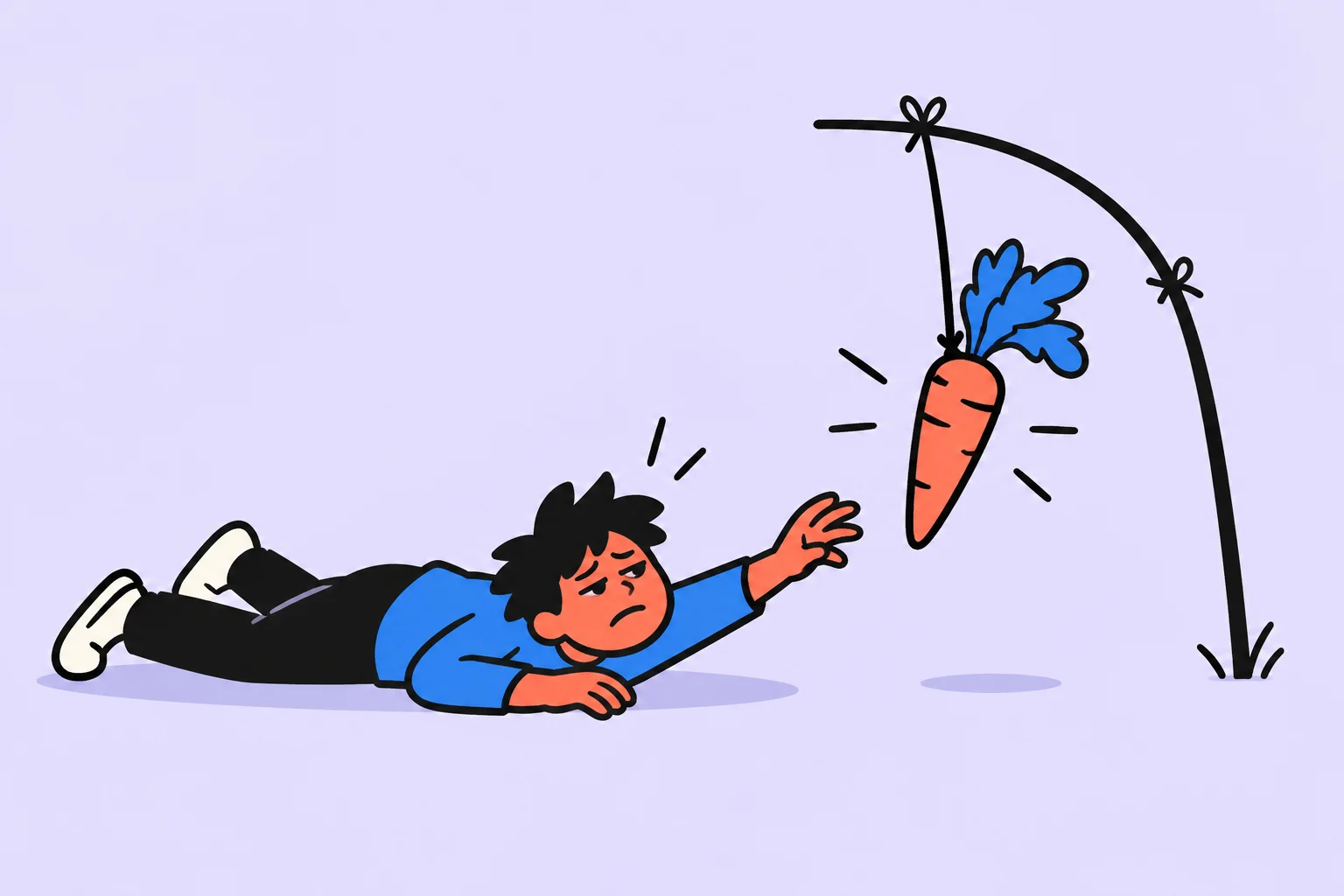
Every Monday, millions of people decide to “start a new life.” By Wednesday, motivation has evaporated. We blame ourselves for lacking willpower, look for another dose of inspiration, and repeat the cycle. The problem lies in the approach rather than in you. If you feel you have no motivation, perhaps it is time to stop chasing it and find more reliable tools.
This article examines why motivation is unreliable from a neuroscience perspective, which traps of motivational thinking prevent action, and what actually works instead of endlessly waiting for the “right moment.” We draw on Stanford University research, cognitive psychology findings, and the practical experience of thousands of users who moved from chasing motivation to building sustainable systems.
duration of a dopamine surge from a motivational video
average time to form a sustainable habit
increase in engagement through gamification
of New Year's resolutions fail by February
What motivation is from a neuroscience perspective
Motivation is a neurochemical process linked to dopamine. When we imagine a desired future, the brain releases dopamine, creating anticipation and energy. But there is a problem: dopamine is produced in anticipation of a reward rather than during the process of earning it.
When you watch a motivational video, your brain experiences a dopamine surge. You feel energized and ready to act. But this surge lasts 20–40 minutes, after which dopamine returns to normal (or falls below it). This is precisely why motivation is unreliable for long-term change.
Neuroscientist Andrew Huberman at Stanford explains that dopamine is a molecule of “wanting” rather than “liking.” The brain produces dopamine in anticipation, but when you begin acting and encounter difficulties, the dopamine signal weakens. You lose “motivation” because of how neurochemistry works rather than a lack of willpower.
Research by Wolfram Schultz (Cambridge University, 2015) found that dopamine neurons respond more strongly to unexpected rewards than expected ones. This explains why the first day of a new routine brings excitement, while enthusiasm fades by the fifth day: the brain has already become “accustomed” to the predictable reward.
The motivation cycle trap: why you keep going in circles
A typical motivation cycle looks like this: inspiration → an ambitious plan → the first enthusiastic days → the first obstacle → disappointment → abandoning the plan → guilt → seeking new motivation. The cycle repeats. Each repetition reinforces learned helplessness: “Nothing ever works out for me.”
Research by Peter Gollwitzer (NYU) found that publicly announcing goals can hinder their achievement. When you say “I will run every day,” the brain receives social approval (dopamine) before any action begins. Motivation for the action itself decreases because the reward has already been received. This phenomenon is called “identity substitution”: the brain confuses intention with action.
Another trap is “all or nothing.” You decide to run every day, miss one day, and quit entirely. Perfectionism in goal achievement is the enemy of progress. One missed day does not destroy a habit, but two in a row create a new habit: the habit of not doing it. This is a key observation from research on habit formation.
Willpower is a limited resource, and this is proven
Psychologist Roy Baumeister conducted the famous radish and chocolate cookie experiment. Participants who had to resist the temptation to eat cookies (and eat radishes) gave up on a difficult task significantly sooner than those who did not have to restrain themselves. This effect is called “ego depletion.”
What does this mean in practice? By evening, your willpower “reserve” is minimal. This is why resisting bad habits is harder in the evening, slipping into unhealthy eating is easier, and making yourself exercise is more difficult. Relying on willpower means setting your evening self up to fail.
Later research (Job, Dweck, Walton, 2010) clarified that ego depletion partly depends on beliefs. People who believe willpower is limited become depleted faster. But even with optimal beliefs, willpower remains unreliable: it depends on sleep, stress, glucose levels, and dozens of other factors.
A dangerous myth: “Successful people are simply more disciplined.” Research by Angela Duckworth (University of Pennsylvania) found that “disciplined” people do not suppress temptations more often. They encounter them less often because they have built an environment that minimizes the need for self-control.
Habits: automation instead of willpower
Habits work through the basal ganglia, brain structures responsible for automatic actions. Once behavior becomes a habit, it requires no conscious effort or willpower. You do not motivate yourself to brush your teeth every morning: you simply do it automatically.
Habit formation takes 18 to 254 days (averaging 66 days, according to Phillippa Lally's University College London study). The key is to start with a minimal action: “put on running shoes” rather than “run for an hour.” “Sit on a cushion and take one breath” rather than “meditate for 30 minutes.” Once the minimal action becomes automatic, gradually build on it.
Brain neuroplasticity allows you to literally rewire neural connections. Every repetition strengthens synaptic pathways. After enough repetitions, the action shifts from the prefrontal cortex (conscious control) to the basal ganglia (automatic operation). At this point, the habit is “established” and motivation is no longer needed to perform it.
How to form a habit without motivation
Choose one specific action: “drink a glass of water in the morning” rather than “be healthy”
Link it to an existing habit (stacking): “After I turn on the kettle, I will drink a glass of water”
Create a minimal version: if you cannot drink a full glass, take three sips
Track completion visually: mark days in a habit tracker
Never miss two days in a row: this is a critical rule
After 2–3 weeks, increase difficulty by 10–20%
Celebrate completion (the brain needs positive reinforcement)
Systems instead of goals: an approach that changes everything
Scott Adams, the creator of Dilbert, formulated the principle: “Goals are for losers, systems are for winners.” A goal is “lose 10 kg.” A system is “eat more vegetables and walk 10 000 steps every day.” A goal focuses on a result that does not yet exist (which is demotivating). A system focuses on a process you can perform right now.
With a goal, you are unhappy until you achieve it and briefly happy afterward. With a system, every day of following through is a small victory. You live in the “now” and move in the right direction rather than waiting for “later.”
Gamification: making the dopamine system work for you
If motivation is dopamine, you can use the dopamine system to your advantage through gamification. Points, levels, streaks, and achievements all create regular micro-doses of dopamine that sustain engagement without having to seek external motivation.
Research shows that gamification increases engagement by 48% and productivity by 36%. The key is to connect game elements to real progress rather than make them artificial. When you see a growing streak of 30 days of meditation, that is a real achievement reinforced by a game mechanic.
An important nuance: gamification works when rewards are unpredictable (variable reinforcement). This is why social media is so addictive: you do not know whether you will get a like.
Environment and surroundings: the invisible architecture of behavior
Kurt Lewin described behavior with the formula B = f(P, E): behavior is a function of the person and the environment. We spend too much energy changing ourselves (motivation and willpower) and too little changing the environment. Want to eat more fruit? Put it somewhere visible. Want to spend less time on your phone? Put it in another room.
James Clear, in «Atomic Habits» calls this “choice design.” Make desired behavior as easy as possible and undesired behavior as difficult as possible. Prepare workout clothes the night before. Delete social media apps from your phone. Surround yourself with people already doing what you aspire to do.
Research by Brian Wansink (Cornell University) found that people who keep fruit visible weigh an average of 6 kg less than those who keep cookies or chips visible. No motivation or willpower: simply thoughtful environment design.
Practical tip: audit your environment. Walk through your home and workspace. What catches your eye first: a phone with notifications or a book? Candy or fruit? A sofa with a remote or a yoga mat? Small environmental changes have disproportionately large effects.
Identity instead of results: who you are rather than what you want
The most powerful mechanism for long-term change is changing identity. “I am a nonsmoker” (identity) rather than “I want to quit smoking” (result). “I am a writer” rather than “I want to write a book.” Every action consistent with the new identity strengthens it.
Ask yourself: “What kind of person would achieve what I want? What do they do every day?” Then begin doing those actions. It will feel awkward initially, but each repetition strengthens the new identity. This is neuroplasticity in action rather than self-deception. Every “vote” for the new identity (every completed micro-action) reshapes your self-concept.
Research shows that identity-based changes (identity-based habits) are 3 times more sustainable than outcome-based changes. A person who says “I do not eat sweets” (identity) resists temptation more effectively than one who says “I am trying not to eat sweets” (intention). Wording changes neural decision-making patterns.
The two-minute rule: starting without motivation
David Allen introduced the “two-minute rule” in GTD: if a task takes two minutes, do it immediately. James Clear adapted this for habits: any new action should take no more than two minutes. Want to read? Open a book and read one page. Want to meditate? Sit down and take three breaths.
Why does it work? Because starting is the hardest part of any action. Physicists call this “static friction”: moving an object from rest requires more force than keeping it moving. The two-minute rule minimizes the “static friction” of starting.
Often, you continue after two minutes. You put on running shoes and decide to go outside. Outside, you decide to walk. After walking, you decide to run. Motivation arrived after starting the action rather than before it. This is called the “action principle”: motivation is a side effect of action rather than its prerequisite.
Procrastination as a protective mechanism
Modern psychology views procrastination as an emotional regulation strategy rather than laziness. When a task causes anxiety, boredom, or fear of failure, the brain prefers immediate relief (procrastination) to long-term benefit (completing the task).
Research by Timothy Pychyl (Carleton University) found that procrastination is linked to the amygdala, the emotion-processing center. When a task seems threatening (too difficult, unclear, or boring), the amygdala activates an avoidance response. No amount of motivation can override this basic instinct.
The solution is to lower the emotional barrier rather than “force yourself.” Break the task into tiny steps that do not cause anxiety. Make the first step so small that refusing would seem ridiculous. “Open the document and write a heading” rather than “write the report.”
5 ways to overcome procrastination without motivation
Identify the emotion behind procrastination (fear, boredom, or perfectionism)
Break the task into 5–10 minute steps: the amygdala does not perceive small steps as threatening
Use a Pomodoro timer: 25 minutes of work and 5 minutes of rest; a time limit reduces anxiety
Pair an unpleasant task with an enjoyable ritual (coffee + work, music + cleaning)
Track completion: visible progress creates positive reinforcement
Habit stacking: fitting the new into the existing
One of the most effective ways to form new habits is habit stacking. The formula is simple: “After [existing habit], I will [new habit].” The existing habit becomes the trigger for the new one, using neural pathways already established.
Examples: “After I pour my morning coffee, I will write down three tasks for the day.” “After I get in the car, I will turn on an audiobook.” “After I brush my teeth in the evening, I will read one page.” The stronger the existing habit, the more reliably stacking works.
Prepare your next action so that starting it does not require another major decision. Create a task in Sinqly: registration is free.
Intrinsic versus extrinsic motivation: self-determination theory
Psychologists Edward Deci and Richard Ryan developed self-determination theory (SDT), identifying three basic psychological needs: autonomy (a sense of choice), competence (a sense of mastery), and relatedness (a sense of belonging). When these needs are met, intrinsic motivation emerges: the most sustainable form of drive to act.
The problem with most motivational approaches is that they rely on external incentives: rewards, punishments, and social pressure. Extrinsic motivation works in the short term but suppresses intrinsic motivation. A classic example: children paid to draw drew less after payments stopped than children who had never been paid (the overjustification effect).
What does this mean in practice? Create conditions for intrinsic motivation instead of searching for external incentives. Choose goalsthat align with your values (autonomy). Start at a level where you feel competent (mastery). Find a community of like-minded people (relatedness).
What to do right now: a practical plan
Stop waiting for motivation. Choose one action that moves you toward your goal and do its smallest version right now. Today, rather than tomorrow or Monday. Motivation is a side effect of action rather than its prerequisite.
Your action plan for the coming week
Choose ONE habit you want to form, rather than three or five
Reduce it to a two-minute version (“put on running shoes” rather than “run 5 km”)
Find a trigger: an existing habit to which you will link the new one
Prepare the environment: remove barriers and put needed items somewhere visible
Track completion every day: a visible streak is motivating in itself
If you miss a day, avoid self-blame; simply do not miss a second consecutive day
After three weeks, assess progress and add a second habit if the first is established
Frequently asked questions
Why does motivation disappear quickly?
Motivation is linked to dopamine, the neurotransmitter of anticipation. A dopamine surge from an inspiring idea or motivational video lasts just 20–40 minutes, after which dopamine falls. This is normal neurochemistry rather than a sign of weakness or lack of willpower. Evolutionarily, the brain is designed to conserve energy rather than maintain constant motivation.
What works better than motivation?
Scientific evidence points to three reliable mechanisms: automatic habits (formed through the basal ganglia and requiring no willpower), systems rather than goals (focusing on daily processes rather than distant results), and environment design (changing surroundings to make desired behavior easier and undesired behavior harder).
How long does forming a habit take?
According to Phillippa Lally's University College London study (2009), habit formation takes 18 to 254 days, averaging 66 days. Simple habits (drinking water in the morning) form faster; complex ones (daily workouts) take longer. The key conclusion: missing one day does not destroy a habit, but two consecutive missed days are critical.
How do you act when you have no motivation at all?
Use the two-minute rule: begin with a minimal action. Motivation often comes after starting rather than before. Changing the environment (putting needed items somewhere visible), habit stacking (linking a new action to an existing habit), and visual tracking (marking every completed day) also help.
Does gamification help replace motivation?
Gamification provides a sustainable alternative rather than replacing motivation. Streaks, points, and achievements deliver regular micro-doses of dopamine, sustaining engagement without having to seek external inspiration. Research shows a 48% increase in engagement when game mechanics are used in habit formation.
Why does willpower fail to help achieve goals?
Willpower is a limited resource that depletes throughout the day. By evening, reserves are minimal, explaining evening lapses. Willpower also depends on sleep quality, stress, and nutrition. Automating behavior through habits and environment design is more effective than relying on deliberate self-control.
How can you stop procrastinating without motivation?
Procrastination is an emotional regulation strategy rather than a problem of laziness. Three approaches help: breaking tasks into 5–10 minute steps (the amygdala does not perceive them as threatening), pairing unpleasant tasks with enjoyable rituals (coffee + work), and removing distraction triggers from the environment (putting the phone away and closing social media tabs).
Was this helpful?
Rate the article and tell us what was missing. Your feedback goes to the Sinqly team and will not be published on the site.
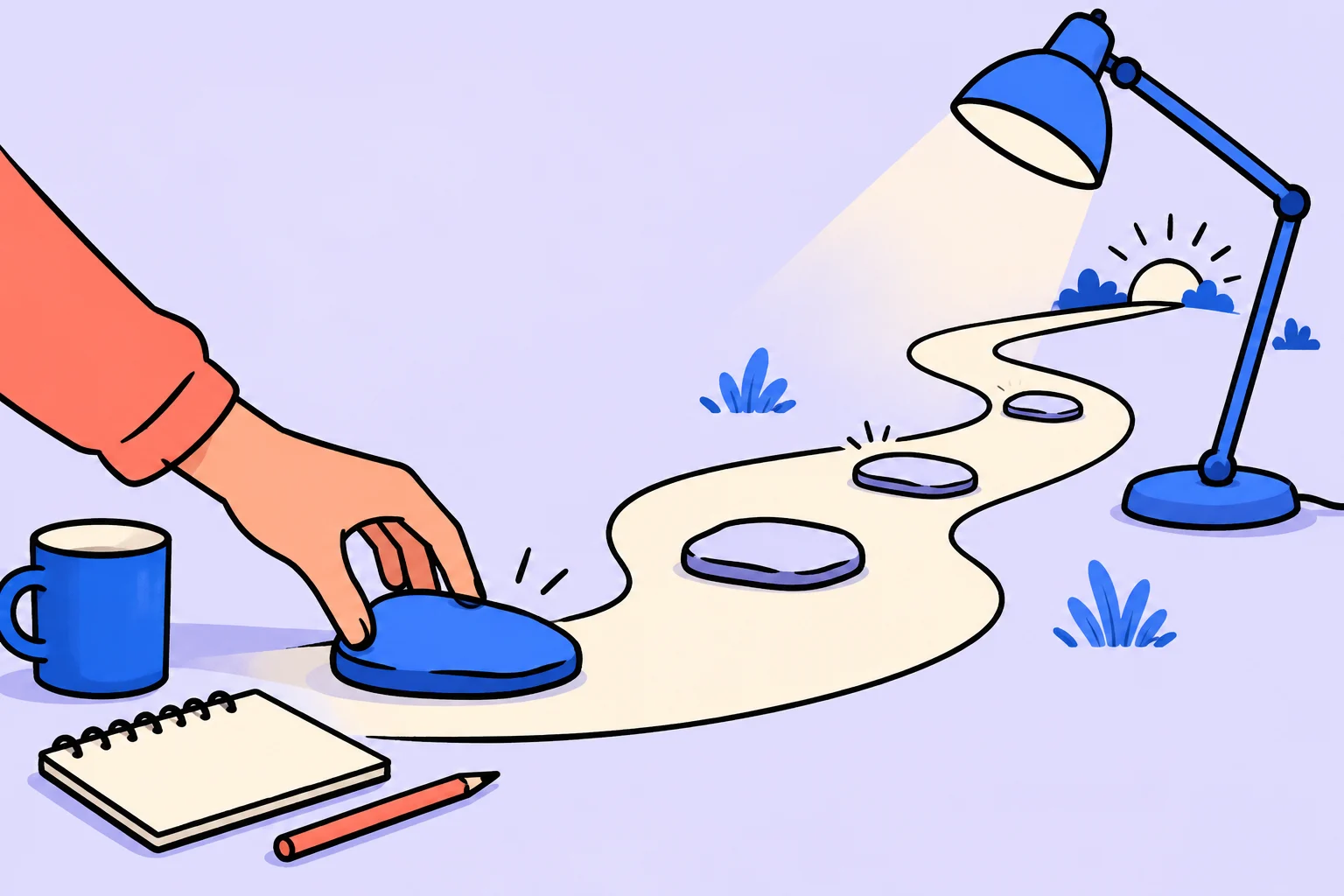
Dopamine and motivation with ADHD: using neurochemistry for productivity
How the dopamine system works with ADHD. 7 strategies for managing motivation through neurochemistry: gamification, stacking, micro rewards, and physical activity.
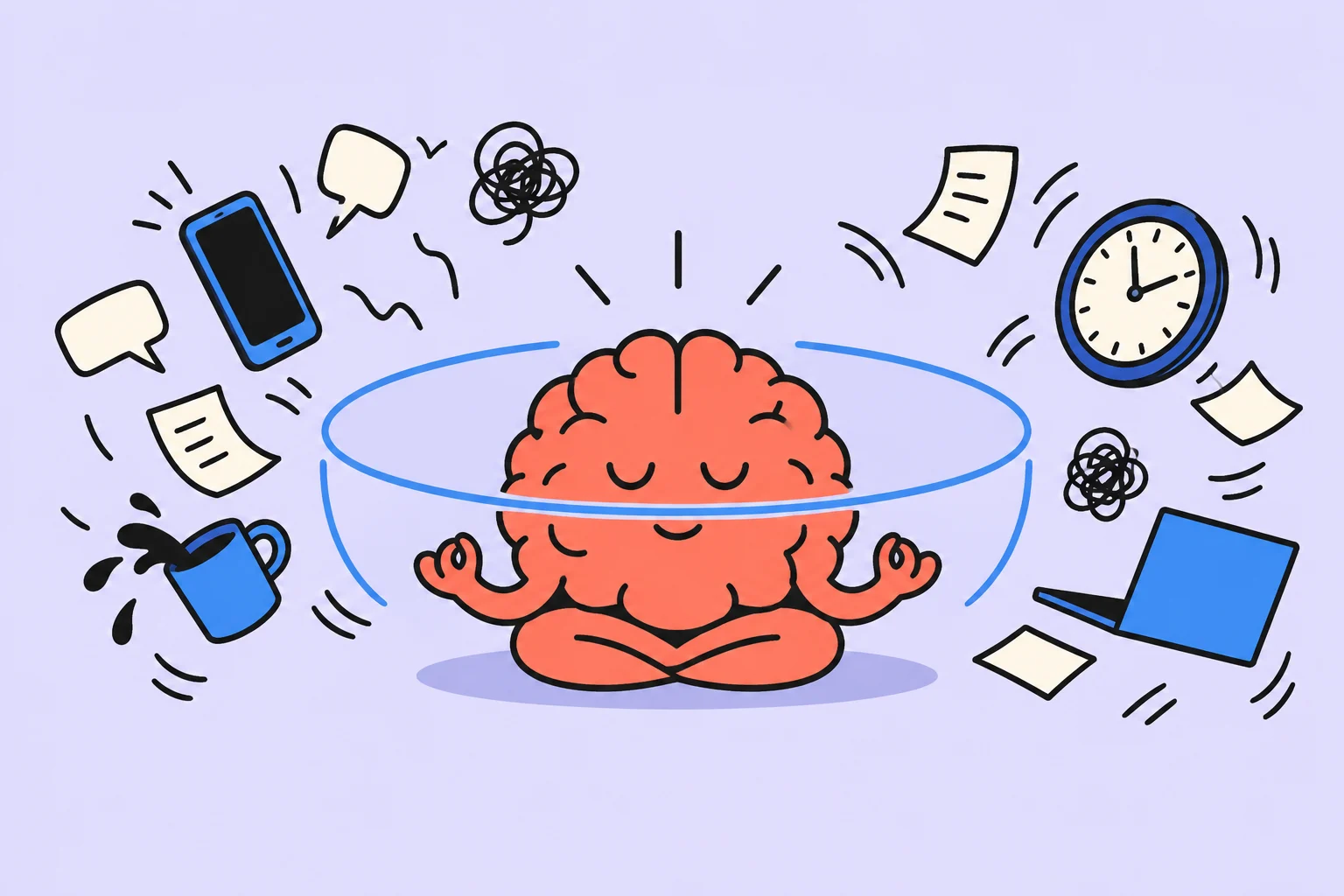
Focus techniques for ADHD: what really works in 2026
Scientifically grounded methods for improving focus with ADHD. 12 proven concentration techniques, exercises, and tools for people with attention deficits.

A Habit in 21 Days: What the Research Says and How to Start
Why 21 days does not guarantee a habit. The limits of Lally's research, a practical plan and a completed example for tracking actions and missed attempts.