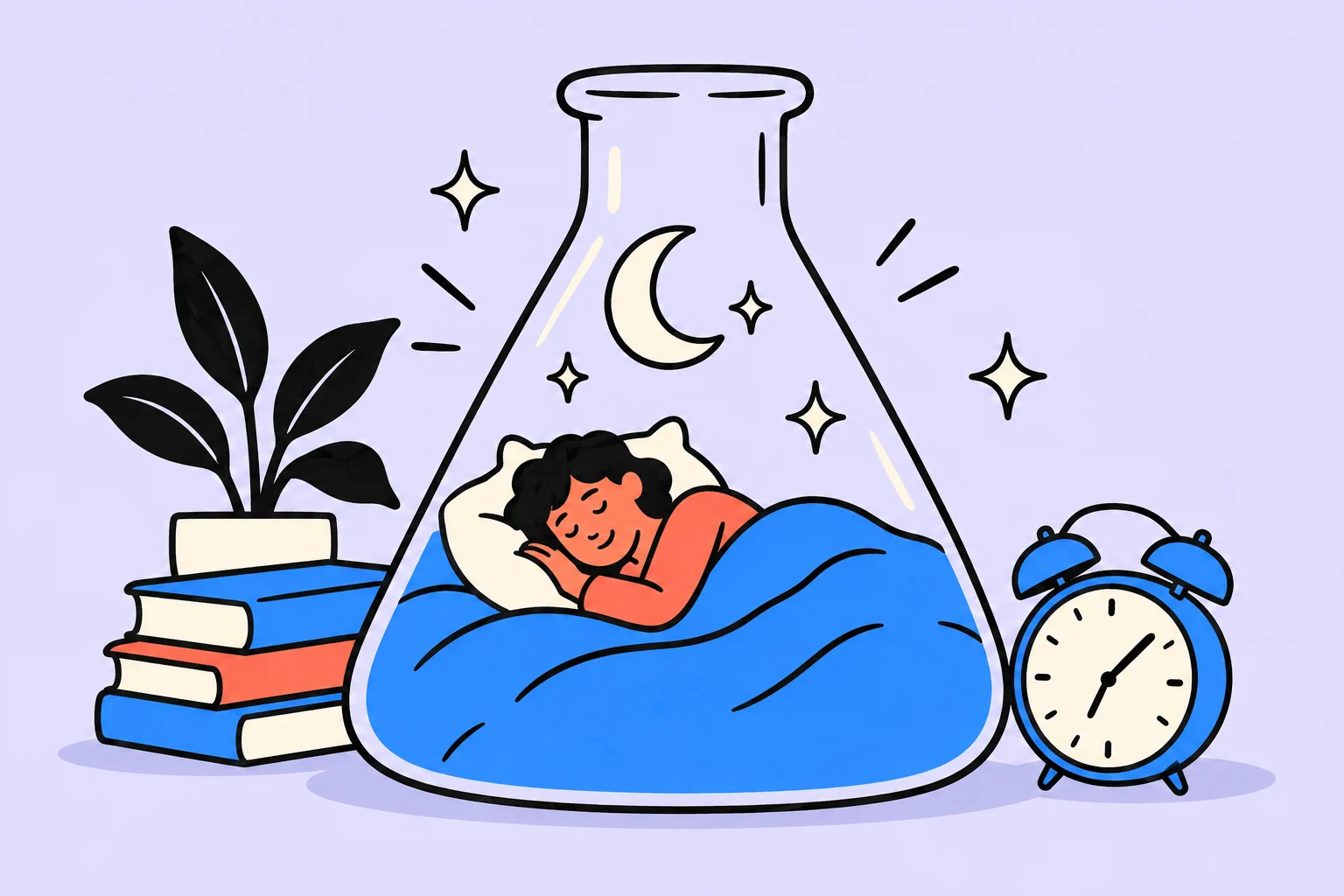
We spend a third of our lives asleep, and the quality of that third determines the quality of the other two. Matthew Walker, a Berkeley neuroscientist and author of the bestseller Why We Sleep, calls sleep “the single most effective thing we can do to reset our brain and body health.” Sleep deprivation impairs memory, weakens immunity, increases cardiovascular risk, and even shortens life expectancy. All of this can be prevented through habits rather than medication.
Chronobiology: how your internal clock works
Every cell in your body contains a molecular clock that follows an approximately 24-hour cycle. This mechanism is called a circadian rhythm. Its main conductor is the suprachiasmatic nucleus in the hypothalamus, which responds to light entering through the retina. Bright light tells the brain it is daytime and time to be awake. Darkness starts the production of melatonin, the sleep hormone.
A modern problem is that we spend evenings in front of screens emitting blue light, the very spectrum that suppresses melatonin. The brain thinks it is still daytime and does not prepare for sleep. In the morning, we wake in a dark room without the bright light that should initiate wakefulness. Circadian rhythms become disrupted: falling asleep and waking up are difficult, the day brings sleepiness, and the evening brings alertness.
The solution is surprisingly simple: get bright light within the first 30 minutes after waking, ideally sunlight, although a bright lamp also works. In the evening, reduce lighting 2 hours before bed. These two actions are the most powerful way to adjust your circadian rhythm.
hours: recommended sleep duration for adults (NSF)
of Russians sleep less than 7 hours a night
higher risk of depression with chronic sleep deprivation
Sleep hygiene: create ideal conditions
Sleep hygiene is a set of rules and conditions that help you fall asleep easily and sleep soundly. It is about physiology, rather than mysticism or soft pillows, although those help too.
Temperature: the optimal sleeping temperature is 18–20 degrees. Your body needs to cool slightly to initiate sleep. This is why a hot bath 1–2 hours before bed can paradoxically help: afterward, body temperature drops quickly, promoting sleepiness. Air the bedroom before bed or use air conditioning.
Darkness: any light suppresses melatonin. Use blackout curtains, eliminate device indicator lights, and use a sleep mask if needed. Even the faint light from a phone charger can disrupt deep sleep without you realizing it.
Quiet: if outside noise from the street or neighbors is unavoidable, use earplugs or a white-noise generator. The sleeping brain keeps processing sounds, and sudden noise pulls you from deep sleep into lighter sleep. You may not wake up, but sleep quality falls.
Keep the bed for sleep: do not work, eat, or watch videos in bed. Your brain should associate the bed exclusively with sleep. If you habitually scroll through social media in bed, the brain receives a mixed signal that the bed means activity, making it harder to fall asleep.
If you cannot fall asleep within 20 minutes, get up. Go to another room and do something quiet in dim light, such as reading a paper book or a breathing practice. Return to bed when you feel sleepy. Lying there struggling is the worst option: it builds an association between bed and insomnia.
An evening ritual: preparing for sleep
You cannot instantly switch from working-day mode to sleep. Your brain needs a transition: an evening ritual lasting 60–90 minutes. It signals to the nervous system that it is time to slow down.
2 hours before bed: stop work and any intense mental activity. Your brain needs time to process the day's information. 1.5 hours before bed: reduce the lighting. Use warm light and turn off overhead lamps. If you use devices, enable night mode with warm colors.
1 hour before bed: take a hot shower or bath to raise and then lower body temperature. Try light stretching or yoga. Read a paper book rather than an electronic one: even a warm-lit screen stimulates the brain. 30 minutes before bed: write down thoughts circling in your head. A reflection journal helps move worries from your head onto paper. 15 minutes before bed: try 4-7-8 breathing, inhaling for 4 seconds, holding for 7, and exhaling for 8.
For more on building an evening ritual, see Evening rituals for quality sleep.
Daytime habits that affect sleep
Sleep quality depends on the whole day, rather than only what you do before bed. Caffeine has a half-life of 5–6 hours. A coffee at 15:00 means half the caffeine is still in your bloodstream at 21:00. Set a caffeine deadline: have your last cup no later than 14:00. This also applies to tea, energy drinks, and chocolate.
Physical activity: regular exercise improves sleep quality, as dozens of studies confirm. However, intense exercise less than 3 hours before bed can make falling asleep harder because of raised cortisol and body temperature. Morning or the first half of the day is the ideal time to exercise.
Alcohol: the idea that a glass of wine helps you sleep is a common myth. Alcohol does help you fall asleep faster, but disrupts sleep architecture: it suppresses REM sleep, when memory consolidation and emotional processing take place. You sleep for 8 hours but wake up exhausted.
Sleep tracking: measure to improve
The subjective feeling that you sleep badly is an unreliable indicator. Objective data show how much you actually sleep, how much time you spend in deep sleep, and how often you wake during the night. Modern wearables, including fitness bands, smart rings, and watches, track sleep stages with acceptable accuracy.
Gadgets are not the only useful way to track sleep. A simple sleep diary is a powerful tool. Each morning, record when you went to bed, approximately when you fell asleep, when you woke up, how many times you woke during the night, your sleep quality from 1 to 10, and your morning energy level. After 2 weeks, you will see patterns in what improves or worsens your sleep.
When to see a doctor
If you follow all the sleep-hygiene recommendations for 4–6 weeks without improvement, consult a sleep specialist. Chronic insomnia, defined as difficulty falling or staying asleep 3+ times a week for 3+ months, can have medical causes: sleep apnea, restless legs syndrome, thyroid disorders, or depression.
Cognitive behavioral therapy for insomnia (CBT-I) is the gold standard for chronic insomnia treatment recommended by the American Academy of Sleep Medicine. It is more effective than sleeping pills in the long term and has no side effects. CBT-I addresses the thoughts and behaviors that maintain insomnia and usually takes 6–8 sessions.
Sleep is a foundation, not a luxury
Good sleep underpins productivity, health, mood, and relationships. It is an investment with a guaranteed return. Start with one change: set a consistent wake-up time, including weekends, and follow it for two weeks. Then add an evening ritual, followed by daytime habits. Step by step, using a habit tracker and support from Sinqly's AI coach, you can build a healthy sleep system that changes the quality of every day.
Turn an idea into action
Was this helpful?
Rate the article and tell us what was missing. Your feedback goes to the Sinqly team and will not be published on the site.
How to start waking up early: a 30-day plan
A step-by-step plan for switching to an earlier wake-up time in 30 days. The science of circadian rhythms, chronotypes, nutrition, melatonin, morning habits, and a challenge.
How to manage anxiety: 10 science-based methods for relief
Practical methods for tackling anxiety: cognitive techniques, breathing practices, and habits for reducing anxiety. A scientific approach and AI support from Sinqly.

How to improve your relationship: 10 habits for couples
Discover 10 science-based habits for improving relationships: communication, quality time, gratitude, shared goals, and other practices for strong couples.