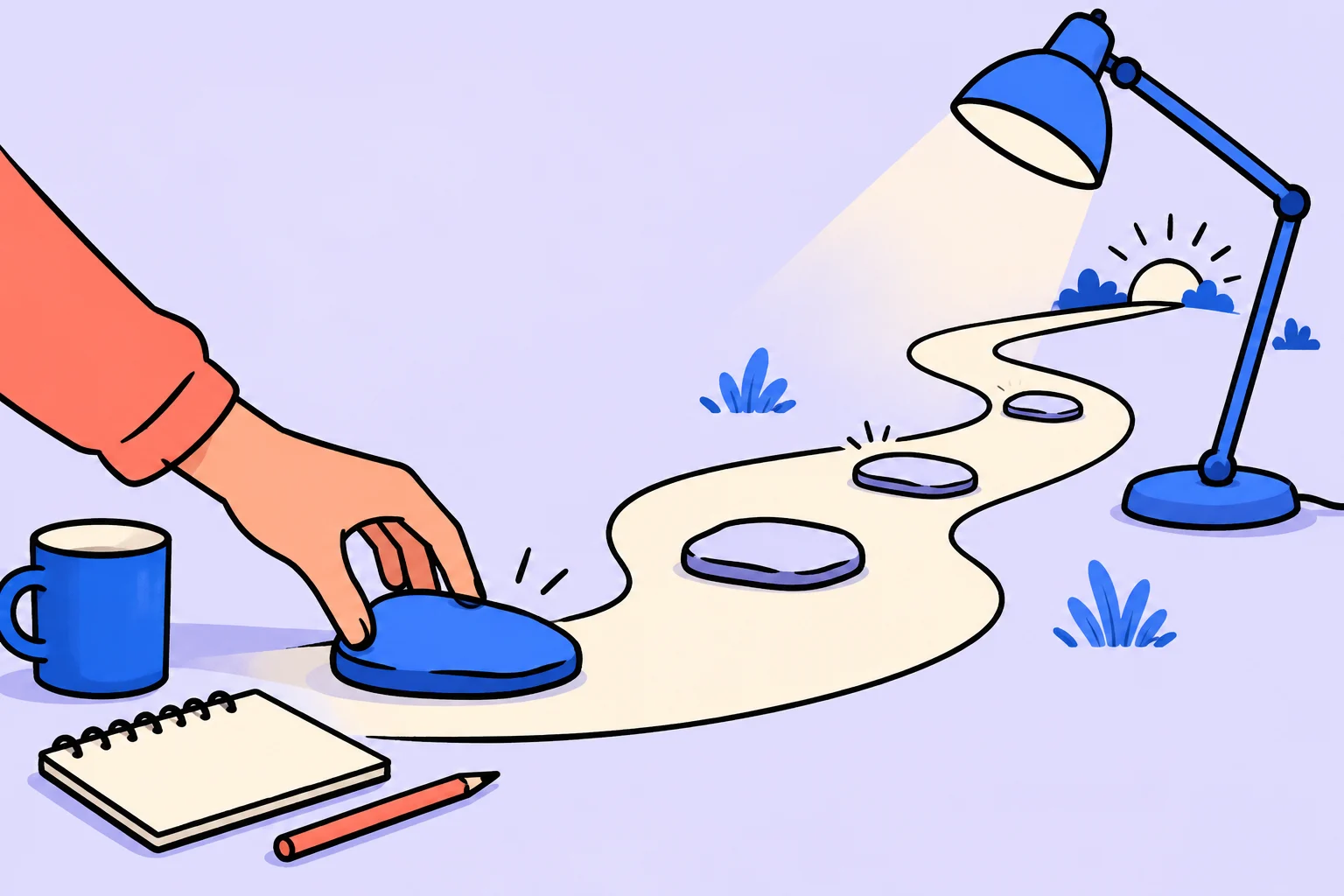
"I know I need to do it. I want to do it. But I physically cannot start." If this describes your life, dopamine is probably involved. With ADHD, the brain's dopamine system works differently: the motivation neurotransmitter is produced in the same amount but used up faster than necessary. As a result, ordinary tasks do not create enough of a "fuel impulse" to initiate action. This is neurochemistry rather than laziness, lack of willpower, or procrastination. You can learn to work with it.
increase in dopamine after 20 minutes of cardio
higher dopamine transporter density with ADHD
faster dopamine reuptake with ADHD
Dopamine and ADHD: what happens in the brain
To understand motivation with ADHD, you need to understand the neurochemistry. Dopamine is a neurotransmitter with several critical functions: it signals anticipation of reward, specifically anticipation rather than pleasure itself; helps sustain attention on a task; participates in planning and decision-making; and provides a feeling of satisfaction after completed actions.
In a neurotypical person, dopamine is released steadily: enough for everyday tasks and more for important and interesting ones. The ADHD brain has two key differences. The first is increased dopamine transporter (DAT) density in the striatum. A study published in PubMedfound that people with ADHD have 70% higher DAT density, accelerating dopamine reuptake from the synaptic cleft.
The second difference is reduced D2/D3 receptor sensitivity in the nucleus accumbens, the brain's reward center. This means that even when dopamine is released, it produces a weaker motivational signal. Consequently, ordinary tasks such as cleaning, writing a report, or paying bills do not trigger enough of a dopamine response and feel "impossible." Highly stimulating tasks such as video games, extreme deadlines, and new projects, however, trigger a dopamine surge, allowing the brain to focus on them for hours. Read more about signs of adult ADHD in our complete guide.
A meta-analysis of 44 neuroimaging studies published in Neuroscience & Biobehavioral Reviews (2023) confirmed a significant reduction in dopamine receptor availability in the prefrontal cortex and striatum with ADHD. This explains why people with ADHD have difficulty with motivation, planning, and sustaining attention on "uninteresting" tasks.
Motivation with ADHD: why "just do it" does not work
"Just do it" is the worst advice for someone with ADHD. It is like telling a nearsighted person to "just look harder." Motivation with ADHD depends on neurochemistry rather than willpower. The ADHD brain can motivate itself only when a task meets one of the four criteria researcher William Dodson calls "ICNU":
Interest — the task is inherently engaging. Challenge — the task contains an element of competition or overcoming difficulty. Novelty — the task is new or is done in a new way. Urgency — the deadline is pressing right now. If a task meets none of these criteria, the ADHD brain literally cannot initiate motivation, regardless of how important the task is rationally.
This explains the ADHD paradox: a person may perform brilliantly on interesting, urgent projects while being unable to make themselves take out the trash. Taking out the trash meets none of the four dopamine activation criteria; laziness is not the reason. Understanding this mechanism is the first step toward a solution. Practical productivity strategies for ADHD are collected in our detailed article.
Dopamine traps with ADHD: what steals your motivation
The ADHD brain is especially vulnerable to "dopamine traps": sources of fast, intense dopamine that exhaust the neurotransmitter system and reduce receptor sensitivity. Every hour in these traps raises the "dopamine threshold": motivation requires ever more stimulation, while ordinary tasks feel increasingly unbearable.
Social media — an endless feed with novelty every few seconds. Every swipe, like, and notification is a micro dose of dopamine. Algorithms are deliberately optimized for maximum dopamine stimulation. The ADHD brain lacks a built-in "emergency brake": 5 minutes of "checking Instagram" becomes 2 hours.
Video games — constant mini rewards, a sense of progress, levels, and achievements. For the ADHD brain, this is a perfect dopamine storm: novelty + challenge + immediate feedback. Overeating — sugar and fatty foods trigger a quick dopamine surge followed by a "crash." Doom scrolling — news and content that evoke strong emotions stimulate the simultaneous release of cortisol and dopamine.
The practical takeaway: if you want more motivation for work, start by reducing dopamine traps. This restores receptor sensitivity rather than serving as a "punishment." Read more about digital minimalism in Digital minimalism: a practical guide.
Strategy 1: A dopamine schedule for the ADHD brain
The idea of a dopamine schedule is to consciously manage the flow of dopamine throughout the day to maximize motivation when you need it. This is strategic allocation of stimulation rather than a "dopamine detox," which is often unrealistic with ADHD.
Screen-free mornings (30-60 minutes)
Do not check your phone, social media, or the news immediately after waking. This preserves dopamine resources for important tasks. Instead, try exercise, a shower, a protein-rich breakfast, and 5 minutes of planning your day.
Difficult tasks in the first half of the day
While your dopamine "budget" is still full, direct it toward the most important and difficult tasks. Do not spend your morning energy on email and chats.
Physical activity before work
20-30 minutes of cardio raises dopamine by 200-300% for 2-4 hours. This creates a "super-productivity window": use it for the day's main tasks.
Highly stimulating activities in the evening
Schedule social media, games, and entertainment at the end of the day as a reward. The principle of "vegetables first, dessert later" works at the neurochemical level.
A weekly "dopamine reset"
Minimize screen time and highly stimulating activities one day a week. This "resets" receptors and increases sensitivity to ordinary sources of pleasure.
Strategy 2: Gamify routine with ADHD
Gamification is one of the most effective tools for the ADHD brain because it adds novelty, challenge, and immediate rewards to ordinary tasks. In effect, it "tricks" the dopamine system into perceiving routine as a game.
Practical examples: set a timer and try to beat your cleaning speed record. Create a points system for daily tasks: 1 point for a small chore, 5 points for a difficult one, and 10 for one you have postponed for a long time. Use a streak tracker: how many consecutive days have you practiced your habit? A visual progress bar is powerful: the brain wants to "fill the bar to the end."
Tip: create a physical "achievement jar." Every time you complete a task, drop in a coin, pebble, or bead. Watching the jar fill is a powerful dopamine incentive for the ADHD brain. At the end of the week, a full jar becomes tangible evidence of your productivity.
Strategy 3: Dopamine stacking — combine pleasure with usefulness
Dopamine stacking, or layering, combines a boring task with a pleasant stimulus. The idea is simple: associate routine with pleasure so the dopamine-driven anticipation of something enjoyable extends to the boring action.
Examples of stacking: listen to your favorite podcast only while cleaning. Drink your best coffee only while working on a report. Visit your favorite café only to work on a difficult project. Watch your favorite series only on the treadmill. Eat your favorite food only at your desk; use this cautiously, and only for truly difficult tasks.
The key stacking rule: the pleasant stimulus must be available only alongside the boring task. If you can listen to the podcast anytime, it stops motivating you to clean. Exclusivity creates dopamine-driven anticipation: your brain begins to associate cleaning with enjoyment of the podcast.
Strategy 4: Micro rewards to sustain motivation
With ADHD, large delayed rewards offer almost no motivation; the brain values only immediate rewards. "Finish the project by Friday and you will get a bonus" sounds to the ADHD brain like "maybe something good will happen someday in the distant future." No dopamine impulse = no motivation.
The solution is a micro-reward system. Break a large task into 15-30-minute parts and reward yourself after each. Write a paragraph, then stand up, stretch, and eat a piece of chocolate. Finish a section, then spend 5 minutes on a favorite activity. Finish half the project, then take a proper break with something pleasant. Finish the whole project, then give yourself a big reward.
Micro rewards create a series of small dopamine peaks that sustain motivation throughout the task. Without them, the ADHD brain "switches off" after 10-20 minutes and slips into procrastination. Use a task manager with subtasks: completing each subtask becomes a small victory.
Strategy 5: Physical activity — the main dopamine hack
Physical activity is the most powerful, free, and accessible way to raise dopamine with ADHD. 20-30 minutes of aerobic exercise such as running, brisk walking, cycling, or swimming raises dopamine and norepinephrine by 200-300% for several hours. This is comparable to the effect of low doses of stimulant medication.
A study published in the Journal of Attention Disorders (2018) found that a single 30-minute workout improves attention, working memory, and impulse control in adults with ADHD for 2-4 hours. Regular exercise 3-5 times per week has a cumulative effect: baseline dopamine rises, and ADHD symptoms decrease by 20-30%.
Especially effective for people with ADHD: a morning run or brisk walk before work to create a "productivity window"; short movement breaks every 30-45 minutes with 10 squats, push-ups, or jumps; and sports involving competition or novelty, such as martial arts, dancing, and climbing. A running habit is one of the most beneficial habits for the ADHD brain.
A meta-analysis of 11 randomized controlled trials in Frontiers in Psychology (2023) confirmed that regular aerobic physical activity significantly improves executive functions, attention, and behavioral control in adults with ADHD. The effect lasts up to 48 hours after exercise.
Strategy 6: Sleep and nutrition — the foundation of the dopamine system
The dopamine system critically depends on two basic factors: sleep and nutrition. Without them, no "motivation hacks" will work; it is like trying to start a car without fuel or oil.
Sleep. Sleep deprivation reduces D2 dopamine receptor sensitivity by 10-15% for every night with less than 6 hours of sleep. After a sleepless night, motivation plummets: even interesting tasks feel overwhelming. Sleep problems are especially common with ADHD: the brain "won't switch off" in the evening, thoughts race, and falling asleep takes hours. Helpful measures include a fixed bedtime, no screens for 1-2 hours before sleep, magnesium before bed in consultation with a doctor, white noise, or meditation to fall asleep.
Nutrition. The amino acid tyrosine is a direct precursor of dopamine in the brain. Foods rich in tyrosine include eggs, chicken, fish, cottage cheese, nuts, legumes, and bananas. A protein-rich breakfast supplies the brain with dopamine's "building material" for the first half of the day. Sugar and simple carbohydrates cause a quick dopamine surge followed by a sharp drop; avoid them at breakfast and at the start of the working day.
Omega-3 fatty acids found in oily fish, flaxseed oil, and walnuts support healthy neuronal cell membranes and improve dopamine signaling. A systematic review of 16 studies found a 16% reduction in inattention with regular Omega-3 intake. Adequate water intake is another factor: even 2% dehydration reduces cognitive function.
Strategy 7: Novelty and context switching
The ADHD brain craves novelty, one of the four dopamine activation criteria in ICNU. Use this consciously: regularly change your working context to maintain interest and motivation.
Practical approaches: work from different places such as a café, library, coworking space, or park; use new tools for familiar tasks, such as a new font, playlist, or app; change the order of tasks throughout the day; add a game or competition element; set unusual constraints, such as "I'll write this report in 45 minutes" or "I'll finish cleaning before this song ends."
Novelty does not mean chaos. The goal is to add small elements of novelty to a stable structure, rather than constantly change everything. A fixed schedule + variation within blocks = the optimal formula for the ADHD brain. Read more about building such a system in How to organize life with ADHD.
ADHD neurochemistry: norepinephrine, serotonin, and other players
Although dopamine is the main "culprit" in motivation problems with ADHD, it is not the only neurotransmitter involved in the condition. Understanding the full picture helps you choose more effective strategies.
Norepinephrine is responsible for alertness, readiness to act, and the ability to respond to environmental changes. The norepinephrine system is also disrupted with ADHD, explaining difficulty switching attention and getting "stuck" on one task. Physical activity and cold exposure raise both dopamine and norepinephrine simultaneously.
Serotonin regulates mood, impulse control, and sleep. Low serotonin with ADHD can manifest as increased impulsivity, irritability, and sleep problems. Sunlight with at least 20 minutes outdoors in the morning, dietary tryptophan from turkey, dairy products, and nuts, regular physical activity, and social interaction help support serotonin.
GABA (gamma-aminobutyric acid) is an inhibitory neurotransmitter that helps "switch off" unnecessary brain activity. With ADHD, GABA deficiency can manifest as an inability to "stop thoughts," difficulty falling asleep, and a constant sense of inner restlessness. Meditation and breathing practices increase GABA system activity.
Caffeine, nicotine, and "self-medication" with ADHD
Many people with undiagnosed ADHD intuitively "self-medicate" using substances that temporarily raise dopamine and ease symptoms. Caffeine, nicotine, alcohol, sugar, and energy drinks are all forms of self-medication that work in the short term but create long-term problems.
Caffeine moderately raises dopamine and norepinephrine, which is why many people with ADHD "cannot function without coffee." In moderate amounts of 1-3 cups per day, caffeine can be a useful complement, though it does not replace systematic strategies. Avoid coffee after 14:00 to protect sleep.
Nicotine is a powerful stimulant of dopamine and acetylcholine. Studies show that people with ADHD are 2 times more likely to smoke and find quitting significantly harder. Understanding this mechanism matters: if you smoke and suspect ADHD, treating ADHD may make quitting easier.
The most dangerous form of self-medication is alcohol and drugs. People with ADHD are 2-3 times more likely to develop addictions, and alcohol or drugs can temporarily "switch off" the chaos in their minds. But the price is too high. If you notice self-medication patterns, that is a serious reason to consult a psychiatrist for ADHD assessment.
The dopamine management strategies in this article do not replace medical care. If you suspect ADHD, consult a psychiatrist for assessment. Medication prescribed by a doctor acts directly on the dopamine system and helps 70-80% of patients. The strategies in this article can work without medication, but they are significantly more effective alongside it.
How to organize the next step in Sinqly
Define your next action so it is clear where to start and where to stop.
Healthy gamification
Experience points, streaks, and levels create dopamine cycles for useful actions rather than procrastination.
Micro tasks
The AI coach automatically breaks large goals into 5-15-minute steps, with each step providing an immediate reward.
Progress visualization
Charts, progress bars, and streaks provide visual feedback that activates dopamine-driven anticipation.
AI support without pressure
Gentle reminders and support from an AI coach that understands ADHD and does not judge.
Frequently asked questions about dopamine and motivation with ADHD
Why is motivation lacking with ADHD?
With ADHD, the dopamine system works less efficiently: there are 70% more dopamine transporters, and reuptake is faster. Ordinary tasks do not produce enough of a dopamine response to initiate motivation. This is neurochemistry rather than laziness, supported by decades of neuroimaging research.
How can you raise dopamine naturally with ADHD?
The most effective approaches: physical activity with 20-30 minutes of cardio raising dopamine by 200-300%, a protein-rich breakfast with tyrosine, quality sleep of 7-9 hours, limiting dopamine traps such as social media and games, gamifying tasks, novelty in routine, and regular meditation.
What are dopamine traps with ADHD?
Dopamine traps are sources of fast, intense dopamine: social media, video games, overeating sweets, and endless scrolling. They raise the dopamine threshold, making ordinary tasks feel even more unbearable. Limiting these traps is one of the first steps toward restoring motivation.
Does coffee help with ADHD?
Caffeine moderately raises dopamine and norepinephrine, improving concentration. Many people with ADHD use coffee as a mild stimulant. The optimal amount is 1-3 cups in the first half of the day, with no coffee after 14:00 to preserve sleep quality. Coffee complements strategies but does not replace a systematic approach.
How does gamification help with ADHD?
Gamification adds immediate rewards to routine tasks: points, levels, streaks, and progress bars. Every completed action triggers a mini surge of dopamine, compensating for a lack of internal motivation.
Are ADHD and addiction connected?
Yes, people with ADHD are 2-3 times more likely to develop addictions. This is a form of self-medication: the brain seeks sources of the dopamine it lacks. Alcohol, drugs, overeating, and gambling are all attempts to "fill the dopamine gap." ADHD diagnosis and treatment significantly reduce the risk of addiction.
How does physical activity affect dopamine with ADHD?
Aerobic exercise is the most powerful natural dopamine stimulant. 30 minutes of running or brisk walking raises dopamine and norepinephrine for 2-4 hours, improving attention, working memory, and impulse control. Regular exercise has a cumulative effect, reducing ADHD symptoms by 20-30%.
Turn an idea into action
Was this helpful?
Rate the article and tell us what was missing. Your feedback goes to the Sinqly team and will not be published on the site.
How to organize life with ADHD: a complete guide to systems and practical tips
A complete guide to organizing life with ADHD. Proven planning systems, practical tips, tools, and habits for people with attention deficit hyperactivity disorder.
The best apps for people with ADHD in 2026
The best ADHD apps: task managers, habit trackers, and focus timers. A detailed review of 12 tools for people with ADHD.
ADHD and productivity: how to work effectively with ADHD
A practical productivity guide for people with ADHD. 10 strategies, tools, and techniques for working effectively with attention deficit hyperactivity disorder.