
“Do I have ADHD, or am I just inattentive and lazy?” Thousands of adults ask themselves this question. Adult ADHD often remains undiagnosed: symptoms are attributed to stress, tiredness, or character flaws. Yet a timely ADHD diagnosis can radically improve quality of life by helping people understand their characteristics and access effective support. This guide covers everything about adult ADHD diagnosis, from the first symptoms to choosing a specialist and interpreting results.
of adults worldwide have an ADHD diagnosis
of ADHD cases go undiagnosed in adulthood
ratio of women to men with undiagnosed ADHD
What is adult ADHD? The main manifestations
Attention deficit hyperactivity disorder (ADHD) is a neurodevelopmental disorder that begins in childhood but can persist into adulthood. Adult ADHD involves three main groups of symptoms: inattention, hyperactivity, and impulsivity. These manifestations differ significantly from childhood ADHD.
Inattention in adults involves specific difficulties rather than simply “daydreaming”: struggling to stay focused on boring tasks, being easily distracted by external stimuli, forgetting important meetings and deadlines, losing documents and keys, and being unable to finish projects. These symptoms affect work, studies, and personal life, creating chronic stress.
Hyperactivity in adults rarely takes the form of physical activity. It is more likely to involve inner restlessness, “racing” thoughts, difficulty relaxing, and a need to keep doing something. Impulsivity appears as hasty decisions, interrupting others, emotional reactions, and difficulty planning for the future. Read more about symptoms in the article Adult ADHD: signs.
Important: ADHD is a neurobiological characteristic of the brain rather than a flaw in character or upbringing. It is a medical condition that requires professional assessment and can significantly affect quality of life without support.
DSM-5 diagnostic criteria for adult ADHD
Adult ADHD diagnosis is based on the criteria in the Diagnostic and Statistical Manual of Mental Disorders, 5th edition (DSM-5). A diagnosis requires at least 5 of the 9 symptoms in the “inattention” or “hyperactivity-impulsivity” category (children require 6 symptoms).
Key DSM-5 criteria for adults: symptoms have been present since childhood (before age 12), have persisted for at least 6 months, occur in two or more areas of life (work, home, relationships), significantly impair functioning, and are not explained by other mental disorders. These criteria help distinguish ADHD from temporary difficulties or other conditions.
In 2013, DSM-5 introduced important changes for adult diagnosis: the age of symptom onset was raised from 7 to 12 (many adults cannot remember exactly whether they had symptoms at age 7), and the required symptom count for adults was reduced from 6 to 5 (recognizing that symptoms can become less obvious with age). These changes made adult ADHD diagnosis more accurate.
Types of ADHD: the different forms of attention deficit disorder
DSM-5 identifies three types of ADHD based on the predominant symptoms. The combined type is the most common (60-70% of cases), including symptoms of inattention, hyperactivity, and impulsivity. It involves the classic signs of ADHD: difficulty concentrating, restlessness, and hasty decisions.
The predominantly inattentive type (previously called ADD) accounts for 20-25% of cases. The main problems are distractibility, forgetfulness, organizational difficulties, and “daydreaming.” Hyperactivity is minimal or absent. This type is more common in women and girls and often goes undiagnosed because it does not cause problems for others.
The predominantly hyperactive-impulsive type is rare in adults (5-10%). It involves restlessness, impulsivity, and difficulty waiting, without serious attention problems. In adults, hyperactivity transforms into inner restlessness, a need for constant activity, and difficulty relaxing.
Combined type
60-70% of cases. Inattention + hyperactivity + impulsivity. The classic ADHD presentation.
Inattentive type
20-25% of cases. Distractibility, forgetfulness, and 'daydreaming'. More common in women.
Hyperactive-impulsive
5-10% in adults. Restlessness, hasty decisions, and difficulty waiting.
How adult ADHD is diagnosed: a step-by-step process
Adult ADHD diagnosis is a multistage process that requires time and the involvement of a qualified specialist. It begins with an initial psychiatric consultation, during which the doctor takes a detailed history, explores your concerns, and assesses your overall condition. It is important to describe your difficulties honestly: the doctor will help you understand them without judging you.
The next stage is a structured interview in which the doctor asks specific questions about ADHD symptoms, their manifestations in childhood and adulthood, and their effect on different areas of life. Standardized questionnaires are used: ASRS-v1.1 (a screening scale), CAARS (a comprehensive adult ADHD assessment), and the Conners scales. These tools help assess symptom severity objectively.
Additional neuropsychological tests assess attention, working memory, and executive functions. These include sustained attention tasks (CPT), working memory tasks (N-back), and planning tasks (Tower of London). These tests do not diagnose ADHD on their own, but help identify the pattern of cognitive difficulties.
Initial consultation
A discussion with a psychiatrist: concerns, medical history, and an overall assessment. Duration: 60-90 minutes.
Structured interview
A detailed assessment of ADHD symptoms using standardized scales and questionnaires.
Neuropsychological testing
Tests of attention, memory, and planning. They help identify a person's cognitive profile.
Ruling out other conditions
Differential diagnosis involving depression, anxiety, and bipolar disorder.
Conclusion and treatment plan
The doctor makes a diagnosis, explains the results, and suggests treatment and support options.
Differential diagnosis: distinguishing ADHD from other disorders
ADHD often coexists with other mental disorders or resembles them. Depression can cause concentration problems, but in depression these difficulties occur episodically (during a depressive episode), whereas in ADHD they persist from childhood. In depression, thoughts focus on negative experiences; in ADHD, they jump chaotically.
Anxiety disorders also affect attention, but through a different mechanism: in anxiety, attention is absorbed by worries and concerns, while in ADHD it switches uncontrollably between stimuli. Bipolar disorder has clear periods of highs (mania/hypomania) and lows (depression), whereas in ADHD mood is constantly unstable without clear cycles.
Personality disorders (particularly borderline personality disorder) can include impulsivity and emotional instability. In ADHD, however, these symptoms relate to neurobiological characteristics of attention rather than disturbances in relationships and self-image. Remember that a person can have several diagnoses at once: comorbidity occurs in 75-80% of ADHD cases.
Self-diagnosis using internet tests does not replace a professional assessment. ADHD is a complex disorder that requires other conditions to be ruled out and a comprehensive evaluation. Online tests can indicate a need to consult a specialist, but cannot replace that consultation.
Particular features of diagnosing ADHD in women
ADHD in women often goes undiagnosed or is diagnosed late. Reasons include the greater prevalence of the inattentive type without obvious hyperactivity in girls and women, symptoms being less noticeable to others, and women being better at masking difficulties to meet social expectations. As a result, many women only discover their ADHD in adulthood.
ADHD symptoms in women are often misinterpreted: distractibility is attributed to “female impracticality,” emotional instability to PMS or “female hysteria,” and organizational difficulties to a lack of homemaking skills. These stereotypes complicate diagnosis and lower self-esteem in women with ADHD.
Hormonal changes affect ADHD symptoms in women: symptoms intensify before menstruation (falling estrogen), may temporarily improve during pregnancy (rising estrogen), and often worsen during menopause. These fluctuations are important to consider during assessment. Read more in the article ADHD in women: characteristics and symptoms.
Where to get an ADHD assessment in Russia: finding a specialist
Adult ADHD is diagnosed by a psychiatrist, ideally one with experience in adult ADHD. There are few such specialists in Russia, particularly in the regions. Moscow and St. Petersburg have centers specializing in ADHD: the Burdenko Clinic, the Serbsky Research Institute, and the private centers Mental Health, Insight, and Medic City.
When choosing a specialist, look at their education (psychiatry and additional ADHD training), experience with adult patients (not only children), and knowledge of current diagnostic criteria. A good doctor will explain the assessment process, answer questions, and avoid rushing to a diagnosis after a single appointment.
Compulsory medical insurance covers a psychiatric consultation at a local clinic or psychoneurological dispensary, but these facilities generally lack specialized ADHD care. Private care is more expensive (5-15 thousand for a full assessment), but quality and speed are higher. People in the regions can consider online consultations with specialists in Moscow or St. Petersburg (in-person diagnosis and remote follow-up).
Online ADHD tests: possibilities and limitations
Online ADHD tests are convenient preliminary self-assessment tools, but do not replace professional diagnosis. The best-known include ASRS-v1.1 (18 questions, developed by WHO), the Conners test (a shortened version), and questionnaires based on DSM-5 criteria. These tests help you decide whether to see a specialist.
Advantages of online tests include accessibility, anonymity, speed, being free, and the ability to retake them. They provide a basic understanding of ADHD symptoms, help organize your observations about yourself, and prepare you for a doctor's appointment.
Limitations of online tests: they do not account for context or medical history, cannot rule out other disorders, and may produce false-positive or false-negative results. People may assess their symptoms inaccurately or give socially desirable answers. Online tests are a first step toward understanding, but only a doctor can make a diagnosis.
Before seeing a doctor, take several online tests, keep a symptom journal for a week, and prepare specific examples of difficulties at work, in education, and in relationships. This will help the doctor understand your situation better and make an accurate diagnosis.
Neuropsychological testing in ADHD assessment
Neuropsychological tests are an additional tool in ADHD assessment that helps objectively evaluate cognitive functions. Continuous performance tests (CPT) measure sustained attention: the patient must respond to certain stimuli while ignoring others. Missing target stimuli and making false responses are typical in ADHD.
Working memory tests (such as N-back) assess the ability to hold and manipulate information mentally. Working memory is often reduced in ADHD, affecting the ability to follow instructions, plan, and solve problems. Executive function tests (Tower of London and the Stroop test) assess planning, impulse control, and cognitive flexibility.
It is important to understand that neuropsychological tests do not diagnose ADHD on their own. Results are interpreted in the context of the clinical picture. Some people with ADHD have normal test results (particularly those with high intelligence), while others' difficulties may relate to anxiety or fatigue. Tests help identify a person's cognitive profile and plan support.
The cost of ADHD diagnosis in Russia
The cost of ADHD diagnosis in Russia varies by region and type of medical institution. A full assessment at private clinics costs 8-15 thousand rubles in Moscow, 6-12 thousand in St. Petersburg, and 3-8 thousand in the regions. A psychiatric consultation costs 3-8 thousand per session, and neuropsychological testing costs 5-10 thousand.
Compulsory medical insurance provides basic psychiatric care free of charge, but specialized ADHD assessment is virtually absent from the public system. Major research institutes (Burdenko and Serbsky) have departments that accept compulsory medical insurance, but access is difficult: a referral is required and waiting lists are long.
Saving money on ADHD diagnosis is justified when considering the long-term benefits: greater ability to work, improved relationships, reduced stress, and access to treatment and support. Undiagnosed ADHD costs more in lost opportunities, career problems, and deteriorating mental health. Investing in diagnosis is investing in quality of life.
What to do after an ADHD diagnosis
An ADHD diagnosis marks the beginning of understanding yourself and accessing effective help. The first step after diagnosis is education: learn about ADHD from reliable sources, since understanding your condition reduces anxiety and stigma. Read books by Russell Barkley and Edward Hallowell, and join communities of people with ADHD.
Discuss a treatment plan with your doctor: whether medication is needed, which forms of psychotherapy may help, and which lifestyle changes matter. Consider a comprehensive approach to ADHD treatment, including medication, cognitive behavioral therapy, and digital support tools.
Tell loved ones about your diagnosis if you feel ready. Understanding that your difficulties relate to neurobiological characteristics rather than laziness or irresponsibility can improve relationships. At work, consider requesting reasonable accommodations: flexible hours, a quiet workspace, and written instructions.
Adult ADHD diagnosis: myths and reality
There are many myths around adult ADHD diagnosis. “ADHD is a childhood disorder that adults grow out of” is incorrect. 60-70% of children with ADHD retain symptoms in adulthood, although their manifestations may change. “ADHD is a fashionable diagnosis given to everyone” is another myth. Diagnosis requires strict criteria and other conditions to be ruled out.
“If you have ADHD, you cannot be successful” is false. Many famous people have ADHD: Richard Branson, Michael Phelps, Simone Biles, and Justin Timberlake. With the right support, people with ADHD can achieve outstanding results, particularly in creative and entrepreneurial fields.
“ADHD is treated only with pills” is another myth. Effective ADHD management involves a comprehensive approach: medication (when indicated), psychotherapy, lifestyle changes, and supportive tools. “ADHD is just bad behavior” is a stigmatizing misconception. ADHD is a neurobiological condition with a genetic basis, supported by neuroimaging research.
The family's role in adult ADHD diagnosis
Family plays an important role in adult ADHD diagnosis. Loved ones can provide information about symptoms the person may not notice or may minimize. Spouses are often the first to notice their partner's forgetfulness, procrastination, and emotional instability. Parents may recall childhood behaviors.
When taking a history, the doctor may ask a family member to attend or complete a questionnaire about the patient's symptoms. This helps create a more objective picture. It is important for the family to understand that ADHD is a medical condition that can be managed with the right approach, rather than the person's fault.
After diagnosis, it is important for family members to learn about ADHD, understand their loved one's behavioral characteristics, and learn to support them without judgment. Family therapy can help improve communication and reduce conflicts related to ADHD symptoms. Family support is one of the most important factors in successful ADHD management.
A study in the Journal of Clinical Psychology (2021) found that adults with ADHD who received family support after diagnosis followed their treatment plan 40% better and achieved their goals 35% more often than those managing alone.
ADHD diagnosis in different age groups
ADHD diagnosis in young adults (18-25) often occurs during university or the start of a career, when demands on self-organization increase sharply. Symptoms previously compensated for by external structures (parents and school timetables) become obvious. At this age, it is important to distinguish ADHD from adjustment-related stress.
In middle-aged adults (30-50), diagnosis often follows their children's ADHD diagnosis: parents recognize the symptoms in themselves. Career crises, relationship problems, and burnout can also act as triggers. At this age, it is important to account for accumulated compensatory strategies and masking behavior.
ADHD diagnosis in older people (50+) is less common but possible. It often occurs after retirement, when the external structures of work disappear, or when accompanying conditions develop. It is important to distinguish ADHD from cognitive changes related to age or other medical conditions.
Frequently asked questions about ADHD diagnosis
How can I tell whether I have ADHD or am simply poorly organized?
ADHD differs from ordinary organizational problems in several ways: symptoms have been present since childhood, occur in several areas of life (work, home, relationships), significantly affect functioning, and are not explained by stress or a lack of skills. With ADHD, difficulties persist and do not disappear even when organizational tools are provided.
Can ADHD be diagnosed in adulthood?
Yes, ADHD can be diagnosed at any age. Many people only discover their ADHD in adulthood, particularly women. Modern DSM-5 criteria are adapted for diagnosing adults: the age of symptom onset has been raised to 12, and the required symptom count reduced from 6 to 5.
Which doctor diagnoses ADHD in adults?
ADHD is diagnosed by a psychiatrist, ideally one experienced in adult ADHD. Clinical psychologists can help with testing, but the doctor makes the diagnosis. It is important to find a specialist familiar with current diagnostic criteria and the characteristics of adult ADHD.
Which tests are used to diagnose ADHD?
The main tools include ASRS-v1.1 (the WHO screening scale), CAARS (a comprehensive adult ADHD assessment), the Conners scales, and structured DIVA or CAADID interviews. Additional neuropsychological tests of attention, memory, and executive functions may be used.
How long does ADHD diagnosis take?
A full ADHD assessment takes 2-4 appointments with a doctor, totaling 3-6 hours. It includes taking a history (1-2 hours), a psychiatric interview (1-2 hours), testing (1-2 hours), and analyzing results and making a diagnosis (30-60 minutes). A rapid assessment in one appointment is possible but less accurate.
Can online tests replace a doctor's appointment?
No. Online tests provide preliminary screening only. They help you decide whether to see a specialist, but do not replace professional assessment. Only a doctor can diagnose ADHD after an individual consultation, ruling out other disorders, and a comprehensive evaluation.
What should I do if I suspect I have ADHD?
Take a preliminary online ADHD test, gather information about your symptoms (when they appeared and how they affect your life), find a specialist experienced in adult ADHD, and book a consultation. Prepare specific examples of difficulties at work, in education, and in relationships: these will help the doctor assess you.
How does ADHD differ from depression or anxiety?
In ADHD, attention difficulties persist from childhood; in depression, they occur episodically. In anxiety, attention is absorbed by worries; in ADHD, it switches uncontrollably. ADHD often coexists with depression and anxiety (comorbidity), which complicates diagnosis and requires professional assessment.
Can ADHD be inherited?
Yes, ADHD has a strong genetic component: heritability is 70-80%. If one parent has ADHD, the child's risk is 25-35%. In identical twins, it is up to 90%. But a genetic predisposition does not mean ADHD will inevitably develop: environmental factors also matter.
Turn an idea into action
Was this helpful?
Rate the article and tell us what was missing. Your feedback goes to the Sinqly team and will not be published on the site.
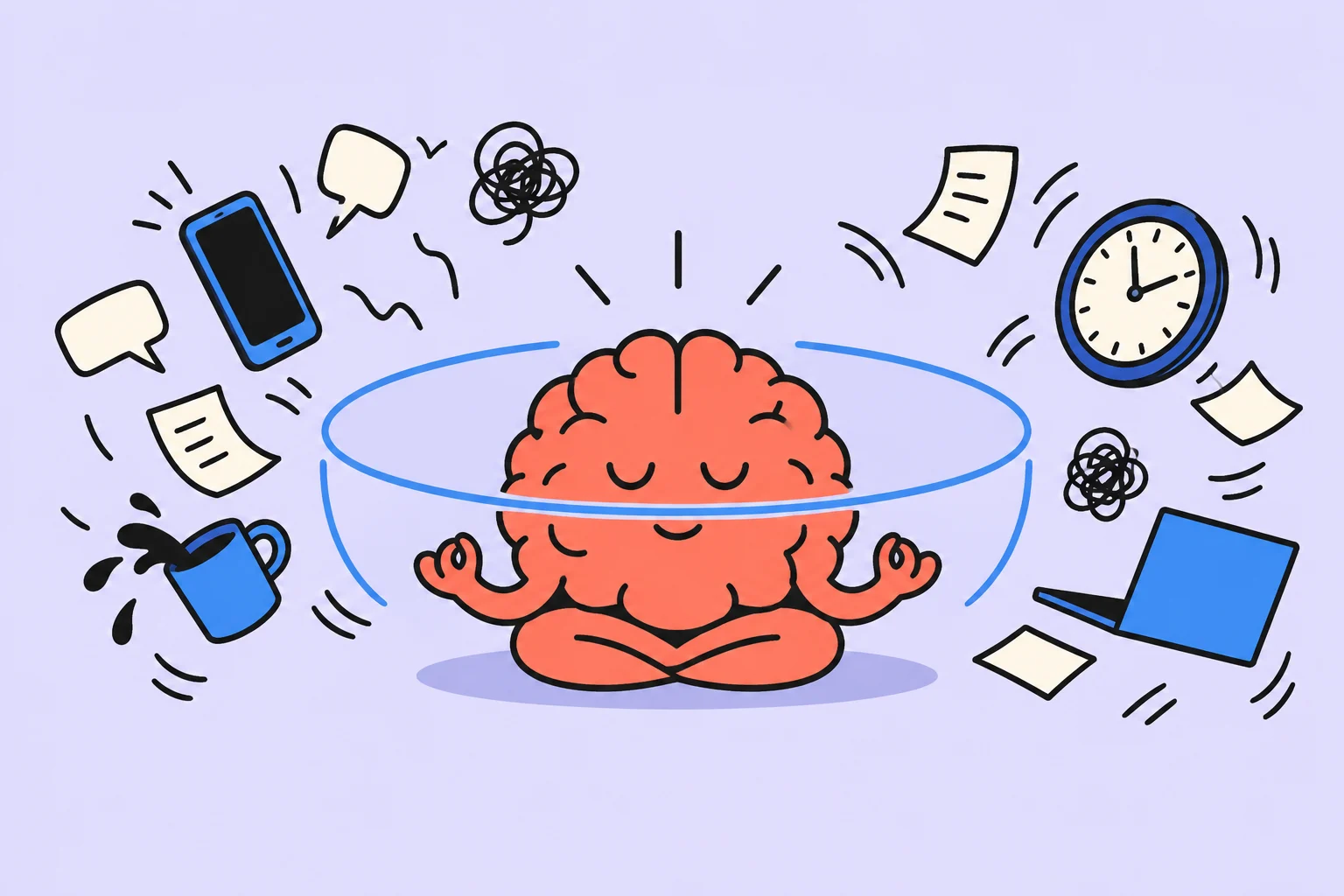
Focus techniques for ADHD: what really works in 2026
Scientifically grounded methods for improving focus with ADHD. 12 proven concentration techniques, exercises, and tools for people with attention deficits.

ADHD and productivity: how to work effectively with ADHD
A practical productivity guide for people with ADHD. 10 strategies, tools, and techniques for working effectively with attention deficit hyperactivity disorder.

ADHD and Work: Building a Career with Attention Deficit Hyperactivity Disorder
A career with ADHD: suitable professions, workplace adjustments and productivity strategies. Employee rights and successful examples.